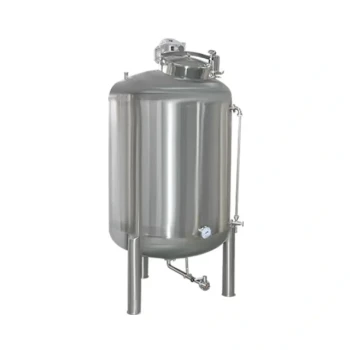
Preserving biological integrity is the priority. Temperature-Controlled Storage Facilities are essential because high-value bee products, specifically Royal Jelly and fresh pollen, are composed of unstable proteins and enzymes. Without a strictly regulated low-temperature environment, these components rapidly degrade at room temperature, effectively stripping the product of its medicinal and nutritional value.
High-value bee products rely on specific bioactive compounds to deliver health benefits. Temperature-controlled facilities inhibit chemical degradation and microbial growth, serving as the critical "cold chain" backbone that ensures these products retain their biological activity from the hive to the consumer.
The Mechanisms of Preservation
To understand why standard warehousing is insufficient for these products, one must look at the biochemistry of the raw material.
Protecting Unstable Proteins
Royal Jelly is not a simple sweetener; it is a complex matrix containing unstable proteins.
Heat acts as a destructive force on these delicate structures. When exposed to room temperature, these proteins can denature, changing their shape and losing their function.
Temperature-controlled facilities maintain conditions that keep these protein structures intact.
Preserving Enzymatic Activity
The health benefits associated with fresh pollen and Royal Jelly often stem from their enzyme content.
Enzymes are biological catalysts that are highly sensitive to thermal fluctuations. In a warm environment, biological activity ceases as enzymes deactivate.
Controlled cooling locks these enzymes in a stable state, ensuring they remain active when eventually consumed.
Inhibiting Microbial Growth
Nutrient-dense bee products are ideal breeding grounds for bacteria and fungi.
A low-temperature environment drastically slows down microbial metabolism.
This inhibition prevents spoilage and extends shelf life without relying on chemical preservatives that could alter the product's purity.
Understanding the Risks and Trade-offs
While temperature control is the solution, it relies on a delicate system known as the "cold chain."
The Irreversibility of Damage
A common misconception is that cooling can "save" a product.
If a product is exposed to heat before reaching the facility, the degradation is permanent. A high-tech storage facility cannot reverse chemical breakdown or protein denaturation that has already occurred.
The Invisible Threat
Unlike fresh produce that rots visibly, degraded Royal Jelly often maintains its appearance.
This creates a risk where a product looks high-quality but has practically zero medicinal value due to a lapse in temperature control.
Consistency is more critical than the lowest possible temperature; fluctuations are often more damaging than a steady, moderately cool state.
Ensuring Product Integrity
When evaluating storage solutions or handling protocols for heat-sensitive bee products, consider your ultimate objective.
- If your primary focus is therapeutic efficacy: Prioritize facilities that offer uninterrupted deep-freezing capabilities to lock in maximum enzymatic strength.
- If your primary focus is supply chain integrity: Ensure the storage facility is fully integrated into the distribution "cold chain" to prevent thermal shock during transfer.
Temperature control is not merely a storage requirement; it is the only mechanism that validates the product's classification as a functional health supplement.
Summary Table:
| Preservation Factor | Impact of Temperature Control | Risk of Heat Exposure |
|---|---|---|
| Unstable Proteins | Maintains molecular structure and function | Permanent denaturation and loss of value |
| Enzymatic Activity | Locks biological catalysts in a stable state | Deactivation; loss of therapeutic benefits |
| Microbial Growth | Inhibits metabolism of bacteria and fungi | Rapid spoilage and reduced shelf life |
| Physical Appearance | Remains consistent with high-quality status | May look normal but lack medicinal efficacy |
Secure the Bioactive Potency of Your Wholesale Bee Products
Maintaining the cold chain is critical for the success of commercial apiaries and distributors. At HONESTBEE, we understand that your reputation relies on product integrity. We provide the comprehensive tools and equipment necessary to handle high-value consumables like Royal Jelly and fresh pollen.
From specialized beekeeping tools to advanced honey-filling machines and commercial-grade storage solutions, HONESTBEE is your partner in quality. Whether you are scaling a professional apiary or managing a global distribution network, we supply the hardware and expertise to protect your biological assets.
Ready to elevate your production standards?
Contact HONESTBEE today to discuss our wholesale equipment and machinery solutions.
References
- Gamze Saner, Figen Çukur. Alternative Marketing Strategies for Honey and Other Bee Products in Turkey. DOI: 10.1080/10496500802083690
This article is also based on technical information from HonestBee Knowledge Base .
Related Products
People Also Ask
- What economic role do honey storage tanks play? Boost Your Revenue Through Strategic Inventory Management
- What roles do industrial honey storage tanks and filtration meshes play in processing? Ensure Purity & Consistency
- What is the purpose of a honey storage tank? Streamline Your Honey Processing for Quality & Efficiency
- What are honey storage tanks used for? Essential Features for Quality Preservation and Profit
- How do large honey storage tanks and gravity fall filling systems improve honey packaging efficiency and safety?