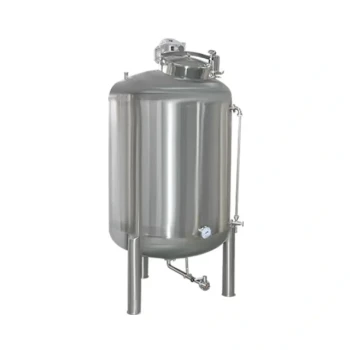
Temperature-controlled storage is the definitive safeguard against honey degradation. These specialized tanks provide a stable thermal environment that directly inhibits excessive crystallization and fermentation. By precisely regulating temperature, they maintain the honey's specific viscosity and moisture ratio, ensuring the product retains its physical consistency and chemical integrity throughout its shelf life.
Core Takeaway Honey is a chemically active, living product that reacts volatilely to environmental fluctuations. Temperature-controlled tanks stabilize the product by locking in moisture content and inhibiting biological changes, thereby extending shelf life and preserving the honey's original market value.
Controlling the Biological State
Preventing Fermentation and Spoilage
The primary function of temperature-controlled storage is to halt the natural biological processes that lead to spoilage. Without thermal regulation, environmental fluctuations can trigger fermentation, turning high-quality honey into an unsalable product.
By maintaining a consistent, cool temperature, these tanks inhibit the yeast activity responsible for fermentation. This allows producers to store honey for extended periods without the risk of the product turning sour or developing off-flavors.
Managing Crystallization Rates
While crystallization is a natural process, uncontrolled or uneven crystallization is often perceived as a defect by consumers. Temperature fluctuations accelerate this process, leading to an inconsistent texture.
Temperature-controlled tanks keep the honey at a specific thermal setpoint that slows down the formation of glucose crystals. This ensures the honey remains in a liquid or controlled semi-solid state, maintaining the viscosity required for bottling and consistent consumer presentation.
Preserving Chemical Integrity
Stabilizing Moisture and Viscosity
Honey is a supersaturated sugar solution where the ratio of water to sugar determines its stability. These tanks play a critical role in maintaining the correct moisture ratio.
If the temperature varies wildly, the viscosity changes, and moisture migration can occur within the tank. A stable environment prevents separation, ensuring that every batch drawn from the tank has consistent physical properties.
Protecting Enzymes and Flavor Profiles
Beyond simple structure, honey contains delicate biochemical compounds. Fluctuations in heat can degrade diastase activity and destroy heat-sensitive nutrients found in pollen or royal jelly components.
A systematic constant temperature prevents the degradation of these active nutrients and preserves the unique flavor profile of the floral source. This is essential for meeting strict export-grade standards where chemical composition is rigorously tested.
Material Safety and Hygiene
Combating Hygroscopic Absorption
Honey is hygroscopic, meaning it naturally absorbs moisture from the surrounding air. If stored in non-sealed or temperature-variable environments, condensation can form, diluting the honey and encouraging fermentation.
Professional storage tanks offer airtight sealing combined with thermal control to prevent atmospheric moisture from interacting with the product. This eliminates the risk of rising water content during long-term storage.
Preventing Heavy Metal Contamination
Honey is naturally acidic and corrosive. Storing it in ordinary containers for long periods can lead to corrosion and the leaching of heavy metals into the product.
Industrial-grade, temperature-controlled tanks are typically constructed from corrosion-resistant stainless steel. This food-grade material prevents chemical contamination, ensuring the honey remains pure and safe for consumption.
Understanding the Trade-offs
While temperature-controlled tanks are superior for quality, they represent a significant capital investment compared to standard bulk containers. They require a power source and regular maintenance to ensure sensors and heating/cooling elements function correctly; a failure in the system can lead to rapid spoilage of a large volume of product.
However, for commercial operations, the cost of equipment is generally outweighed by the elimination of inventory losses. The ability to hold inventory without degradation allows producers to avoid selling during harvest lows and instead wait for peak market demand.
Making the Right Choice for Your Goal
To determine how to implement storage solutions effectively, consider your specific production objectives:
- If your primary focus is Market Timing: Utilize these tanks to extend shelf life, allowing you to bypass low-price harvest seasons and sell when demand peaks.
- If your primary focus is Export Compliance: Rely on strict temperature control to preserve enzyme levels (diastase) and prevent HMF accumulation, which are critical metrics for international grading.
- If your primary focus is Consumer Experience: Use thermal regulation to prevent uncontrolled crystallization, ensuring the texture and viscosity remain consistent on the shelf.
Investing in thermal control is not just about storage; it is about arresting the aging process of your honey to guarantee premium quality upon delivery.
Summary Table:
| Key Feature | Impact on Honey Quality | Primary Benefit |
|---|---|---|
| Thermal Regulation | Inhibits yeast activity and fermentation | Extends shelf life and prevents spoilage |
| Crystallization Control | Manages glucose crystal formation rate | Maintains consistent viscosity and texture |
| Moisture Stabilization | Prevents hygroscopic absorption and separation | Preserves physical and chemical integrity |
| Material Protection | Uses corrosion-resistant stainless steel | Eliminates heavy metal contamination risk |
| Nutrient Preservation | Protects diastase activity and flavor profiles | Ensures compliance with export-grade standards |
Maximize Your Honey's Market Value with HONESTBEE
Preserving the integrity of your harvest requires professional-grade solutions. At HONESTBEE, we specialize in supporting commercial apiaries and distributors with a full spectrum of beekeeping machinery and essential equipment. From advanced temperature-controlled storage tanks and honey-filling machines to specialized hardware, we provide the tools you need to prevent degradation and ensure premium quality.
Our value to you:
- Comprehensive Wholesale Offering: A one-stop shop for tools, machinery, and consumables.
- Industrial Durability: Equipment designed to meet strict food-safety and export standards.
- Commercial Expertise: Tailored solutions for large-scale operations and honey-themed merchandise.
Don't let environmental fluctuations compromise your inventory. Contact HONESTBEE today to upgrade your facility and secure your product's future!
References
- Fernanda Duarte Araújo, Abadia dos Reis Nascimento. HONEY ECONOMIC VALUATION IN THE STATE OF GOIÁS: CONSERVATION AND INCOME. DOI: 10.18677/agrarian_academy_015
This article is also based on technical information from HonestBee Knowledge Base .
Related Products
- Professional Honey Storage Tank with Agitation System
- Stainless Steel Honey Storage and Settling Tank with Double Strainer
- Stainless Steel Honey Storage Tank with Lid for Honey
People Also Ask
- What economic role do honey storage tanks play? Boost Your Revenue Through Strategic Inventory Management
- What roles do industrial honey storage tanks and filtration meshes play in processing? Ensure Purity & Consistency
- What is the purpose of a honey storage tank? Streamline Your Honey Processing for Quality & Efficiency
- What are honey storage tanks used for? Essential Features for Quality Preservation and Profit
- How do large honey storage tanks and gravity fall filling systems improve honey packaging efficiency and safety?