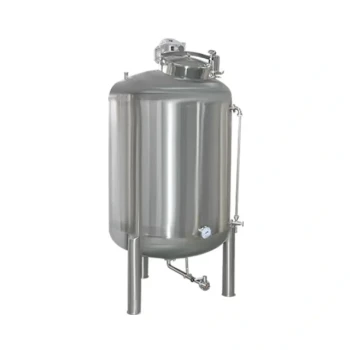
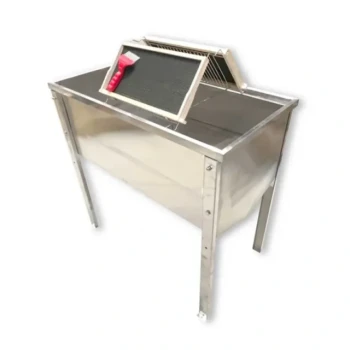
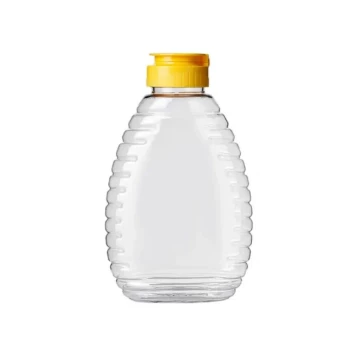
High-specification food-grade honey storage tanks serve as the critical vessel for preserving chemical stability and facilitating natural clarification during the maturation phase. Constructed from high-quality stainless steel or food-grade polymers, these tanks provide a chemically inert environment that blocks moisture and impurities, ensuring the honey retains its pure color and active ingredients while allowing sediments and air bubbles to separate naturally.
Core Takeaway: Maturation is a purification process where gravity separates impurities from the raw product. High-specification tanks enable this by acting as a hermetic barrier against humidity and oxidation, allowing the honey to "settle" without the risk of fermentation or chemical degradation.
Ensuring Chemical Purity and Stability
The Importance of Material Inertness
Raw honey is naturally acidic and chemically active. High-specification tanks are constructed from food-grade stainless steel or advanced polymers specifically chosen for their high corrosion resistance. This ensures the container does not react with the honey's acids, preventing the leaching of heavy metals or plastic residues that would compromise the product's safety.
Preserving Active Ingredients
The maturation phase is vital for stabilizing the biological properties of honey. By providing a sterile, non-reactive environment, these tanks prevent physical or chemical alterations that could degrade enzymes and antioxidants. This isolation is essential for maintaining the honey's "raw" status and market value.
Facilitating Natural Clarification
The Role of Gravity
During maturation, the honey must remain static to allow for sedimentation. These tanks serve as settling vessels where gravity naturally pulls heavier impurities, such as wax debris and fine particles, to the bottom. Simultaneously, air bubbles introduced during extraction rise to the surface, resulting in a clear, impurity-free product.
Enhancing Visual Quality
The primary outcome of this settling process is the optimization of the honey's color and clarity. By allowing the honey to rest in a controlled environment, the final product achieves the visual standards required for commercial bottling without the need for aggressive filtration. This preserves the pollen content while removing undesirable macroscopic debris.
Moisture Control and Fermentation Prevention
Combating Hygroscopy
Honey is highly hygroscopic, meaning it naturally absorbs moisture from the surrounding air. Superior airtight sealing is a defining feature of high-specification tanks, creating a barrier that isolates the honey from external humidity changes. Without this seal, an increase in water content would lead to a decrease in viscosity and a high risk of fermentation.
Preventing Stratification
In lower-quality storage, moisture often migrates to the top layer of the honey due to density differences. High-grade tanks utilize optimized sealing structures to inhibit this moisture migration and stratification. This prevents the formation of a localized high-water layer at the top of the tank, which is the most common cause of spoilage and fermentation during storage.
Understanding the Trade-offs
Static vs. Active Processing
While these tanks are essential for maturation (a static process), industrial-grade versions often include heating or stirring systems for homogenization. The trade-off is clarity versus uniformity: Stirring ensures consistent flavor and moisture across batches but disrupts the sedimentation process needed for clarification. For true maturation, the tank must function as a static settling unit before any homogenization occurs.
Investment vs. Risk
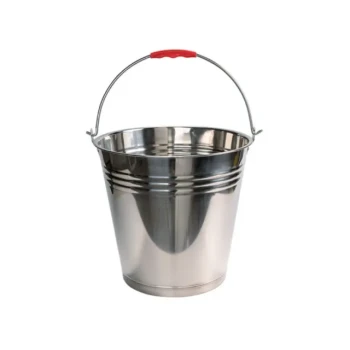
High-specification stainless steel tanks represent a significant upfront capital investment compared to standard food-grade buckets. However, using inferior containers introduces the risk of "off-flavors" from plastic interaction or fermentation due to poor seals. The cost of the tank must be weighed against the potential loss of an entire batch due to spoilage or contamination.
Making the Right Choice for Your Goal
Selecting the right tank configuration depends on whether your priority is artisanal purity or large-scale standardization.
- If your primary focus is Artisanal Quality: Prioritize static tanks with superior airtight seals and conical bottoms to maximize natural settling and preserve enzymatic activity.
- If your primary focus is Large-Scale Export: Select tanks equipped with temperature control and gentle agitation capabilities to homogenize large batches for consistent moisture content and flavor.
High-specification storage is not merely a container; it is an active participant in refining raw honey into a stable, high-value commercial product.
Summary Table:
| Feature | Function in Maturation | Impact on Quality |
|---|---|---|
| Material Inertness | Prevents acid-metal reactions | Ensures chemical purity & safety |
| Airtight Sealing | Blocks external humidity | Prevents fermentation & spoilage |
| Static Settling | Allows gravity-based separation | Improves clarity & removes debris |
| Temperature Control | Maintains viscosity & enzyme health | Preserves nutritional value |
| Conical Bottoms | Facilitates sediment collection | Simplifies purification process |
Elevate Your Honey Production with HONESTBEE Professional Equipment
At HONESTBEE, we understand that high-quality maturation is the bridge between raw extraction and a premium commercial product. We provide commercial apiaries and distributors with high-specification, food-grade storage solutions and advanced beekeeping machinery designed to protect your harvest's integrity.
From stainless steel settling tanks to specialized honey-filling machines and hive-making hardware, our comprehensive wholesale catalog is built to scale your business. Whether you are looking for industrial-grade tools or honey-themed cultural merchandise to enhance your brand, we deliver the reliability you need.
Ready to upgrade your apiary’s efficiency? Contact HONESTBEE Today to Discuss Your Wholesale Needs
References
- Nancy Diana Panța. Applying Value Chain Analysis through the Lens of Sustainability to Enterprises in the Beekeeping Sector. DOI: 10.18662/lumproc/gekos2020/12
This article is also based on technical information from HonestBee Knowledge Base .
Related Products
- Stainless Steel Honey Storage Tank with Lid for Honey
- Stainless Steel Honey Storage and Settling Tank with Double Strainer
- Professional Honey Storage Tank with Agitation System
- Food Grade Plastic Honey Bucket Pail for Beekeeping
- Premium Stainless Steel Honey Tank Bucket Pail with Reinforced Handle and Polished Finish
People Also Ask
- What economic role do honey storage tanks play? Boost Your Revenue Through Strategic Inventory Management
- What roles do industrial honey storage tanks and filtration meshes play in processing? Ensure Purity & Consistency
- What is the purpose of a honey storage tank? Streamline Your Honey Processing for Quality & Efficiency
- What are honey storage tanks used for? Essential Features for Quality Preservation and Profit
- How do large honey storage tanks and gravity fall filling systems improve honey packaging efficiency and safety?