Wing clipping and marking serve as critical data validation tools in selective breeding and honey production experiments. These techniques allow researchers to rigorously monitor the queen's survival and guarantee that the specific genetic strain under study remains active within the colony throughout the observation period.
Core Takeaway In scientific beekeeping, data integrity relies on the certainty of genetic lineage. Marking and clipping provide the only definitive proof that a colony has not undergone natural queen replacement, ensuring that observed traits—such as mite resistance or honey yield—are attributable to the specific genetics being tested.
Validating Genetic Continuity
Detecting Natural Replacement
The primary reason for these techniques is to identify "supersedure." Supersedure occurs when a colony naturally replaces an aging or failing queen with a new daughter queen.
Without a unique mark or clipped wing, a researcher might unknowingly collect data from a new queen with different genetics. Explicit marking alerts the researcher immediately if the original test subject is missing.
Attributing Traits Accurately
Experiments often measure specific hereditary traits, such as Varroa mite resistance or high honey yields.
To claim that a specific breeding line is responsible for these traits, you must prove the queen is the original subject. These physical identifiers ensure that the performance data collected is derived specifically from the target resistant bee strains.
Operational Efficiency and Control
Rapid Visual Identification
A single hive contains thousands of bees. Finding an unmarked queen during an inspection can be time-consuming and disruptive.
Applying a vibrant, colorful dot to the queen's thorax makes her significantly easier to locate. This reduces the time the hive is open, minimizing stress on the colony during data collection.
Preventing Subject Loss
Wing clipping serves a mechanical purpose beyond identification. By trimming one wing, researchers prevent the queen from flying effectively.
This ensures that the queen cannot fly away when introduced to a new hive or lead a swarm away from the experiment. This preserves the colony population and keeps the test subject within the controlled environment.
Understanding the Trade-offs
Application Safety
Marking requires the use of water-based, low-toxicity acrylic markers. Using inappropriate chemicals or solvents can harm the queen or cause the colony to reject her.
Precision and Stress
The process requires a steady hand. The marker tip must be soft to deliver paint without pressure, and clipping must be done with specific scissors.
Incorrect handling can cause physical injury or undue distress, which may negatively impact the queen's egg-laying capability—the very metric researchers often aim to study.
Applying These Principles to Your Goals
Whether you are conducting rigorous research or managing production hives, the application of these techniques depends on your objectives.
- If your primary focus is Experimental Accuracy: You must mark and clip every queen to ensure that data regarding disease resistance and yield is statistically valid and genetically accurate.
- If your primary focus is Colony Management: You should prioritize marking for quick identification during inspections, which helps monitor colony health and reduces inspection time.
- If your primary focus is Swarm Prevention: You should utilize wing clipping to prevent the loss of your queen and the associated workforce during the swarming season.
Data integrity in beekeeping begins with the certainty that the queen you inspected today is the same one you installed yesterday.
Summary Table:
| Feature | Purpose in Breeding/Experiments | Key Benefit |
|---|---|---|
| Wing Clipping | Prevents the queen from leading a swarm away | Preserves the test subject & colony population |
| Thorax Marking | Enables rapid visual identification among thousands | Reduces hive inspection time and colony stress |
| Genetic Validation | Detects natural queen replacement (supersedure) | Ensures data is attributed to the correct lineage |
| Trait Tracking | Monitors specific traits like mite resistance | Guarantees accuracy of long-term research data |
Elevate Your Apiary's Performance with HONESTBEE
At HONESTBEE, we understand that precision is the backbone of successful commercial beekeeping and selective breeding. Whether you are a professional researcher or a large-scale distributor, our comprehensive wholesale offering provides the tools you need to maintain data integrity and operational efficiency.
From specialized queen marking tools and precision clippers to advanced honey-filling machines and commercial-grade hive hardware, we supply the full spectrum of equipment necessary for modern industry success. Partner with us to access professional-grade consumables and machinery designed for the rigors of commercial honey production.
Ready to scale your beekeeping operations? Contact us today to explore our wholesale solutions!
References
- Kenneth E Ward, Rufina Ward. Comparative Performance of Two Mite-Resistant Stocks of Honey Bees (Hymenoptera: Apidae) in Alabama Beekeeping Operations. DOI: 10.1603/0022-0493(2008)101[654:cpotms]2.0.co;2
This article is also based on technical information from HonestBee Knowledge Base .
Related Products
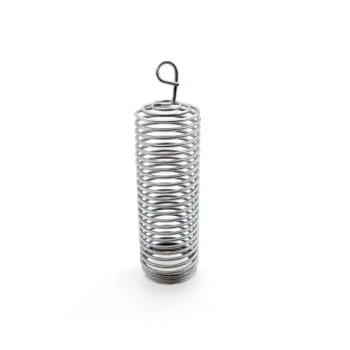
- Durable Galvanized Steel Spring Queen Bee Cage
- Portable Queen Bee Incubator with 12V Car Adapter for Safe Transport
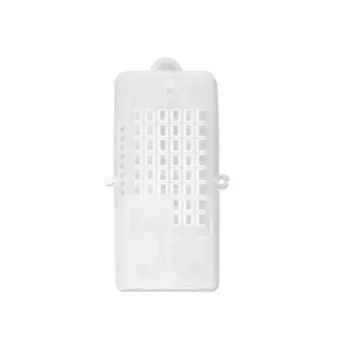
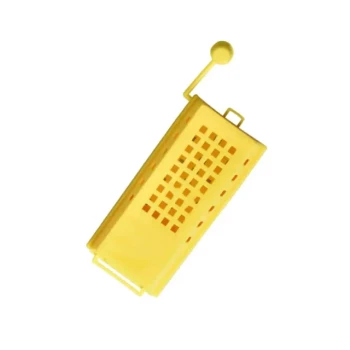
- Professional Queen Bee Introduction and Transport Cage
- Heavy Duty Stainless Steel Queen Bee Catcher Clip
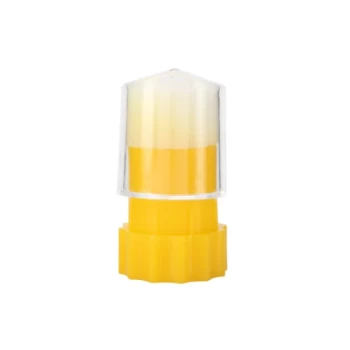
- Queen Bee Catcher Plastic Bee Marker Bottle with Piston Marking Tube
People Also Ask
- Why are specialized queen bee cages used for the banking of mated queen bees? Maximize Commercial Apiary Storage Efficiency
- What is the mechanism of action for using temporary queen bee cages? Master Successful Queen Introduction
- What is the step-by-step process for installing a queen bee's cage onto a frame? Ensure Hive Acceptance Safely
- What is the optimal placement for a queen bee cage? Essential Strategies for Successful Re-queening
- What are the advantages and disadvantages of introducing a queen bee by embedding the cage? Boost Your Queen Acceptance