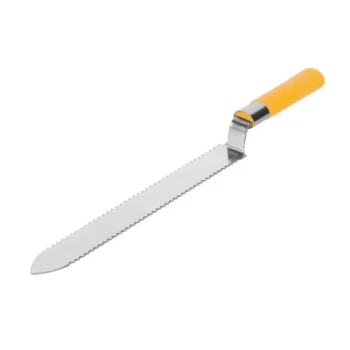
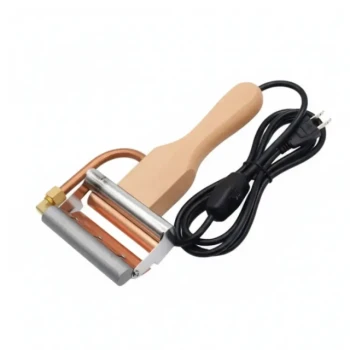
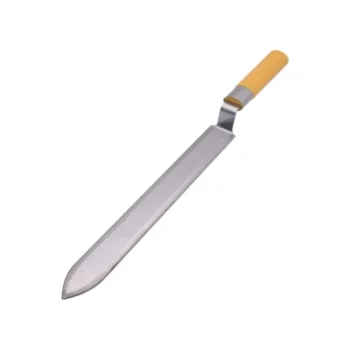
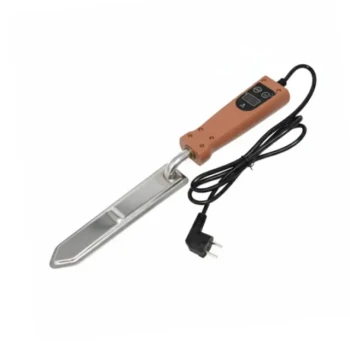
The use of wooden honey cutting knives is strictly dictated by the chemical sensitivity of the Giant Honey Bee (Apis dorsata). Unlike iron tools, wooden implements are chemically stable and do not leave behind metallic odors or residues. These metallic signatures are interpreted by the bees as environmental threats, causing the colony to permanently abandon a nesting site, whereas wooden tools ensure the location remains attractive for future nesting cycles.
Core Takeaway The choice of material is not about cutting efficiency, but about site preservation. Using iron tools triggers a permanent defensive migration, while wooden tools maintain the chemical neutrality of the hive location, allowing for sustainable, recurring harvests.
The Biological Impact of Material Choice
The Threat of Metallic Residues
Apis dorsata colonies possess an acute sensitivity to their chemical environment.
Iron tools introduce foreign metallic odors and residues to the comb and branch structure. The bees perceive these lingering chemical signals as a distinct environmental threat or contamination.
The Consequence of Iron Usage
The reaction to iron is not temporary aggression, but permanent displacement.
If iron tools are utilized during the cut, the colony is likely to abandon the nesting site permanently. The presence of the residue signals that the location is no longer safe for habitation.
The Neutrality of Wood
Wooden knives are used because they are chemically inert.
They cut through the comb without depositing foreign particles or scents. This invisibility preserves the natural state of the nesting branch, ensuring the bees do not associate the harvest with environmental degradation.
Sustainability and Recurrence
Encouraging Colony Return
The primary goal of the harvester is to ensure the bees return to the same specific tree or cliff.
By using wooden tools, the nesting site remains chemically attractive to the bees. The absence of threat markers encourages the colony to return to the exact same spot in subsequent seasons.
Promoting Comb Rebuilding
Sustainable harvesting relies on the bees' instinct to rebuild.
When the environment remains "clean" (free of iron residue), the bees are willing to rebuild their combs at the original site. This creates a cyclical resource rather than a one-time extraction event.
Operational Context and Trade-offs
The Sharpness Efficiency Gap
While wood is biologically superior for this task, it presents a mechanical trade-off.
Wooden knives generally lack the razor-sharp edge and durability of iron or steel. Harvesters must accept a slightly more labor-intensive cutting process to ensure the long-term survival of the harvest site.
The Role of Auxiliary Tools
The wooden knife does not work in isolation; it is part of a broader safety system.
Smoking equipment is required to generate thick smoke, which sedates the bees and drives them away temporarily. This prevents immediate stinging and clears the comb for the harvester.
Reaching the Hive
The physical location of Apis dorsata nests dictates the rest of the toolset.
Manual ladders are essential for reaching high-altitude branches or cliff sides. While the ladder and smoke handle access and safety, the wooden knife remains the sole tool responsible for post-harvest site viability.
Making the Right Choice for Your Goal
To establish a successful harvesting operation, you must prioritize the biology of the bee over the convenience of the tool.
- If your primary focus is sustainable harvesting: Prioritize wooden cutting tools to ensure the colony returns to the nesting site next season.
- If your primary focus is harvester safety: Rely on effective smoking equipment to disperse the colony before attempting to cut the comb.
Preserving the chemical integrity of the nesting site is the only way to transform honey harvesting from a single event into a renewable resource.
Summary Table:
| Feature | Wooden Cutting Knives | Iron/Steel Tools |
|---|---|---|
| Chemical Impact | Chemically inert; no residues | Leaves metallic odors & residues |
| Bee Reaction | Colony perceives site as safe | Colony perceives site as threatened |
| Site Sustainability | High; encourages seasonal return | Low; leads to permanent abandonment |
| Cutting Efficiency | Moderate; requires manual effort | High; superior sharpness |
| Primary Goal | Long-term site preservation | Short-term extraction efficiency |
Maximize Your Harvest Sustainability with HONESTBEE
At HONESTBEE, we understand that professional beekeeping requires the perfect balance between traditional wisdom and modern efficiency. Whether you are managing commercial apiaries or supplying the industry as a distributor, we provide the comprehensive wholesale solutions you need to succeed.
From specialized honey-filling machines and hive-making equipment to essential consumables and honey-themed cultural merchandise, our portfolio covers the full spectrum of beekeeping hardware. We help you transform honey harvesting into a reliable, renewable resource with tools designed for biological safety and operational excellence.
Ready to scale your beekeeping business?
Contact HONESTBEE today to explore our full range of professional equipment and wholesale offerings!
References
- Cameron Jack, Jamie Ellis. Giant Honey Bee (suggested common name) Apis dorsata Fabricius (Insecta: Hymenoptera: Apidae). DOI: 10.32473/edis-in1119-2016
This article is also based on technical information from HonestBee Knowledge Base .
Related Products
- Serrated Honey Uncapping Knife for Beekeeping and Bee Hive Maintenance
- Large Size Honey Uncapping Knife and Scraper for Beekeeping
- Professional Serrated Double-Sided Uncapping Knife for Beekeeping
- Electric Adjustable Blade Honey Uncapping Plane
- Professional Stainless Steel Double-Sided Honey Uncapping Knife
People Also Ask
- What is the benefit of the serrated edge on an uncapping knife? Unlock Faster, Cleaner Honey Extraction
- What specialized tools are used for uncapping and straining honey? Professional Gear for Efficient Harvesting
- What are the technical advantages of using specialized honey uncapping knives? Optimize Purity and Comb Reusability
- What specific structure does a professional honey uncapping knife target? Maximize Your Mature Honey Yield
- How do you cut capping off honey from frames? A Guide to Efficient Uncapping Methods