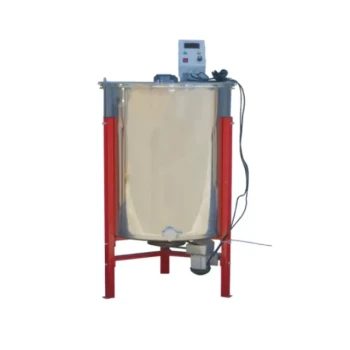
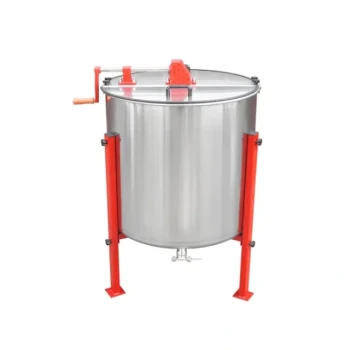
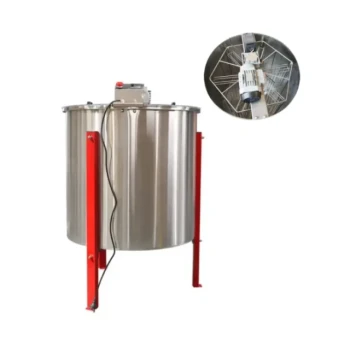
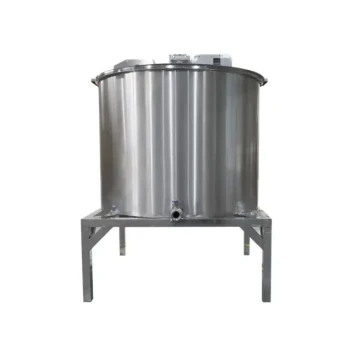
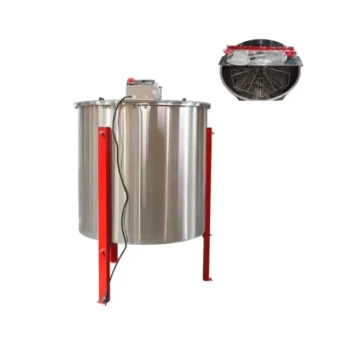
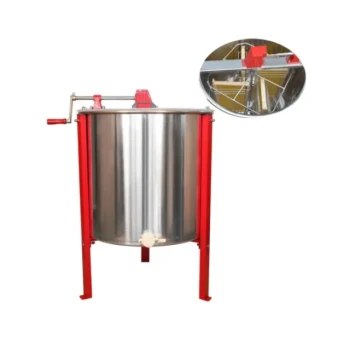
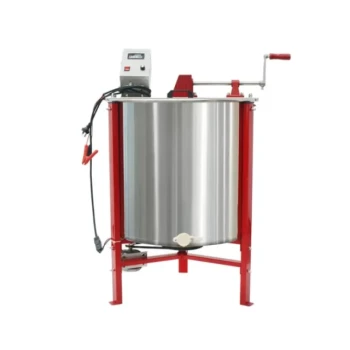
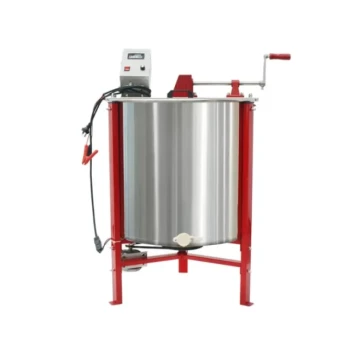
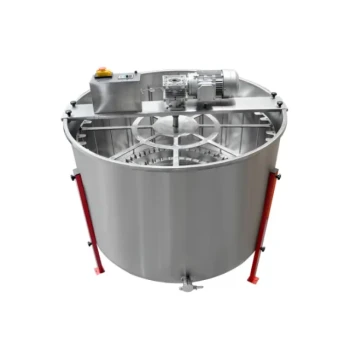
The superiority of a centrifugal honey extractor lies in its ability to separate honey without destroying the honeycomb, utilizing high-speed rotation to preserve the wax frames for future use. While manual squeezing requires crushing the comb to release the honey, a centrifugal extractor keeps the physical structure intact, transforming the harvest from a destructive process into a sustainable cycle.
Core Insight: The primary value of centrifugal extraction is not just mechanical speed, but biological efficiency. By preserving the drawn comb, you eliminate the bees' need to secrete new wax, allowing the colony to redirect significant energy from reconstruction to honey production.
The Mechanics of Preservation and Productivity
Preserving the Honeycomb Infrastructure
Manual squeezing is inherently destructive; it requires crushing the wax cells to release the liquid. This forces the colony to start from scratch after every harvest.
A centrifugal extractor uses rotational force to fling honey out of uncapped cells while keeping the frame structure rigid and intact. This allows the beekeeper to return the empty "drawn comb" directly to the hive.
The Energy Equation
Bees consume a substantial amount of honey and energy to secrete wax and build combs.
When you return intact combs to the hive, you save the bees the labor and resources required for reconstruction. This energy saving directly translates to a significant increase in total annual honey production, as the colony can focus immediately on foraging and storage.
Superior Quality and Hygiene Control
Eliminating Contamination
Manual handling and squeezing introduce a high risk of "secondary contamination." This method often mixes wax debris, pollen, and other impurities into the final product.
Centrifugal extraction is a "non-contact" separation method regarding the comb structure. It yields a cleaner product with significantly fewer impurities, reducing the need for aggressive filtering that might strip natural flavors.
Enhancing Clarity and Marketability
Modern extraction machinery is designed to meet strict food safety standards.
By mechanically separating the honey, you ensure higher clarity and better retention of natural active ingredients. This consistency is difficult to achieve with manual methods and is essential for meeting commercial market access requirements.
Understanding the Trade-offs
While centrifugal extraction is technically superior, it introduces operational considerations that do not exist with manual methods.
Initial Investment and Maintenance Unlike the zero-cost method of manual squeezing, extractors require an upfront financial investment in machinery. They also require cleaning, maintenance, and storage space when not in use.
Potential for Frame Damage While the goal is preservation, improper use can still cause damage. If the rotational speed is too high—especially with new, soft wax—the centrifugal force can "blow out" the comb, detaching it from the frame.
Making the Right Choice for Your Goal
To determine if this equipment aligns with your operation, consider your specific objectives:
- If your primary focus is maximizing yield: A centrifugal extractor is essential because it allows bees to reuse combs, significantly shortening the production cycle between harvests.
- If your primary focus is product quality: The mechanical separation ensures a cleaner, clearer honey with fewer impurities and wax debris than squeezed methods.
- If your primary focus is low-cost hobbyism: Manual squeezing avoids equipment costs, but you must accept lower honey yields and the destruction of your comb infrastructure.
Ultimately, moving to centrifugal extraction changes beekeeping from a resource-heavy rebuilding process into an efficient, continuous production loop.
Summary Table:
| Feature | Centrifugal Extraction | Manual Squeezing |
|---|---|---|
| Honeycomb Integrity | Preserved (Reusable) | Destroyed (Crushed) |
| Honey Yield | Higher (Saves bee energy) | Lower (Resource intensive) |
| Product Purity | High (Mechanical separation) | Moderate (Wax/pollen debris) |
| Efficiency | Fast & Continuous | Laborious & Destructive |
| Food Safety | Easy to standardize | Risk of contamination |
Elevate Your Beekeeping Operation with HONESTBEE
Transitioning from manual extraction to professional machinery is the key to scaling your honey production and ensuring market-leading quality. At HONESTBEE, we specialize in supporting commercial apiaries and distributors with high-performance beekeeping tools and industrial-grade machinery.
From advanced centrifugal honey extractors and honey-filling machines to durable hive-making hardware and essential consumables, our comprehensive wholesale portfolio is designed to maximize your efficiency and output. Let us help you transform your harvest into a sustainable, high-yield production loop.
Ready to upgrade your equipment? Contact our expert team today to discuss our wholesale solutions!
References
- Issa Nombré, Jeanne Millogo Rasolodimby. Impacts of storage conditions on physicochemical characteristics of honey samples from Burkina Faso.. DOI: 10.5897/ajfs.9000161
This article is also based on technical information from HonestBee Knowledge Base .
Related Products
- electric honey extractor honey centrifuge 3 frame honey extractor stainless steel honey frame extractor
- Manual Hand Crank 4 Frame Honey Extractor Centrifuge for Beekeeping
- Professional 4 Frame Self Reversing Electric Honey Extractor for Beekeeping
- Electric 4 Frame Tangential Honey Extractor
- 24 Frame Honey Extractor Commercial Radial Honey Frame Extraction Machine
People Also Ask
- What are the characteristics of electric honey extractors? Boost Your Apiary Efficiency with Automated Technology
- What are the disadvantages of using an electric honey extractor? Weighing Cost, Power, and Comb Safety
- What are the advantages of an electric honey extractor? Boost Efficiency and Scale Your Honey Production
- What are the technical advantages of electric honey extractors? Maximize Yield and Protect Your Bee Colony
- How does an electric honey extractor affect the quality of honey? Preserve Flavor & Purity with Precision Extraction