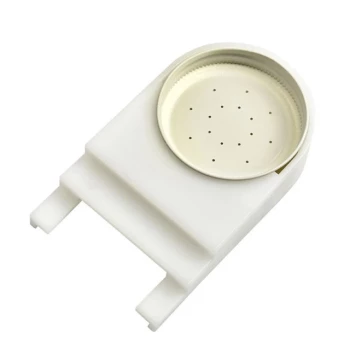
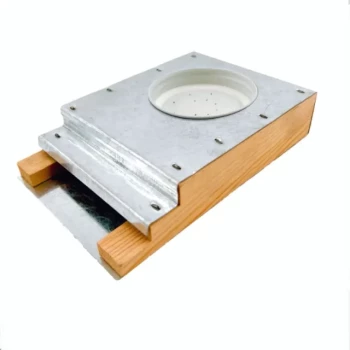
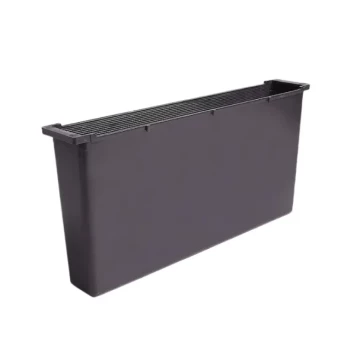
A Division Board Feeder is critical because it delivers concentrated nutrition directly to the specific area of the hive where it is needed most. By positioning high-sugar syrup immediately adjacent to the brood combs, it forces an uptake of carbohydrates by the nurse bees, ensuring they have the energy and raw materials required to synthesize royal jelly.
By simulating the resource abundance of a major nectar flow, this feeder guarantees that nurse bees maintain peak glandular activity, allowing for consistent royal jelly secretion even when natural forage is scarce.
Optimizing Hive Biology for Production
Strategic Placement for Maximum Uptake
The physical location of the Division Board Feeder is its defining feature. It is placed immediately adjacent to the brood combs.
This proximity is vital because nurse bees—the workforce responsible for royal jelly production—remain centered in the brood nest. Placing the feed right next to them eliminates the need for travel, ensuring immediate and constant access to resources.
Fueling the Hypopharyngeal Glands
The primary goal of this feeding method is to target the hypopharyngeal glands of the nurse bees.
These glands are responsible for secreting royal jelly. By providing a high-concentration supplemental feed, you are supplying the specific raw materials the bees’ bodies require to keep these glands functioning at a high capacity.
Simulating Environmental Abundance
Mimicking a Nectar Flow
Bees naturally regulate royal jelly production based on the availability of resources in the environment.
The Division Board Feeder overrides this natural governor by providing a steady, rich supply of syrup. This simulates a major nectar flow, tricking the colony into a "production mode" regardless of the actual season or weather.
Consistency in Times of Scarcity
Natural nectar and pollen sources fluctuate and can become scarce.
Relying solely on nature introduces volatility into your production cycle. This feeder acts as a stabilizer, maintaining high levels of secretion even during a dearth in natural forage.
Understanding the Operational Trade-offs
Allocating Internal Space
Unlike top feeders or entrance feeders, a Division Board Feeder occupies space inside the brood box.
You must effectively sacrifice the space of one frame or comb to accommodate the feeder. This requires careful management of the hive's internal geometry to ensure there is still adequate room for brood rearing while accommodating the feeder.
Disruption During Refilling
Because the feeder is internal, refilling it generally requires removing the hive cover.
Frequent refilling can disturb the colony's temperature and organization. You must balance the need for constant feed with the need to minimize intrusive inspections.
Implementing This in Your Apiary
To maximize your royal jelly yields, consider your specific production goals:
- If your primary focus is maximum output: Ensure the feeder is always topped off with high-concentration syrup to prevent any dip in glandular activity.
- If your primary focus is resource management: Prioritize using these feeders during pollen dearths to bridge the gap and maintain colony momentum.
By placing the right resources in the right location, you turn a biological possibility into a reliable production system.
Summary Table:
| Feature | Impact on Royal Jelly Production | Benefit to Commercial Apiaries |
|---|---|---|
| Strategic Placement | Located adjacent to brood combs | Minimizes nurse bee travel, ensuring constant nutrient uptake. |
| Glandular Stimulation | Fuels hypopharyngeal glands directly | Maintains peak secretion levels regardless of external conditions. |
| Flow Simulation | Mimics a major natural nectar flow | Keeps the colony in "production mode" during nectar dearths. |
| Resource Stability | Provides consistent carbohydrate supply | Eliminates production volatility caused by seasonal fluctuations. |
Maximize Your Royal Jelly Yields with HONESTBEE
At HONESTBEE, we understand that commercial success in royal jelly production depends on precision and efficiency. As a leading partner for commercial apiaries and distributors, we provide the industrial-grade beekeeping tools and machinery needed to scale your operations.
From advanced division board feeders that optimize hive biology to honey-filling machines and specialized hive-making equipment, our comprehensive wholesale offering covers every industry essential. Whether you are stocking essential consumables or upgrading your facility's hardware, HONESTBEE delivers the quality and value your business demands.
Ready to scale your production? Contact us today to discuss our wholesale solutions and discover how our expertise can benefit your apiary.
References
- Mohamed Ali. Relationship Between Number of Grafted Queen Cell Cups and Amount of Produced Royal Jelly in Honey Bee Colonies Apis mellifera L.. DOI: 10.21608/eajbsa.2017.12651
This article is also based on technical information from HonestBee Knowledge Base .
Related Products
- Classic Boardman Entrance Bee Feeder Hive Front Feeding Solution
- Boardman Entrance Bee Feeder Durable Galvanized Steel and Wood Construction for Beekeeping
- In-Hive Dual Compartment Frame Bee Feeder for Targeted Colony Nutrition
- HONESTBEE Entrance Bee Feeder Efficient Hive Front Liquid Feeding Solution for Beekeeping
- Professional Hive Front Entrance Bee Feeder
People Also Ask
- What are the advantages and disadvantages of using an entrance feeder for bees? Balance Convenience and Hive Security.
- What types of bee feeders are available for beginners? Start with the Simple Entrance Feeder
- How do you make an entrance feeder for bees? A Guide to Safe & Effective Hive Feeding
- What is a recommended alternative use for an entrance feeder instead of providing sugar syrup? - Water Feeding Tips
- What are the advantages and disadvantages of an entrance feeder? Optimize Your Apiary's Feeding Strategy