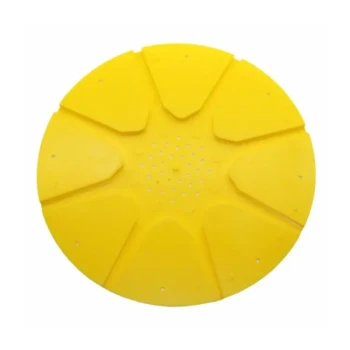
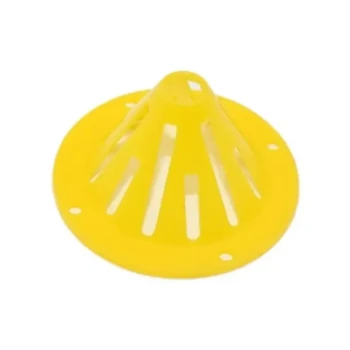
A hygienic board acts as the primary validation instrument for your mite treatment protocol. When applying treatments like Lithium Chloride, this board is essential because it physically isolates fallen mites from the colony, preventing worker bees from cleaning them away before they can be counted. This isolation provides the objective data necessary to confirm that the chemical is effectively killing the parasites.
Without a hygienic board to trap and display fallen mites, you cannot objectively measure the effectiveness of your treatment. It transforms anecdotal observation into quantifiable data, ensuring your dosing strategy is working as intended.
The Mechanics of Verification
To manage hive health effectively, you must move beyond guessing and rely on hard evidence. The hygienic board facilitates this by altering the hive's internal environment to favor data collection.
Preventing Natural Hive Hygiene
Honeybees are instinctively hygienic. Under normal circumstances, worker bees will quickly locate dead debris, including mites, and sweep it out of the hive.
Without a board, this natural cleaning instinct destroys your data. The board intercepts the debris, creating a physical barrier that keeps the "evidence" (the dead mites) accessible to the beekeeper but inaccessible to the cleaning crews.
Trapping the Evidence
Effective hygienic boards often utilize a sticky layer or oil film.
This adhesive surface serves two purposes. First, it ensures that once a mite falls, it stays exactly where it landed. Second, it prevents the mites from crawling away if the treatment stunned them rather than killing them instantly.
Blocking Scavengers
It is not just the bees you must worry about; external scavengers can also skew your data.
Ants and other insects are often attracted to the protein-rich remains of dead mites. A properly installed board—particularly a sticky one—prevents these scavengers from carrying away the dead mites, ensuring your count reflects the true mortality rate.
Optimizing Treatment Protocols
Applying a chemical like Lithium Chloride is only the first step. The hygienic board allows you to scientifically tune your approach based on the results.
Calculating Mortality Rates
To know if a treatment works, you must calculate the percentage effectiveness.
By counting the total fallen mites on the board over a specific period, you can derive a concrete mortality rate. This number tells you if the infestation is being controlled or if the population is surviving the chemical onslaught.
Verifying Dosing Concentrations
Different infestations may require different chemical strengths.
The data from the board allows you to compare results between different dosing concentrations. If a lower dose yields a low drop count, but a higher dose yields a high count, the board provides the justification for increasing the chemical concentration.
Adjusting Application Frequency
Mite reproductive cycles are complex. A single treatment is rarely enough.
Regular monitoring of the board helps determine how often you need to re-apply the treatment. If the drop count remains high after several days, it indicates a need for continued or more frequent application to break the mite's reproductive cycle.
Common Pitfalls to Avoid
While hygienic boards are powerful tools, relying on them requires an understanding of their limitations.
The False Negative
If a board is not sticky or oily enough, mites may be blown off or removed by strong colonies.
This results in a low count, leading you to believe the hive is mite-free when, in reality, the treatment may be working but the evidence is disappearing. Always ensure the adhesive layer is fresh.
Debris Confusion
Hives produce a significant amount of wax cappings, pollen, and other debris.
High volumes of hive trash can obscure mites on the board, making counting difficult. It is critical to check and clean the boards periodically to maintain accurate visibility of the parasites.
Making the Right Choice for Your Goal
Using a hygienic board turns beekeeping from an art into a science. Here is how to apply this to your management strategy:
- If your primary focus is Verifying Efficacy: Use the board to calculate exact mortality rates, ensuring the specific chemical (e.g., Lithium Chloride) is actually killing the target parasites.
- If your primary focus is Protocol Refinement: Use the drop data to compare different concentrations and frequencies, adjusting your dosage until you achieve maximum mite drop with minimum chemical use.
Data is the only way to differentiate between a lucky hive and a well-managed one.
Summary Table:
| Feature | Purpose in Mite Treatment | Benefit to Beekeeper |
|---|---|---|
| Physical Isolation | Prevents bees from cleaning away dead mites | Provides accurate, quantifiable data |
| Sticky/Oil Layer | Traps mites and prevents them from crawling away | Ensures stunned mites are included in the count |
| Scavenger Barrier | Blocks ants and insects from removing debris | Protects the integrity of the mortality evidence |
| Data Collection | Enables calculation of percentage effectiveness | Justifies dosing and frequency adjustments |
Maximize Your Colony Health with HONESTBEE
Are you a commercial apiary or distributor looking to optimize your pest management strategy? HONESTBEE provides the professional-grade tools you need to succeed. From precision-engineered hygienic boards and hive hardware to advanced honey-filling machines and essential consumables, we offer a comprehensive wholesale portfolio tailored to the needs of the modern beekeeping industry.
Partner with HONESTBEE to scale your operations with reliable, high-quality equipment. Contact us today to discuss your wholesale needs!
References
- Balázs Kolics, András Specziàr. Comparison of Alternative Application Methods for Anti-Varroa Lithium Chloride Treatments. DOI: 10.3390/insects13070633
This article is also based on technical information from HonestBee Knowledge Base .
Related Products
- Langstroth Screen Bottom Board for Beekeeping Wholesale
- Langstroth Solid Bottom Board for Beekeeping
- HONESTBEE Wooden Bee Escape Board with Triangle Mesh Design for Beekeeping
- Efficient Hive Clearing: HONESTBEE 8-Way Plastic Bee Escape
- Slatted Porter Style Bee Escape for Rapid Hive Clearing
People Also Ask
- What role do screen bottom boards and monitoring inserts play in assessing Varroa mite mortality and maintaining hive hygiene in Langstroth hives?
- What is the primary function of a screen bottom board? Achieve Accurate Varroa Mite Assessment in Your Apiary
- What is the primary function of a standard screen bottom board when assessing honeybee grooming behavior? - Key Mite Data
- Why is the combination of a screen bottom board and a sticky trap board essential for monitoring Varroa mite? Guide
- Why might a screen bottom board be less effective for pest control? Understanding the 'Mixed Sunlight' Complication