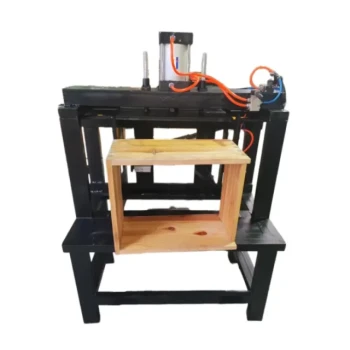
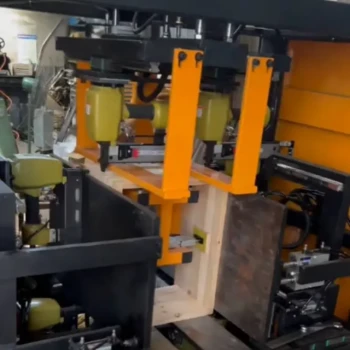
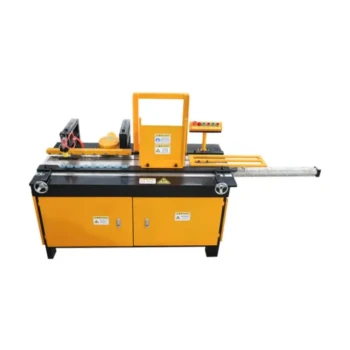
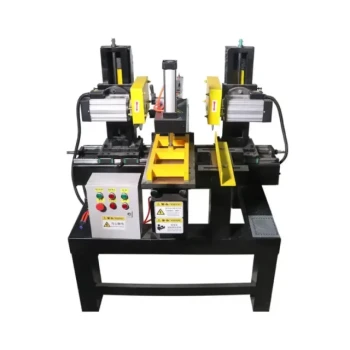
Automated hive-making equipment serves as the critical backbone of industrial beekeeping by enabling the mass production of standardized, weather-resistant hive structures. By ensuring that every physical component is identical, this technology allows technicians to implement unified maintenance protocols and efficient product collection across vast, large-scale apiaries.
To achieve industrial scale, beekeeping must transition from variable, artisanal practices to a manufacturing model based on precision and interchangeability. Automated equipment provides the essential hardware foundation for scientific management, rapid colony expansion, and cost-effective maintenance.
The Role of Standardization in Scaling
Achieving Component Interchangeability
For an apiary to grow from hundreds to thousands of colonies, equipment interchangeability is non-negotiable.
Industrial-grade machines utilize high-precision cutting to ensure that components like frames, bottom boards, and supers have identical dimensions.
This allows beekeepers to swap parts between hives without friction, facilitating seamless equipment management.
Enabling Unified Management Workflows
Standardized physical structures allow for the implementation of scientific management protocols.
When every hive is constructed identically, technicians can apply the same maintenance, treatment, and harvesting procedures to every colony.
This consistency reduces the cognitive load on workers and increases the speed of operations significantly.
Operational Efficiency and Economic Viability
Reducing Manufacturing Cycles and Costs
Automated machinery significantly lowers the labor costs and production time per unit compared to manual assembly.
By mechanizing the cutting and assembly processes, operations can produce large volumes of infrastructure rapidly.
This reduction in overhead is a prerequisite for transitioning from small-scale operations to professional, industrial-scale apiaries.
Rapid Response to Colony Dynamics
Large-scale operations face inevitable colony losses, particularly in the spring.
Automated equipment enables the rapid production of nucleus hives (small-scale hives) to support the cultivation of new colonies.
This capability allows beekeepers to internalize their stock replacement, moving away from purchasing external bees to a sustainable, internal cycle of expansion.
Structural Integrity and Bee Health
Optimizing for Bee Biology
Precision manufacturing ensures that the internal dimensions of the hive respect natural "bee space" requirements.
When internal spaces align with bee biology, the colony functions more efficiently, and stress is minimized.
This precision also facilitates better honey storage and easier manipulation of internal structures by the beekeeper.
Weather Resistance and Protection
A fundamental requirement for large-scale management is the durability of the housing.
Automated equipment produces tightly sealed, weather-resistant hives that protect the colony from environmental stressors.
This structural stability is vital for maintaining colony health in open agricultural environments where hives are exposed to the elements.
Understanding the Trade-offs
While automation drives expansion, it introduces specific challenges regarding capital and flexibility.
High Initial Capital Investment: Implementing industrial-grade machinery requires significant upfront funding, which may be a barrier for mid-sized operations attempting to scale.
Loss of Customization: Automated systems excel at uniformity but lack the flexibility to produce bespoke or non-standard hive configurations without retooling.
Dependence on Supply Chain: Reliance on specialized machinery means that maintenance of the manufacturing equipment itself becomes a critical point of failure for the operation.
Making the Right Choice for Your Goal
To determine how to integrate this technology into your expansion strategy, consider your current operational bottlenecks.
- If your primary focus is rapid expansion: Prioritize machinery that specializes in nucleus hive production to quickly recover losses and multiply colony counts.
- If your primary focus is operational efficiency: Focus on equipment that guarantees 100% component interchangeability to streamline your technicians' daily workflow.
- If your primary focus is durability: Select machinery known for precision assembly to ensure weather-tight seals and long-term structural stability.
True scalability is not just about having more bees; it is about establishing a standardized physical infrastructure that makes managing them sustainable.
Summary Table:
| Key Benefit | Impact on Scaling | Industrial Advantage |
|---|---|---|
| Interchangeability | Standardized parts across thousands of hives | Faster maintenance and seamless part replacement |
| Cost Reduction | Lower labor and production time per unit | Economic viability for rapid large-scale expansion |
| Rapid Production | Fast turnaround for nucleus hive creation | Quick recovery from colony losses and faster multiplication |
| Precision Engineering | Optimized internal "bee space" | Improved colony health and higher honey yields |
| Structural Integrity | Weather-resistant and durable housing | Long-term protection in harsh agricultural environments |
Elevate Your Beekeeping Operation to Industrial Standards with HONESTBEE
Transitioning from artisanal beekeeping to a large-scale commercial model requires more than just more bees—it requires the right infrastructure. HONESTBEE specializes in empowering commercial apiaries and distributors with the high-precision machinery needed for rapid, sustainable growth.
Our value to your business:
- Comprehensive Wholesale Offering: Access a full spectrum of beekeeping tools, machinery, and equipment tailored for professional scale.
- Specialized Hardware: From high-capacity hive-making machines to precision honey-filling systems, we provide the backbone for your production line.
- Industry Consumables: A one-stop shop for essential supplies and honey-themed cultural merchandise to diversify your revenue.
Ready to eliminate operational bottlenecks and achieve 100% component interchangeability?
Contact HONESTBEE Today to Discuss Your Scaling Strategy
References
- Josueth Meza, Paúl Mejía-Erazo. La influencia de la apicultura al crecimiento económico multisectorial. DOI: 10.60100/bciv.v3i3.122
This article is also based on technical information from HonestBee Knowledge Base .
Related Products
- High-Efficiency Pneumatic Bee Hive Making Machine for Rapid Box Assembly
- Automatic High-Speed Bee Hive Box Stapling Machine
- Mini Desktop Bee Hive Frame Forming Making Machine
- Beehive Handle and Frame Rest Cutting Machine: Your Specialized Hive Machine
- Beehive Machine Double End Saw for Precision Hive Component Manufacturing
People Also Ask
- How does the introduction of professional beehive-making machinery benefit sustainable beekeeping? Scale Your Apiary
- Why is specialized beehive-making machinery critical for low-defense breeding? Enhance Selection with Precision Tools
- How does the introduction of specialized beehive making machinery contribute to increasing the scale of regional beekeeping industries?
- What is the importance of specialized beehive making machinery in a circular bio-economy? Build Local Sustainability
- Why is specialized beehive-making machinery essential? Scale Your Apiary with Precision Industrial Standards