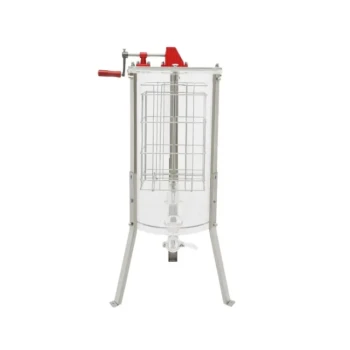
Honey is naturally acidic and chemically active. Because of this low pH, honey acts as a mild solvent that can degrade standard metals, leading to chemical leaching that alters the product's flavor, color, and safety. Food-grade stainless steel is required because it offers superior corrosion resistance, preventing these reactions while providing a smooth, non-porous surface that allows for the rigorous sanitation required by international food safety standards.
The core challenge in honey processing is not just containment, but chemical neutrality. Stainless steel is the industry standard because it remains inert when in contact with acidic bee products, ensuring the honey's biological and chemical profile remains exactly as the bees produced it.
Preserving Chemical Integrity
Combating Natural Acidity
Honey possesses a weak acidity that reacts poorly with reactive metals like iron, copper, or non-food-grade steel.
If processed in inferior materials, the acidity triggers corrosion and leaching, causing metal ions to migrate into the honey. Food-grade stainless steel is chemically stable, creating a barrier that neutralizes this threat.
Preventing Sensory Contamination
When honey reacts with container walls, the consequences are immediate and irreversible.
The reaction often results in discoloration (darkening) and the development of an off-putting metallic taste. Stainless steel ensures the original flavor profile and color clarity are preserved for the consumer.
Ensuring Biological Safety
Eliminating Pathogen Reservoirs
The surface texture of processing equipment is a critical factor in hygiene.
Stainless steel offers exceptional surface smoothness, which prevents micro-cracks and crevices where pathogen residues or yeast could hide. This smoothness is vital for preventing cross-contamination between different batches of bee products.
Compliance with Sanitation Standards
Honey processing requires frequent and thorough cleaning to remove sticky wax, propolis, and crystallized sugars.
Stainless steel withstands the chemicals and heat used in disinfection protocols required by standards such as HACCP. Unlike porous materials, it allows for complete sterilization, ensuring no biological residue remains.
Managing Physical Properties
Controlling Moisture Absorption
Honey is highly hygroscopic, meaning it aggressively absorbs moisture from the surrounding air.
If honey absorbs too much water, it will ferment and spoil. Stainless steel storage tanks are designed to be airtight, locking out atmospheric moisture and maintaining the honey's water content at stable levels.
Facilitating Natural Filtration
High-quality honey often undergoes a static sedimentation process in bulk tanks.
In large stainless steel tanks, specific gravity allows micro-bubbles and wax impurities to rise while heavy sediments settle. The inert nature of the tank allows the honey to sit undisturbed for this process without risking chemical degradation over time.
Understanding the Trade-offs
While stainless steel is the gold standard for commercial processing, it is important to recognize the alternatives and limitations.
Cost and Weight Stainless steel is significantly heavier and more expensive than food-grade plastic. For hobbyists or small-scale operations, the initial investment in stainless steel extractors and tanks can be steep.
The Plastic Alternative Food-grade plastic is a viable alternative for short-term storage or smaller operations. It offers similar chemical inertness and airtight sealing capabilities.
However, plastic is less durable and more prone to scratching. Scratches create porous surfaces that are difficult to disinfect, eventually compromising the hygiene benefits that stainless steel guarantees long-term.
Making the Right Choice for Your Goal
Selecting the right equipment depends on the scale of your operation and your long-term objectives.
- If your primary focus is Commercial Production: Invest in stainless steel to ensure durability, HACCP compliance, and zero risk of chemical leaching during bulk processing.
- If your primary focus is Long-Term Storage: Prioritize airtight stainless steel or high-quality food-grade plastic to prevent fermentation caused by moisture absorption.
- If your primary focus is Budget/Hobby Beekeeping: Utilize food-grade plastic for storage but ensure distinct care is taken to avoid scratching the interior surfaces during cleaning.
Ultimately, using food-grade stainless steel is an investment in the chemical purity and biological safety of your final product.
Summary Table:
| Feature | Food-Grade Stainless Steel | Reactive Metals (Iron/Copper) | Food-Grade Plastic |
|---|---|---|---|
| Corrosion Resistance | Excellent (Acid-resistant) | Poor (Reacts with honey) | Good |
| Flavor Preservation | Superior (Inert) | Poor (Metallic taste) | Good |
| Durability | High (Long-term use) | Moderate | Low (Prone to scratches) |
| Hygiene/Sanitation | Smooth & Non-porous | Difficult to clean | Risk of bacteria in scratches |
| Scale Suitability | Commercial & Industrial | Not Recommended | Hobbyist & Short-term |
Elevate Your Honey Production with HONESTBEE
At HONESTBEE, we understand that maintaining the chemical integrity of your honey is non-negotiable. As a premier partner for commercial apiaries and distributors, we provide professional-grade beekeeping tools and machinery crafted from high-quality food-grade stainless steel to ensure your products meet international safety standards.
From advanced honey-filling machines and industrial extractors to specialized hive-making hardware, our comprehensive wholesale catalog is designed to scale your business. Don't compromise on purity—let us supply the durable, high-performance equipment you need to protect your harvest.
Ready to upgrade your processing facility? Contact us today to discuss your wholesale equipment needs
References
- Smith A. R. Dossou, Rodrigue Castro Gbèdomon. Promotion of beekeeping: Insights from an empirical analysis of three honey value chains in<scp>Benin</scp>. DOI: 10.1111/1477-8947.12238
This article is also based on technical information from HonestBee Knowledge Base .
Related Products
- Electric Double Wall Honey Filtering Machine Purifier Equipment for Honey Processing Plant
- 0.5T Capacity Honey Dehumidifier Dryer with Vacuum Heating and Thickening Filtering Machine
- Heavy Duty Stainless Steel Honey Processing Machine Decrystallizing Tank
- Double Wall Honey Heating Stirring Homogenizer Mixing Machine with Various Capacity
- Economy Honey Homogenizer Mixer and Melting Machine for Beekeeping
People Also Ask
- What is the process of filtering honey? A Guide to Clean, Pure, and Market-Ready Honey
- What types of equipment are used in honey filtering? Build an Efficient System for Pure, Marketable Honey
- What is the overall importance of using the right equipment in honey filtering? Boost Quality & Marketability
- What steps are involved in maintaining honey filtering equipment? A Guide to Protecting Your Honey Quality
- Why is filtering important in honey processing, and what equipment is used? A Guide to Quality & Efficiency