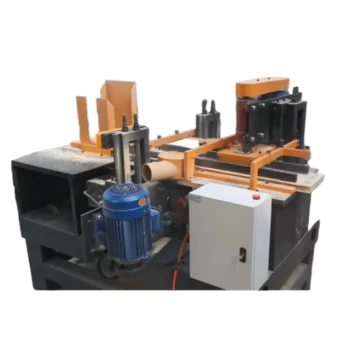
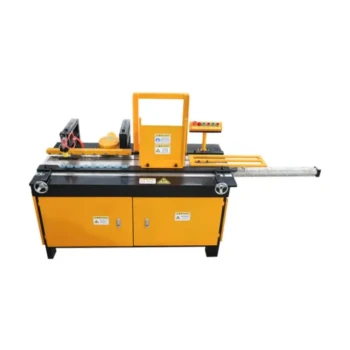
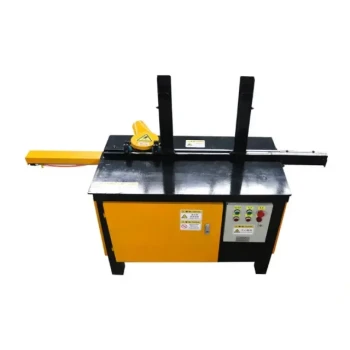
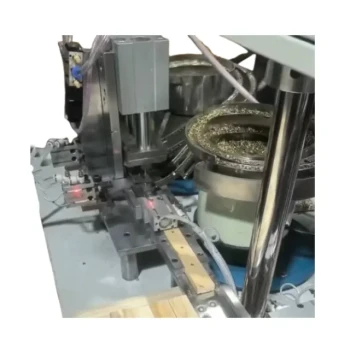
High-capacity beehive manufacturing machinery is the infrastructure backbone of intensive orchard pollination. It enables the rapid production of standardized, high-seal hives required to deploy massive numbers of healthy colonies within short, critical timeframes. Without the volume and precision offered by automated equipment, meeting the urgent housing demands of expanding nectar-producing areas would be logistically impossible.
Intensive pollination services are fundamentally a logistics challenge requiring the movement of thousands of colonies to match brief flowering windows. High-capacity machinery solves this by ensuring every hive unit is available immediately, structurally sound, and physically identical for mass transport.
The Logistics of Mass Pollination
Meeting Urgent Deployment Windows
Intensive pollination is driven by biology, not convenience. Crops like almonds and blueberries have specific, short flowering periods where colony density must be maximized immediately.
High-capacity machinery, such as automated woodworking or injection molding systems, allows apiaries to produce thousands of breeding containers rapidly. This speed ensures that hive availability never becomes a bottleneck when agricultural demand surges.
Supplementing Wild Pollinators
Wild pollinators are often insufficient to cover the sheer scale of modern agricultural demand. Commercial operations must fill this gap with controlled, manageable colonies.
Machinery enables the industrial-scale production necessary to house these large populations. It transforms beekeeping from a craft into a scalable industry capable of guaranteeing precise pollination intervention.
The Critical Role of Standardization
Ensuring Transport Stability
Commercial apiaries frequently migrate colonies across vast distances between forests and farmlands. This requires loading thousands of hives onto specialized trucks.
High-precision manufacturing ensures every hive has completely uniform dimensions. This uniformity is vital for stable stacking and securing loads, significantly reducing logistical losses during cross-regional migration.
Maximizing Component Interchangeability
In large-scale operations, technicians cannot waste time matching specific frames to specific boxes. Efficiency relies on total interchangeability.
Professional woodworking machinery creates components with exact dimensional accuracy. This ensures that frames, supers, and covers fit perfectly on any hive in the operation, reducing maintenance friction and costs.
Structural Precision and Colony Health
Enhancing Thermal Insulation
The health of the bee colony is directly tied to the quality of its housing. Poorly constructed hives lead to energy loss and stress.
Automated manufacturing minimizes gaps in the hive structure, resulting in superior sealing properties. This improves thermal insulation, creating a stable internal environment that supports colony survival and productivity.
Robust Defense Against Pests
Gaps and irregularities in handmade or low-quality hives serve as entry points for predators.
High-precision machinery produces robust, tight-fitting components that act as a defense against pests like hornets. A secure physical structure is the first line of defense in maintaining the healthy colonies required for effective pollination.
Understanding the Trade-offs
Capital Intensity vs. Labor Costs
Transitioning to high-capacity machinery requires significant upfront capital investment compared to traditional manual construction.
However, for intensive operations, the reduction in long-term labor and maintenance costs usually offsets the initial expense. The risk lies in under-utilizing the machinery; it is most effective when demand is consistently high.
Standardization vs. Customization
Industrial machinery excels at uniformity but lacks flexibility for custom, one-off designs.
While this limits the ability to tweak individual hives for micro-climates, the efficiency gains of standardization are generally preferred for commercial pollination services where logistics outweigh nuance.
Making the Right Choice for Your Goal
To determine if high-capacity manufacturing infrastructure is right for your operation, consider your primary objectives:
- If your primary focus is Rapid Scalability: Invest in automated systems to eliminate housing shortages during sudden agricultural expansions.
- If your primary focus is Migratory Efficiency: Prioritize machinery that guarantees dimensional uniformity to ensure safe, high-density stacking during transport.
- If your primary focus is Colony Health: Focus on high-precision equipment that ensures tight seals for better thermal regulation and pest control.
Standardized, high-capacity production is not just about building boxes; it is the technical prerequisite for delivering reliable, industrial-grade pollination services.
Summary Table:
| Key Requirement | Role of High-Capacity Machinery | Strategic Benefit |
|---|---|---|
| Rapid Deployment | Automated production of thousands of units | Meets short, critical flowering windows |
| Logistics | Precise dimensional uniformity and standardization | Enables stable, high-density stacking for transport |
| Colony Health | High-seal structure and thermal insulation | Enhances survival rates and pest resistance |
| Operational Cost | Reduced manual labor and interchangeability | Minimizes maintenance friction and long-term overhead |
Scale Your Beekeeping Operation with HONESTBEE
At HONESTBEE, we specialize in empowering commercial apiaries and distributors with the infrastructure needed for intensive pollination services. Whether you require hive-making machinery, honey-filling systems, or high-quality industry consumables, our comprehensive wholesale solutions are designed for industrial-scale efficiency.
Our Value to You:
- Precision Engineering: Ensure perfect component interchangeability for your migratory logistics.
- High-Volume Supply: Get the tools and machinery needed to meet urgent agricultural demands.
- End-to-End Support: From specialized hardware to honey-themed cultural merchandise, we cover every aspect of your business.
Ready to upgrade your production capacity? Contact HONESTBEE today to discuss our tailored equipment and wholesale offers!
References
- Тетяна Падалко. ASSESSMENT OF THE IMPACT OF HONEY PLANTS IN THE GARDEN ON BEEKEEPING PRODUCTIVITY. DOI: 10.30890/2709-1783.2023-25-01-022
This article is also based on technical information from HonestBee Knowledge Base .
Related Products
- High-Efficiency Pneumatic Bee Hive Making Machine for Rapid Box Assembly
- Automatic High-Speed Bee Hive Box Stapling Machine
- HONESTBEE Bee Frame Side Bar Forming Machine Precision Engineered for High-Volume Production Bee Frame Machine
- HONESTBEE Top Bar & Bottom Bar Forming Machine | Bee Frame Machine
- Mini Desktop Bee Hive Frame Forming Making Machine
People Also Ask
- How does the introduction of professional beehive-making machinery benefit sustainable beekeeping? Scale Your Apiary
- Why is specialized beehive-making machinery critical for low-defense breeding? Enhance Selection with Precision Tools
- How does the introduction of specialized beehive making machinery contribute to increasing the scale of regional beekeeping industries?
- What is the importance of specialized beehive making machinery in a circular bio-economy? Build Local Sustainability
- Why is specialized beehive-making machinery essential? Scale Your Apiary with Precision Industrial Standards