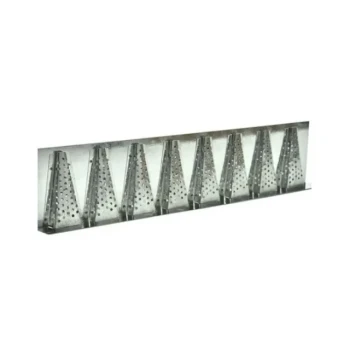
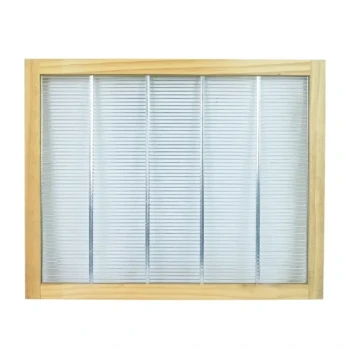
High-durability metal mesh acts as a critical control mechanism in pollination studies. When installed at beehive exits, its immediate purpose is to temporarily block honeybees from leaving the hive, creating a "closed-hive" state that stops their foraging activity while keeping the colony on-site.
By effectively toggling honeybee activity on and off, researchers can measure the specific ecological impact of honeybees on wild pollinators and plants without introducing confounding variables like changing weather or location.
Creating Controlled Experimental Conditions
The "Closed-Hive" Treatment
Researchers utilize this mesh to create distinct treatment groups within a single study area. By blocking the exits, they establish a "closed-hive" condition.
This ensures that any observed changes in the surrounding ecosystem are directly attributable to the absence of honeybee foragers, rather than natural fluctuations in the environment.
Eliminating Environmental Bias
A major challenge in field studies is that moving hives to a new location introduces new variables, such as different soil types or weather patterns.
Using mesh allows for comparisons within the same geographic and climatic conditions. Researchers can observe the exact same field with honeybees (open mesh) and without them (closed mesh).
Analyzing Ecological Interactions
Monitoring Wild Bee Visitation
The primary biological metric gathered during these "closed-hive" periods is the behavior of wild bees.
With honeybees temporarily excluded, researchers can record wild bee flower visitation frequencies. This data reveals how wild species behave when they do not have to compete with managed honeybees for resources.
Mapping Plant-Pollinator Networks
Beyond simple visitation counts, this method allows for the construction of complex interaction networks.
Scientists can map how the relationships between local flora and wild pollinators shift in the presence versus the absence of honeybees, providing a clearer picture of ecosystem dynamics.
Understanding the Operational Constraints
The Necessity of Durability
The specific requirement for high-durability metal is not accidental. Honeybees are persistent and can chew through or dismantle weaker barriers.
To ensure the integrity of the "closed-hive" treatment, the material must withstand the physical efforts of the colony attempting to exit.
The Temporary Nature of Exclusion
It is important to note that this intervention is designed to be temporary.
Permanently blocking exits would harm the hive. The mesh is a tool for creating short-term experimental windows, not for long-term exclusion.
Applying This Methodology
If your primary focus is Isolating Variables:
Use high-durability mesh to remove location and climate as variables, ensuring your data reflects only the impact of honeybee presence.
If your primary focus is Wild Pollinator Health:
Use the "closed-hive" intervals to assess how competition from honeybees alters the foraging efficiency and flower choices of native species.
This method remains the gold standard for conducting controlled, comparative pollination research in real-world environments.
Summary Table:
| Feature | Role in Pollination Studies | Research Benefit |
|---|---|---|
| Material Strength | Resists honeybee persistence and chewing | Ensures experimental integrity |
| Exclusion Control | Toggles honeybee foraging activity on/off | Isolates honeybees as a single variable |
| Environmental Stability | Allows on-site hive closure | Eliminates bias from moving hive locations |
| Ecological Mapping | Enables monitoring of wild bee behavior | Reveals competition-free visitation data |
Elevate Your Research & Operations with HONESTBEE
At HONESTBEE, we understand that high-quality, durable equipment is the backbone of successful beekeeping and scientific inquiry. Whether you are conducting complex pollination studies or managing a large-scale commercial apiary, our products are engineered for performance and reliability.
How we support our partners:
- Comprehensive Wholesale Offering: From high-durability hardware and hive components to advanced hive-making and honey-filling machinery.
- Specialized Industry Consumables: We supply a full spectrum of tools and materials designed for distributors and professional beekeepers.
- Strategic Value: Our equipment ensures consistency in data for researchers and efficiency in production for commercial operators.
Ready to upgrade your apiary infrastructure? Contact us today to discuss our wholesale solutions and discover how HONESTBEE can empower your business or research goals.
References
- Kate Borchardt, Amy L. Toth. Are honey bees altering wild plant–bee interactions in reconstructed native habitats? An investigation of summer season effects in row‐crop agroecosystems with prairie strips. DOI: 10.1111/een.13448
This article is also based on technical information from HonestBee Knowledge Base .
Related Products
- Beehive Entrance Reducer Guardian Metal Hive Entrance for Bees
- Durable 16 Way Circular Bee Escape for Efficient Honey Harvesting
- HONESTBEE Wooden Bee Escape Board with Triangle Mesh Design for Beekeeping
- Metal Hive Feet Bee Hive Stand for Ant Protection
- High-Definition Beekeeper Hat with Round Veil Mesh for Beekeeping
People Also Ask
- Why are entrance reducers used to counter hornet infestations? Protect Your Hive with Strategic Choke Points
- What is the purpose of an entrance reducer for a beehive? Strengthen Colony Defense and Prevent Robbery
- What are the proper guidelines for using hive entrance reducers? Master Temperature Control & Colony Defense
- Why is it critical to maintain a smaller entrance for a newly established bee hive? Boost Colony Growth and Security
- What is the physical mechanism behind the use of hive entrance reducers? Protect Your Bees from Vespa velutina