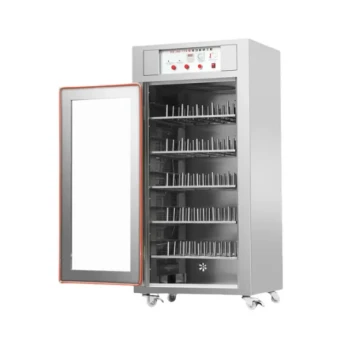
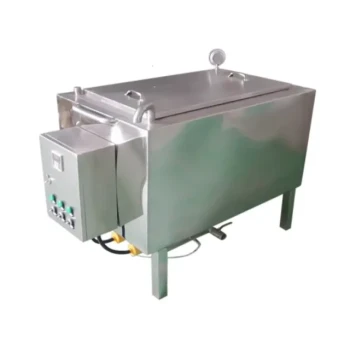
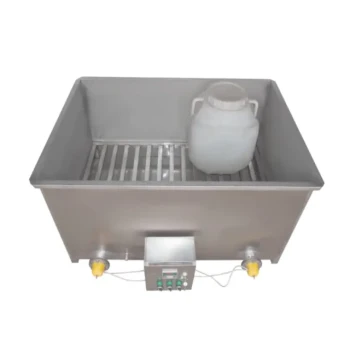
Industrial freeze drying equipment is essential for producing high-quality honey powder because it utilizes vacuum sublimation to remove moisture without heat, preserving the honey's delicate biological profile. Unlike traditional drying methods that cause structural collapse, lyophilization creates a porous microscopic structure that maintains the honey's original antioxidants, enzymes, and flavor. This process ensures the final powder remains highly soluble and retains the bioactivity required for premium health and food applications.
Core Takeaway: Industrial vacuum lyophilizers are the only technology capable of transforming honey into a shelf-stable powder while keeping its vital enzymes and antioxidants intact. By bypassing thermal degradation, this equipment delivers a high-purity product that meets the rigorous quality standards of the global B2B market.
Preserving Biological Potency and Enzymatic Activity
Maintaining Diastase and Antioxidant Levels
Honey is valued for its heat-sensitive compounds, including diastase enzymes and various antioxidants. Traditional heat-based drying often destroys these active substances, reducing the honey to a simple sweetener.
Industrial freeze drying operates at temperatures typically below -10 °C, ensuring these fragile molecules remain biologically active. This preservation is a key selling point for distributors targeting the nutraceutical and functional food sectors.
Sublimation vs. Thermal Degradation
The lyophilization process relies on vacuum sublimation, where ice turns directly into vapor without passing through a liquid phase. This prevents the "cooking" effect associated with spray drying or drum drying.
By maintaining pressures below 270 Pa, the equipment ensures the honey’s chemical composition remains unchanged. This results in a premium powder that mirrors the nutritional profile of fresh, raw honey.
Structural Integrity and Superior Solubility
Creating the Porous Microstructure
One of the primary technical advantages of freeze drying is the creation of a loose and porous microscopic structure. Because the honey is frozen solid before the moisture is removed, the physical "frame" of the product does not collapse.
This structural integrity prevents the powder from becoming a dense, sticky mass. A stable, non-clumping powder is far easier for wholesalers to store, transport, and repackage for end-users.
Enhancing Dissolution Rates for B2B Applications
The porous nature of lyophilized honey powder significantly improves solubility. When added to liquids, the powder rehydrates almost instantly due to the high surface area created by the freeze-drying process.
This makes it an ideal ingredient for manufacturers of instant beverage mixes and cosmetic formulations. Superior solubility reduces processing time for your clients, adding tangible value to your product offering.
Maximizing Shelf Life and International Compliance
Reducing Water Activity to Prevent Fermentation
Honey naturally contains moisture that can lead to fermentation and spoilage if not managed. Industrial freeze drying reduces water activity to exceptionally low levels, far below what is achievable through natural dehydration.
Low water activity inhibits the growth of yeast and bacteria, ensuring the powder remains stable without the need for synthetic preservatives. This helps products meet the "clean label" demands of modern consumers.
Meeting Global Trade Standards
To compete in international markets, honey products must adhere to strict standards like the Codex Alimentarius. Industrial-grade equipment provides the precision control necessary to hit these specific moisture targets consistently.
Reliable moisture control ensures that every batch is uniform, reducing the risk of shipment rejections. For distributors, this consistency is vital for maintaining long-term retail and manufacturing contracts.
Understanding the Trade-offs
While vacuum lyophilizers produce the highest quality powder, they require a higher initial capital investment compared to thermal dryers. The process is also more time-consuming, as sublimation is a slower physical transition than evaporation.
Operating these systems requires deep professional expertise to balance temperature and vacuum cycles correctly. Furthermore, because the resulting powder is highly porous, it is also hygroscopic and requires specialized, moisture-proof packaging to prevent re-absorption of humidity.
Strategic Sourcing for Production Excellence
Why a Full-Spectrum Partner Matters
Successful honey powder production requires more than just a lyophilizer; it requires a comprehensive equipment portfolio. From industrial-grade dehumidifiers for post-harvest moisture control to precision filling machines that prevent secondary contamination, every step of the chain impacts the final margin.
Partnering with a provider that offers one-stop sourcing ensures that all components—from mixing to final packaging—work in harmony. This integration reduces technical friction and accelerates your time-to-market.
How to Apply This to Your Business Goals
- If your primary focus is High-End Nutraceuticals: Prioritize equipment that guarantees maximum retention of diastase activity and antioxidants to justify premium pricing.
- If your primary focus is Supply Chain Reliability: Invest in automated filling and moisture-control systems to ensure every batch meets international trade specifications without deviation.
- If your primary focus is Rapid Market Entry: Seek a one-stop trading partner with deep industry expertise and ultra-fast delivery capabilities to minimize setup delays.
By leveraging industrial freeze-drying technology, you can provide a high-potency, stable, and soluble honey powder that meets the most demanding global standards.
Summary Table:
| Feature | Benefit for Honey Powder | B2B Value Proposition |
|---|---|---|
| Vacuum Sublimation | Preserves heat-sensitive enzymes & antioxidants | Premium nutraceutical-grade product |
| Porous Structure | Prevents clumping and ensures instant solubility | Efficient processing for food & cosmetic manufacturers |
| Low Water Activity | Eliminates fermentation without preservatives | Extended shelf life and international compliance |
| Precision Control | Uniform moisture content across all batches | High supply reliability and reduced rejection rates |
Scale Your Honey Production with HONESTBEE’s One-Stop Solutions
Are you looking to dominate the market with premium honey products or expand your wholesale inventory? HONESTBEE provides commercial apiaries and B2B distributors with a comprehensive, full-spectrum product portfolio. From specialized honey-filling machines and industrial processing equipment to a wide array of beekeeping tools and essential consumables, we are your dedicated partner in growth.
Why Partner with HONESTBEE?
- One-Stop Sourcing: Streamline your supply chain with everything from hive-making hardware to cultural merchandise.
- Rapid Fulfillment: Benefit from our ultra-fast delivery and efficient order fulfillment to meet market demands instantly.
- Professional Expertise: Leverage our deep industry knowledge to optimize your production efficiency and profit margins.
- Exceptional Service: Experience dedicated support and rapid response times tailored to the needs of wholesalers and resellers.
Ready to elevate your business? Contact HONESTBEE Today for a tailored wholesale quote and expert equipment consultation!
References
- Salma Farooq, Wani Suhana Ayoub. Honey Powder: Drying Methods, Physicochemical Properties, and Its Applications in Food Formulations. DOI: 10.1002/fpf2.70020
This article is also based on technical information from HonestBee Knowledge Base .
Related Products
- HONESTBEE Professional Cabinet Bottle Dryer
- 0.5T Capacity Honey Dehumidifier Dryer with Vacuum Heating and Thickening Filtering Machine
- Electric Commercial Beeswax Melter for Factory Use
- Economy Small Scale Honey Dryer Dehumidifier Thickening Machine
- High Quality Honey Dehumidifier Dryer Thickening Machine for Beekeeping
People Also Ask
- Why use a Cabinet Drier for pollen at 38–41°С? Protect Sample Integrity and Heavy Metal Data Accuracy
- What is the role of an industrial forced-air drying oven in bee bread fermentation? Optimize Moisture and Nutrients
- What is the primary purpose of a constant temperature drying oven in bee bread production? Achieve Perfect Fermentation
- How do forced circulation drying ovens sterilize beekeeping tools? Efficient Oxidation for Metal Equipment Safety
- What are the technical requirements for using a constant temperature drying oven for raw propolis? Expert Guide