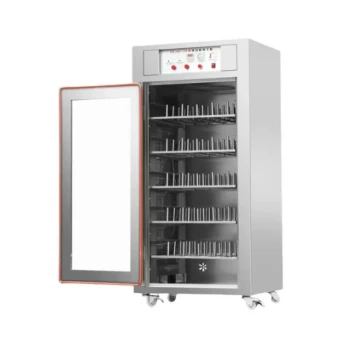
Precision drying is critical for data integrity. A high-precision Cabinet Drier is used to maintain temperatures between 38–41 °С to strike a delicate balance between removing moisture and preserving sample chemistry. This specific thermal window allows pollen to reach a consistent dry weight without causing thermal degradation of organic components or the loss of volatile heavy metals.
Accurate heavy metal analysis requires a stable baseline free from moisture interference. This temperature range ensures the sample is sufficiently dried for calculation purposes while preventing the evaporation of the very elements you are attempting to measure.
The Science of Sample Preparation
Achieving Consistent Dry Weight
For analytical results to be valid, they must be calculated based on a constant mass. Moisture content in pollen can fluctuate wildly depending on storage and environmental conditions.
By processing samples within the 38–41 °С range, you effectively remove water weight. This establishes a stable "dry weight" baseline, which is the essential denominator for calculating accurate heavy metal concentrations.
Preventing Volatile Loss
Certain forms of heavy metals are volatile and sensitive to heat. If the drying temperature exceeds the recommended limit, these elements can vaporize and exit the sample.
Maintaining the environment below 41 °С ensures these volatile heavy metal forms remain trapped within the pollen matrix. This prevents artificially low readings that would compromise the accuracy of your study.
Minimizing Organic Degradation
Pollen is a complex organic material. High temperatures can alter its physical structure and degrade its organic components.
The 38–41 °С range acts as a gentle preservation method. It desiccates the sample without "cooking" it, ensuring the biological matrix remains intact for analysis.
Understanding the Risks of Improper Drying
The Danger of Overheating (> 41 °С)
Exceeding the upper temperature limit is the most common cause of data skewing in volatile metal analysis. Once a sample is overheated, volatile components are lost permanently.
This results in an underestimation of heavy metal concentrations. No amount of post-processing correction can recover the data lost to thermal evaporation.
The Danger of Underheating (< 38 °С)
failing to reach the minimum temperature threshold often leaves residual moisture within the pollen grains.
Water adds weight to the sample, which dilutes the calculated concentration of heavy metals. This leads to results that appear lower than reality because the "dry weight" figure is artificially inflated by water mass.
Ensuring Analytical Accuracy
To obtain reliable data from pollen samples, strict adherence to this thermal window is required.
- If your primary focus is preventing data loss: Ensure the drier never exceeds 41 °С to protect volatile heavy metals from evaporating.
- If your primary focus is calculation accuracy: Verify the temperature stays above 38 °С to guarantee total moisture removal for a valid dry weight baseline.
Controlled drying is the fundamental step that transforms a biological sample into a reliable data point.
Summary Table:
| Factor | Temperature Range | Impact on Pollen Sample Analysis |
|---|---|---|
| Optimal Drying | 38°C – 41°C | Achieves consistent dry weight while preserving volatile heavy metals. |
| Underheating | < 38°C | Residual moisture remains, leading to artificially low concentration readings. |
| Overheating | > 41°C | Causes thermal degradation and evaporation of volatile heavy metal elements. |
| Goal | N/A | Establishes a stable baseline for accurate analytical results and data integrity. |
Maximize Your Pollen Processing Efficiency with HONESTBEE
At HONESTBEE, we understand that precision is the backbone of a successful commercial apiary or distribution business. Whether you are analyzing samples for quality control or processing bulk yields, our professional-grade equipment ensures your products meet the highest industry standards.
Why Partner with HONESTBEE?
- Comprehensive Equipment Solutions: From high-precision drying cabinets and hive-making machinery to advanced honey-filling lines.
- Industry-Leading Supplies: A full spectrum of beekeeping tools and essential consumables designed for commercial scale.
- Brand Value: We help distributors and large-scale apiaries enhance their operational value through specialized hardware and honey-themed cultural merchandise.
Ready to elevate your beekeeping operations with tools built for accuracy and durability?
Contact HONESTBEE Today for Wholesale Solutions
References
- A. T. Atarshchykova, Volodymyr Pоstоienkо. Monitoring of the content and migration of heavy metals in the soils–melliferous plants–bees–beekeeping products system in biocenoses of the combat areas. DOI: 10.15407/agrisp10.03.074
This article is also based on technical information from HonestBee Knowledge Base .
Related Products
- HONESTBEE Professional Cabinet Bottle Dryer
- Economy Small Scale Honey Dryer Dehumidifier Thickening Machine
- 0.5T Capacity Honey Dehumidifier Dryer with Vacuum Heating and Thickening Filtering Machine
- High Quality Honey Dehumidifier Dryer Thickening Machine for Beekeeping
People Also Ask
- What is the role of an industrial forced-air drying oven in bee bread fermentation? Optimize Moisture and Nutrients
- What is the primary purpose of a constant temperature drying oven in bee bread production? Achieve Perfect Fermentation
- How do forced circulation drying ovens sterilize beekeeping tools? Efficient Oxidation for Metal Equipment Safety
- What are the technical requirements for using a constant temperature drying oven for raw propolis? Expert Guide
- How do professional-grade Pollen Drying Ovens preserve active ingredients? Ensure Bioactive Potency with Precision