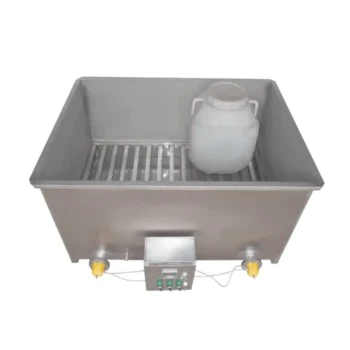
Industrial-grade constant temperature heating is the linchpin of safe specialty honey processing. This equipment provides the continuous, stable thermal energy necessary to maintain honey in a specific boiling state during the detoxification phase. By sustaining these precise temperatures, the equipment alters the chemical stability of volatile toxins like Grayanotoxin and facilitates the physical removal of toxic froth, rendering the honey safe for human consumption.
Detoxification is not merely about heating; it is about maintaining a specific thermal environment that forces chemical changes in toxins. Industrial equipment ensures this environment is stable and repeatable, eliminating the variability that leads to unsafe batches.
The Mechanics of Thermal Detoxification
Destabilizing Chemical Toxins
Certain specialty honeys contain naturally occurring neurotoxins, such as Grayanotoxin, derived from the nectar of specific plants like rhododendrons.
To neutralize these compounds, the honey must undergo a specific heating process, often involving mixing with other substances. Industrial heating equipment alters the chemical stability of these toxins, effectively breaking them down or rendering them inert through sustained thermal exposure.
The Role of the Boiling State
Achieving detoxification requires maintaining the honey mixture in a constant boiling state.
Standard heating methods often suffer from temperature fluctuations, which can interrupt the chemical breakdown process. Industrial-grade equipment delivers continuous thermal energy, ensuring the mixture remains at the exact required temperature throughout the entire processing duration.
Physical Removal via Froth
The boiling process serves a dual purpose: chemical alteration and physical separation.
As the honey boils under controlled temperatures, impurities and toxin-laden residues rise to the surface in the form of froth. Industrial equipment is designed to facilitate the generation and subsequent removal of this froth, physically extracting a significant portion of the toxicity from the final product.
Why "Industrial-Grade" Materials Are Critical
Preventing Heavy Metal Leaching
Honey is naturally acidic. When heated, its acidity increases the risk of chemical leaching if it contacts reactive metals like aluminum or low-quality alloys.
Industrial-grade equipment is typically constructed from high-specification stainless steel. This prevents the release of heavy residues—such as lead, cadmium, or copper—into the honey, ensuring the detoxification process does not inadvertently introduce new chemical hazards.
Consistency and HACCP Compliance
In manual or low-tech processing, human error can lead to uneven heating, leaving pockets of active toxins.
Industrial machinery automates this critical control point. By standardizing the thermal input, producers meet strict HACCP (Hazard Analysis and Critical Control Points) requirements, ensuring that every drop of honey in the batch has undergone the exact same sterilization and detoxification procedure.
Understanding the Trade-offs
Thermal Impact on Nutritional Value
While heat is necessary for detoxification, it is a double-edged sword.
Prolonged exposure to high temperatures can degrade natural enzymes and volatile aromatics that give honey its value. The trade-off is unavoidable: you must prioritize toxin elimination over the preservation of certain raw properties to ensure the product is not poisonous.
Complexity and Cost
Implementing industrial constant temperature systems requires significant capital investment compared to traditional methods.
However, relying on lower-cost, manual heating methods introduces a high risk of inconsistency. In the context of toxic honeys, a single failure in temperature control can result in a dangerous product, making the cost of industrial equipment a necessary insurance against liability.
Making the Right Choice for Your Goal
To select the appropriate processing equipment, you must identify your primary operational objective:
- If your primary focus is Consumer Safety: Prioritize equipment with redundant temperature controls and automated mixing to ensure absolute uniformity in toxin neutralization.
- If your primary focus is Regulatory Compliance: Choose systems constructed from certified food-grade stainless steel that explicitly prevent heavy metal leaching during acidic heating cycles.
Precision heating transforms a potentially hazardous natural substance into a commercially viable product, serving as the definitive barrier between raw toxicity and consumer safety.
Summary Table:
| Key Feature | Benefit | Role in Detoxification |
|---|---|---|
| Constant Temperature | Stable boiling state | Ensures complete chemical breakdown of toxins like Grayanotoxin. |
| Stainless Steel Build | Acid-resistant | Prevents heavy metal leaching (lead/cadmium) during acidic heating. |
| Automated Control | HACCP compliance | Standardizes processes to eliminate human error and unsafe batches. |
| Froth Management | Impurity removal | Facilitates the physical separation of toxic residues from the honey. |
Scale Your Apiary Operations with HONESTBEE
Ensure the highest safety standards for your specialty honey products with professional-grade equipment. HONESTBEE caters to commercial apiaries and distributors with a comprehensive wholesale offering designed for industry leaders.
From industrial-grade heating and honey-filling machines to hive-making hardware and essential industry consumables, we provide the full spectrum of tools needed for a safe and efficient supply chain.
Ready to upgrade your production? Contact us today to learn how our machinery and honey-themed cultural merchandise can add value to your business.
References
- Abdülkadır Gündüz, Hikmet Öksüz. The Honey, The Poison, The Weapon. DOI: 10.1016/j.wem.2011.01.006
This article is also based on technical information from HonestBee Knowledge Base .
Related Products
- 0.5T Capacity Honey Dehumidifier Dryer with Vacuum Heating and Thickening Filtering Machine
- Professional Thermostatic Conical Honey Melter
- Honey Concentrating Vacuum Heating Thickening Machine Dehumidifier for Honey
- Professional Stainless Steel Honey Filtering Machine with Water Bath Heating for Beekeeping
- High Quality Honey Dehumidifier Dryer Thickening Machine for Beekeeping
People Also Ask
- What is the primary function of professional dehumidification equipment in honey processing? Stability & Quality
- How to dry up honey? The Safe Guide to Stabilizing Honey and Preventing Fermentation
- What is the process for using a dehumidifier to lower honey's moisture content? Expert Drying Techniques
- How to decrease moisture in honey? Prevent Fermentation and Ensure Long-Term Quality
- How to remove humidity from honey? Protect Your Harvest from Fermentation