
Preventing leaks in a bee feeder is critical because it protects your individual bees from drowning and, more importantly, stops your hive from broadcasting a signal that can trigger a devastating behavior known as "robbing," which can lead to the colony's collapse.
A leaking feeder transforms a supportive food source into an open invitation for disaster. It alerts aggressive bees from stronger, nearby colonies, turning your hive into a target and creating a dangerous environment that can quickly overwhelm its defenses.
The Immediate Danger to Your Bees
A leaky feeder presents direct, physical risks to the bees it's meant to help. Even a slow drip can create a sticky, hazardous zone around the hive.
The Problem of Drowning
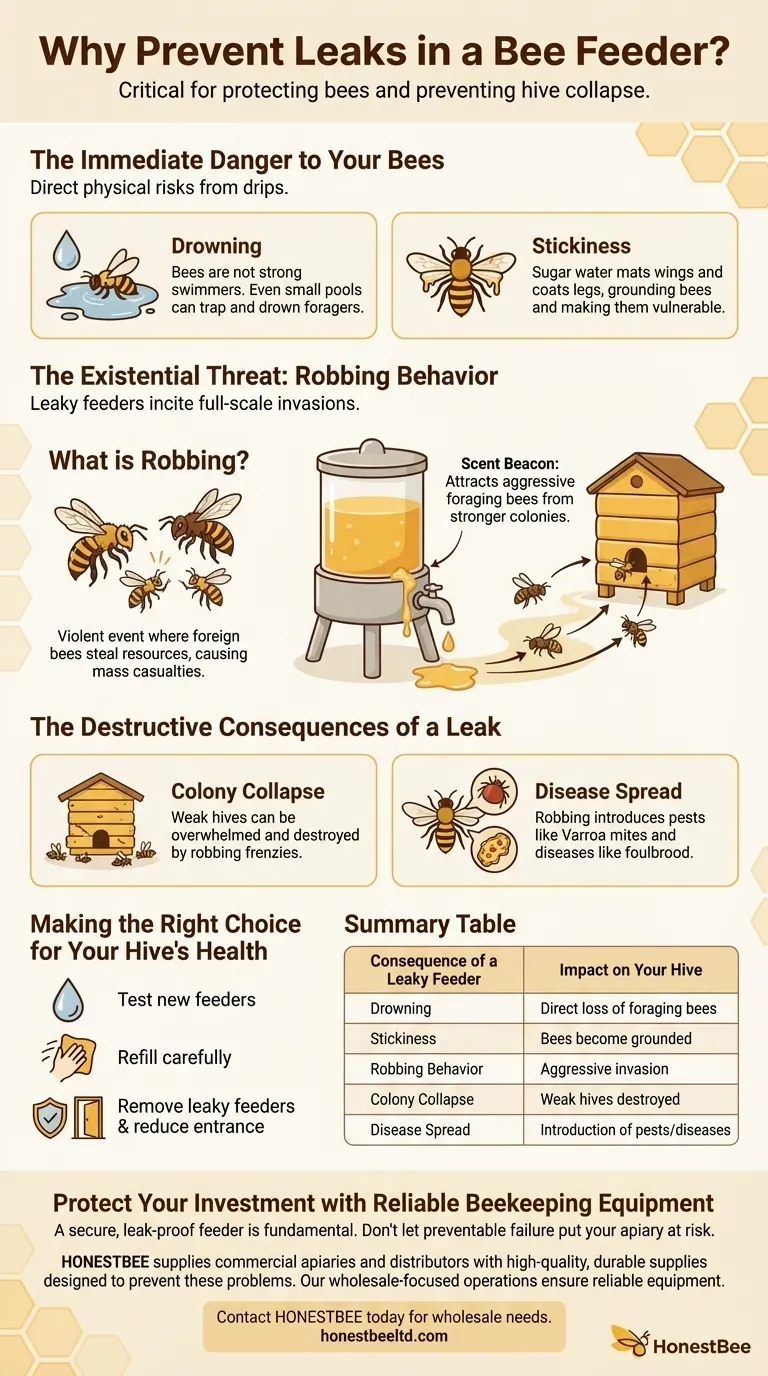
Bees are not strong swimmers. A pool of sugar water, even a small one, can easily trap and drown foraging bees trying to drink from it. This directly reduces your colony's population.
The Hazard of Stickiness
Sugar water that gets on a bee's body can mat its wings and coat its legs. This makes it impossible for the bee to fly, leaving it grounded and vulnerable to predators or chilling temperatures.
The Existential Threat: Robbing Behavior
While losing a few bees is unfortunate, the greatest danger from a leaky feeder is its potential to incite a full-scale hive invasion.
What is Robbing?
Robbing is when honey bees from one colony attack another to steal its honey or sugar syrup stores. This is an aggressive, violent event that can result in mass casualties on both sides.
How a Leak Triggers Robbing
A puddle of sugar water outside the hive is a powerful scent beacon. It attracts foraging bees from other, often stronger, colonies. Once they get a taste of this "free" food, they will trace it back to its source: your hive.
The Escalation of an Attack
The initial robber bees recruit others from their colony. They will attempt to force their way past your hive's guard bees, leading to intense fighting at the entrance. If the robbers succeed, they will overwhelm the colony, kill the defending bees, and strip the hive of all its resources.
The Destructive Consequences of a Leak
The aftermath of a leak-induced robbing event can be catastrophic, especially for a colony that is already small or struggling.
The Collapse of a Weak Colony
A young, small, or weak hive does not have enough guard bees to fend off a determined robbing attack from a large, powerful colony. For these hives, a robbing frenzy is often a death sentence.
The Spread of Pests and Disease
Robbing creates a bridge between hives. Bees from an invading colony can introduce pests like Varroa mites or diseases like foulbrood into your hive, creating long-term health problems even if your colony survives the initial attack.
Making the Right Choice for Your Hive's Health
Your goal is to provide supplemental food without creating a security risk. A secure feeder is non-negotiable.
- If you are setting up a new feeder: Test it with plain water away from the hive first to ensure all seams and joints are completely sealed.
- If you are refilling an existing feeder: Perform refills quickly and carefully, wiping up any drips. Avoid spilling any syrup on or around the hive.
- If you suspect robbing has started: Immediately remove the leaky feeder and reduce the size of the hive's entrance to make it easier for your bees to defend.
By ensuring your feeder is leak-free, you guarantee it remains a tool for support, not a trigger for destruction.
Summary Table:
| Consequence of a Leaky Feeder | Impact on Your Hive |
|---|---|
| Drowning | Direct loss of foraging bees, reducing colony population. |
| Stickiness | Bees become grounded, unable to fly, and vulnerable. |
| Robbing Behavior | Aggressive invasion from other colonies to steal resources. |
| Colony Collapse | Weak hives can be overwhelmed and destroyed. |
| Disease Spread | Robbing can introduce pests and diseases like Varroa mites. |
Protect Your Investment with Reliable Beekeeping Equipment
A secure, leak-proof feeder is fundamental to hive health. Don't let preventable equipment failure put your apiary at risk.
HONESTBEE supplies commercial apiaries and beekeeping equipment distributors with high-quality, durable supplies designed to prevent these exact problems. Our wholesale-focused operations ensure you get the reliable equipment your business depends on.
Contact HONESTBEE today to discuss your wholesale needs and ensure your feeders support your colonies, not threaten them.
Visual Guide
Related Products
- Rapid Bee Feeder White Plastic 2L Round Top Feeder for 8 or 10-Frame Bee Hives
- White Plastic 0.5L Beekeeping Entrance Feeder for Bees
- HONESTBEE Entrance Bee Feeder Professional Hive Nutrition Solution for Beekeeping
- HONESTBEE Professional Entrance Bee Feeder Hive Nutrition Solution
- Boardman Entrance Bee Feeder Durable Galvanized Steel and Wood Construction for Beekeeping
People Also Ask
- What should be done with feeders and equipment after feeding bees? Essential Steps for Apiary Health
- What should be done if feed in a feeder is not consumed by the bees? Prevent Hive Mold with Prompt Feed Management
- What is the necessity of specialized internal or entrance feeders? Secure Your Hive with Professional Feeding Tools
- How do bee feeders work to preserve colony health during nectar shortages? Essential Guide for Beekeepers
- How quickly does a medium to strong colony usually empty a feeder? A Beekeeper's Guide to Hive Health

















