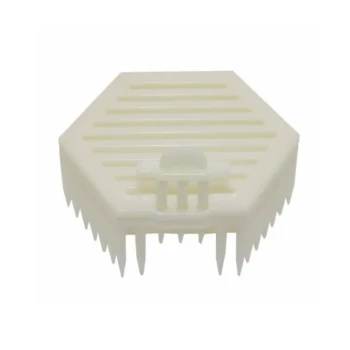
The primary necessity of using a screened cage unit during the emergence phase is to impose immediate physical isolation on virgin queens while maintaining environmental stability. Without this hardware, the first queen to emerge would instinctively seek out and destroy rival queen cells, resulting in a total loss of your remaining stock.
The screened cage serves a dual purpose: it acts as a biological firewall to prevent lethal combat between queens, and it functions as a management tool that enables precise inventory and quality control measurements.
Preserving the Biological Stock
Preventing Lethal Combat
The instinct of a newly emerged virgin queen is to eliminate competition. If left unconfined, a queen will locate other queen cells and kill the developing occupants. The screened cage unit isolates each cell, neutralizing this aggression and ensuring the survival of every viable queen in the batch.
Ensuring Adequate Air Circulation
Unlike solid containers or glass vials, the mesh structure of a screened unit permits free airflow. This prevents the buildup of humidity and heat that could suffocation or stress the emerging bee. Proper ventilation mimics the natural hive environment more effectively than sealed isolation methods.
Enhancing Operational Efficiency
Accurate Inventory Management
Screened units transform a chaotic emergence environment into an organized system. Technical staff can visually confirm emergence status without opening the container or disturbing the bee. This allows for an exact count of viable queens, reducing uncertainty in production planning.
Facilitating Quality Control
The cage unit makes the subsequent handling of individual queens significantly safer and easier. Technicians can retrieve specific queens for morphological measurements or weighing without risking the escape of others. This individual access is critical for selecting high-vigor queens before they are introduced to mating colonies.
Understanding the Trade-offs
Isolation vs. Socialization
While the screened cage is essential for survival during emergence, it creates an artificial environment of total isolation. Prolonged isolation without attendant bees can induce stress responses in the queen. To mitigate this, the cage phase should be viewed as temporary; as noted in supporting literature, queens eventually require the introduction of attendant workers to maintain physiological homeostasis through trophallaxis (feeding and grooming).
Monitoring Environmental Exposure
While the screen provides necessary ventilation, it does not buffer temperature changes as well as a solid wall or glass container might. Therefore, screened cages must be kept within a high-precision incubator (ideally at stable hive temperatures like 34°C) to prevent low-temperature stress. The screen relies on the ambient environment being perfect, as the queen cannot thermoregulate effectively on her own.
Making the Right Choice for Your Goal
To optimize your queen rearing process, consider the following applications of this hardware:
- If your primary focus is maximizing yield: Use screened cages to guarantee that 100% of emerged queens are protected from fratricide.
- If your primary focus is genetic selection: Leverage the individual isolation of the cages to weigh and measure each queen immediately upon emergence, discarding those that do not meet morphological standards.
By utilizing screened cage units, you convert the volatile emergence phase into a controlled, measurable, and safe process for your biological assets.
Summary Table:
| Key Benefit | Primary Function | Operational Impact |
|---|---|---|
| Physical Isolation | Prevents lethal combat between rival queens | Guarantees 100% survival of viable stock |
| Air Circulation | Permits free airflow and regulates humidity | Mimics natural hive conditions; prevents stress |
| Inventory Control | Enables visual confirmation of emergence | Allows for precise production and yield planning |
| Quality Control | Facilitates safe handling for measurements | Simplifies morphological selection of high-vigor queens |
Optimize Your Queen Rearing Success with HONESTBEE
Maximize your apiary's productivity and eliminate queen loss during critical emergence phases. As a premier partner for commercial apiaries and global distributors, HONESTBEE provides the industry's most reliable queen rearing systems, specialized hardware, and essential consumables. Whether you are scaling up production with hive-making machinery or refining your genetic stock with precision isolation tools, we deliver the expertise and wholesale equipment you need to succeed.
Ready to elevate your beekeeping operations? Contact our specialists today to discuss your wholesale needs
References
- H. T. Abou El-Enain, Montaser Elsayed Ali. MORPHOMETRICAL STUDIES ON QUEEN BEES REARED FOR HIGH QUALITY AND QUANTITY. DOI: 10.21608/jppp.2007.219402
This article is also based on technical information from HonestBee Knowledge Base .
Related Products
- Langstroth Screen Bottom Board for Beekeeping Wholesale
- Australian Pine Wood Langstroth Screen Bottom Board for Wholesale
- 8 Frame and 10 Frame Propolis Trap Collector Screen for Propolis Collection
- Hexagonal Direct Comb Introduction Queen Bee Cage
People Also Ask
- What role do screen bottom boards and monitoring inserts play in assessing Varroa mite mortality and maintaining hive hygiene in Langstroth hives?
- What is the primary function of a standard screen bottom board when assessing honeybee grooming behavior? - Key Mite Data
- What is the primary function of a screen bottom board? Achieve Accurate Varroa Mite Assessment in Your Apiary
- Why is the combination of a screen bottom board and a sticky trap board essential for monitoring Varroa mite? Guide
- Why might a screen bottom board be less effective for pest control? Understanding the 'Mixed Sunlight' Complication