Qualitative filter paper functions as the critical separation mechanism within the laboratory analysis of honey. Specifically utilized during the filtration phase of honey dilution, its primary role is to physically capture and isolate insoluble contaminants—such as insect fragments, hair, and wood chips—that would otherwise be lost in the liquid filtrate.
By providing precise retention of particulate matter, qualitative filter paper transforms a liquid honey sample into an observable collection of physical impurities, establishing the necessary conditions for accurate microscopic quality assessment.
The Mechanics of Contaminant Isolation
Precision Retention
The effectiveness of qualitative filter paper lies in its specific pore size retention.
As diluted honey passes through the paper, the liquid flows through while solid particles larger than the pore rating are trapped on the surface.
This ensures that distinct insoluble foreign matter is physically separated from the honey matrix.
The Dilution Context
Honey is often too viscous to filter effectively in its raw state for analytical purposes.
The primary reference indicates that filtration occurs during the honey dilution phase.
This step thins the honey to allow flow, leaving the filter paper to act as a sieve for the non-soluble debris that indicates poor hygiene or processing standards.
Enabling Microscopic Analysis
Creating a Clear Background
Once filtration is complete, the filter paper serves as the viewing platform for inspection.
It creates a clear, high-contrast background that allows laboratory technicians to easily identify contaminants.
Without this solid backdrop, identifying translucent or small particles within a viscous liquid would be prone to significant error.
Preventing Evidence Loss
The fundamental goal of purity detection is an accurate inventory of foreign matter.
If contaminants were to pass into the filtrate, the analysis would yield a false negative, suggesting the honey is purer than it is.
Qualitative filter paper ensures that specific classes of contaminants are retained on the surface for counting and identification.
Understanding the Trade-offs
Flow Rate vs. Retention
While qualitative paper provides excellent retention for analysis, it creates significant resistance.
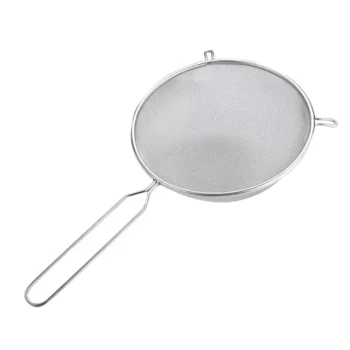
Unlike the mesh screens used in commercial honey processing—which maximize flow rate to remove wax and dust for consumer appeal—laboratory filter paper prioritizes capture efficiency over speed.
Using paper that is too fine may lead to clogging during the dilution phase, while paper that is too coarse will fail to trap smaller insect fragments, compromising the microscopic analysis.
Consumable Quality
Not all filter papers are created equal.
As noted in the context of beekeeping consumables, the quality of the input affects the final assessment.
Low-quality filter paper may shed its own fibers, introducing artifacts that confuse the microscopic analysis and distort purity results.
Ensuring Accuracy in Purity Testing
To ensure the integrity of your honey purity detection, align your consumable choice with your specific objective:
- If your primary focus is microscopic analysis: Select qualitative filter paper with a pore size specifically rated to capture target insolubles (like insect fragments) to ensure a distinct background for inspection.
- If your primary focus is commercial processing: Utilize standard honey filters or screens with heating to maximize flow rate and visual appeal, understanding that this is distinct from analytical detection.
- If your primary focus is source control: Audit the supply chain of your consumables to prevent the introduction of chemical pollutants or low-quality materials that could compromise testing accuracy.
The reliability of your purity detection relies not just on the microscope, but on the integrity of the medium that captures the sample.
Summary Table:
| Feature | Role in Honey Purity Detection | Benefit for Lab Analysis |
|---|---|---|
| Pore Size Retention | Precisely traps insoluble matter like insect fragments | Ensures physical separation of contaminants |
| Visual Background | Provides a clear, high-contrast surface | Enables accurate microscopic identification |
| Dilution Support | Works with thinned honey to act as a sieve | Prevents evidence loss and false negatives |
| Capture Efficiency | Prioritizes retention over liquid flow speed | Delivers reliable data for quality assessment |
Optimize Your Honey Quality Control with HONESTBEE
Ensure your honey meets the highest industry standards with premium consumables and professional-grade equipment. HONESTBEE serves commercial apiaries and distributors worldwide with a comprehensive wholesale range of beekeeping tools and advanced machinery.
Our portfolio includes everything from specialized hive-making and honey-filling machines to essential industry consumables and honey-themed merchandise. Let us help you streamline your production and enhance your analytical accuracy.
Ready to scale your operation? Contact us today for expert solutions and wholesale pricing!
References
- Josyane Brasil da Silva, Carina Martins de Moraes. Evaluation of physic contamiants and contamination with coliforms, molds and yeasts of honey from the Northern Brazil. DOI: 10.4322/rbcv.2021.0022
This article is also based on technical information from HonestBee Knowledge Base .
Related Products
- Professional Stainless Steel Honey Filter with Support Handle
- Conical Nylon Honey Strainer Filter Bag for Beekeeping and Honey Filtration
- Professional Honey Filter with Tripod Support Stand
- Two-Stage Plastic Honey Filter for Buckets
- Electric Double Wall Honey Filtering Machine Purifier Equipment for Honey Processing Plant
People Also Ask
- Why are stainless steel filters essential during the initial purification phase of honey processing? Ensure Purity
- What are the benefits of using a high-quality honey filter? Elevate Purity and Preserve Natural Flavor
- What is the primary purpose of honey filters? Achieve Professional Clarity & Pure Honey Quality
- What micron filter should I use for honey? Choose the Right Filter for Sales or Competitions
- Why do people filter honey? For Clarity, Stability, and Consumer Appeal