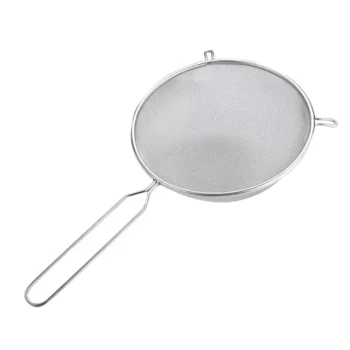
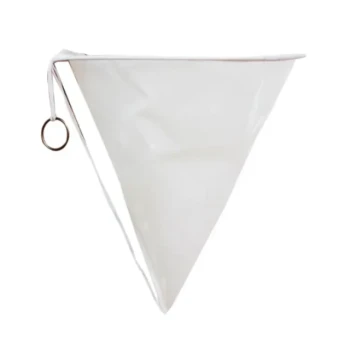
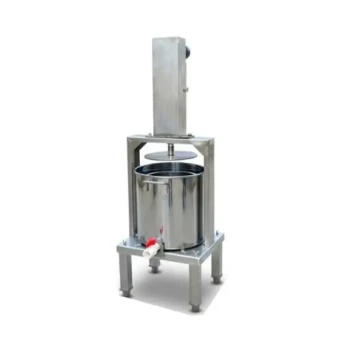
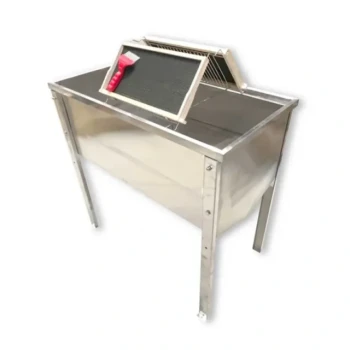
Stainless steel filters are the critical control point in early honey processing because they combine mechanical precision with chemical inertness. They provide the essential physical filtration needed to remove wax particles and debris immediately after uncapping and centrifugation. Crucially, the material choice withstands the natural acidity of honey, preventing chemical contamination while ensuring the final product meets rigorous food safety and hygiene standards.
The core value of stainless steel filtration extends beyond simple debris removal; it safeguards the chemical integrity of the honey. By resisting corrosion in an acidic, high-sugar environment, these filters prevent metal ion leaching, ensuring the product retains its natural sensory profile and visual clarity.
The Chemistry of Processing Equipment
Withstanding Natural Acidity
Honey is a naturally acidic substance. When processing equipment contacts this acidic environment, standard metals can corrode or degrade. Stainless steel is chemically inert, providing a stable surface that refuses to react with the honey’s complex chemical structure.
Preventing Contamination
Because stainless steel is corrosion-resistant, it prevents metal ions from leaching into the honey. This is vital for maintaining physicochemical stability and ensuring no foreign chemical compounds compromise the product's safety.
Preserving Sensory Purity
Chemical interactions between machinery and food products can introduce off-odors or metallic tastes. The inert nature of stainless steel ensures that the sensory purity—the natural taste and smell—of the honey remains unaltered during the filtration process.
Achieving Mechanical Precision
Removing Macroscopic Impurities
The primary physical role of these filters is to intercept large contaminants introduced during harvesting. This includes wax debris, bee fragments, larval remains, and other environmental particulates that lower the quality of the raw product.
Enhancing Market Grade
Visual appeal is a primary driver of market value. By effectively removing water-insoluble matter, stainless steel filters significantly improve the transparency and clarity of the honey, directly elevating its market grade.
Multi-Stage Filtration
Professional systems often employ a dual-layer or multi-layer gradient process. A primary filter (e.g., 2mm) tackles large solids, while a finer filter (e.g., 0.5mm) captures minute impurities, ensuring a polished final look without stripping essential nutrients.
Understanding the Trade-offs
The Risk of Over-Filtration
While clarity is desirable, filtration must be balanced against biological integrity. If the stainless steel mesh is too fine, it may remove microscopic pollen grains, which are essential for verifying the honey's botanical origin and nutritional value.
Flow Rate vs. Precision
Higher precision filtration (finer mesh) creates significant resistance, especially given honey's high viscosity. Operators must balance the need for particle removal against the efficiency of the production line to prevent bottlenecks or excessive pressure buildup.
Making the Right Choice for Your Goal
To select the appropriate filtration strategy for your processing line, consider your specific end-product requirements:
- If your primary focus is Visual Clarity: Prioritize a multi-stage gradient filtration system ending with a fine mesh (0.5mm) to maximize transparency and retard crystallization.
- If your primary focus is Botanical Integrity: Utilize a coarser mesh or muslin approach that removes visible debris like wax but allows microscopic pollen grains to pass through.
- If your primary focus is Food Safety Compliance: Ensure all equipment certifications verify the use of food-grade stainless steel to guarantee zero chemical leaching and full adherence to international hygiene standards.
Investing in high-quality stainless steel filtration is not just about cleaning the honey; it is about respecting the chemistry of the product to deliver a safe, stable, and superior consumer experience.
Summary Table:
| Feature | Benefit to Honey Processing |
|---|---|
| Chemical Inertness | Prevents corrosion from natural acidity and avoids metal ion leaching. |
| Material Durability | Withstands high viscosity pressure and allows for frequent, hygienic cleaning. |
| Mechanical Precision | Effectively removes wax debris, bee fragments, and environmental particulates. |
| Visual Enhancement | Improves transparency and market grade by removing water-insoluble matter. |
| Customizable Mesh | Allows for multi-stage filtration to balance clarity with botanical integrity. |
Elevate Your Honey Quality with HONESTBEE Solutions
Maintaining the chemical integrity and visual clarity of your honey is essential for commercial success. HONESTBEE provides professional-grade stainless steel filtration systems and high-capacity honey-filling machinery designed specifically for the rigorous demands of commercial apiaries and global distributors.
From specialized hardware to essential industry consumables, our comprehensive wholesale offering ensures your production line meets the highest food safety standards while maximizing efficiency.
Ready to scale your honey processing or distribution business? Contact us today to discuss our wholesale equipment solutions!
References
- Themis Jesus Silva, Rafael Navas. Apicultura como atividade de desenvolvimento e conservação do bioma Caatinga. DOI: 10.14393/rct153816
This article is also based on technical information from HonestBee Knowledge Base .
Related Products
- Professional Stainless Steel Honey Filter with Support Handle
- Professional Stainless Steel Honey Filtering Machine with Water Bath Heating for Beekeeping
- Stainless Steel Triangle Support Honey Strainer and Filters
- Stainless Steel Double Layer Honey Strainer Sieve Filters
- Heavy Duty 304 Stainless Steel Honey Dipper
People Also Ask
- What are the benefits of using a high-quality honey filter? Elevate Purity and Preserve Natural Flavor
- What is the primary purpose of honey filters? Achieve Professional Clarity & Pure Honey Quality
- What micron filter should I use for honey? Choose the Right Filter for Sales or Competitions
- Why do people filter honey? For Clarity, Stability, and Consumer Appeal
- Why is filtering honey an important step in honey processing? Ensure Purity, Clarity & Marketability