Specialized artificial insemination equipment is necessary because commercial queen breeding depends on genetic control that natural mating cannot reliably provide. Honey bees mate in flight with multiple drones from an uncontrolled mating pool, making parentage difficult to verify. Instrumental insemination lets breeders select specific drones, combine semen from chosen lines, and reproduce desirable traits with greater consistency across generations.
The central value of specialized equipment is control: it converts queen breeding from an uncertain open-mating process into a repeatable genetic improvement program. This supports hybrid vigor, line maintenance, trait selection, and more reliable commercial production of high-quality queens.
Why Natural Mating Is Not Enough
Open mating creates genetic uncertainty
Virgin queens typically mate during flight with drones from the surrounding environment. In a commercial breeding program, those drones may come from unrelated colonies, competing breeding lines, or unmanaged local populations.
As a result, breeders cannot reliably guarantee the queen’s paternal lineage through open mating alone. This makes it difficult to produce genetically uniform queens or accurately compare the performance of different crosses.
Environmental conditions affect breeding results
Natural mating also depends on weather, drone availability, mating yards, and the surrounding bee population. These variables can interrupt breeding schedules and make production inconsistent.
Artificial insemination reduces dependence on these external factors by allowing mating to take place under controlled conditions, including when specific drones are unavailable in the local environment.
Uncontrolled mating can introduce unwanted genetics
For breeders working to maintain a pure line or produce a defined hybrid, unmanaged drone competition creates a risk of genetic contamination. A queen may receive sperm from drones that do not match the intended breeding plan.
Specialized insemination equipment helps isolate the intended genetic contribution and maintain the accuracy of purebred, line-bred, or hybrid queen production.
What Specialized Equipment Makes Possible
Precise selection of drone parentage
Instrumental insemination allows technicians to collect semen from specifically selected drones. The breeder can then inseminate a virgin queen with semen from one chosen drone or pool semen from multiple selected drone lines.
This supports directional selection for traits such as honey productivity, disease resistance, hygienic behavior, Varroa resistance, and local adaptation.
Controlled line breeding
Closed-population and line-breeding programs require deliberate control over mating relationships. Artificial insemination makes planned crosses possible, including tightly controlled related-line matings when they are part of a formal breeding design.
This level of control helps breeders fix desirable characteristics and evaluate inheritance across generations. It also allows them to manage inbreeding risks rather than leaving mating outcomes to chance.
Maintenance of sex-allele diversity
Honey bee breeding programs must pay close attention to genetic diversity at the sex-determining locus. Excessive narrowing of this diversity can contribute to inbreeding problems and reduced brood viability.
By controlling drone and queen parentage, breeders can plan matings that preserve necessary sex-allele diversity while still selecting for economically valuable traits.
Production of predictable hybrid generations
Hybrid breeding aims to combine selected parental lines and capture heterosis, commonly known as hybrid vigor. According to the primary reference, artificial insemination-based hybrid breeding can produce honey productivity increases of approximately 34% to 50% compared with line-bred strains.
Those results depend on accurate parentage and repeatable crosses. Without precise mating control, the performance of the resulting hybrid generation becomes difficult to reproduce or verify.
How the Equipment Supports Commercial Operations
Precision insemination instruments
Micro-syringes, insemination needles, and controlled micro-injection systems enable semen to be delivered accurately to the queen. Precision matters because the process involves delicate reproductive anatomy and very small semen volumes.
The equipment is not simply a convenience. It is the mechanism that turns a breeding objective—such as a specific drone genotype—into a controlled insemination event.
Queen immobilization and handling systems
Queen immobilization devices help technicians position the queen safely and consistently during insemination. Stable handling reduces the risk of injury and improves procedural repeatability between queens and operators.
For commercial breeders, repeatability is essential because a breeding program may involve many queens, multiple genetic lines, and records that must remain comparable.
Carbon dioxide narcosis equipment
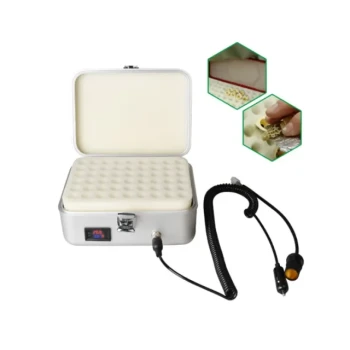
Carbon dioxide apparatus is used to manage queen handling and support the insemination procedure. Properly controlled narcosis can help technicians work with queens under standardized conditions.
Because handling errors can affect queen performance, equipment should be selected as part of an integrated system rather than as isolated tools.
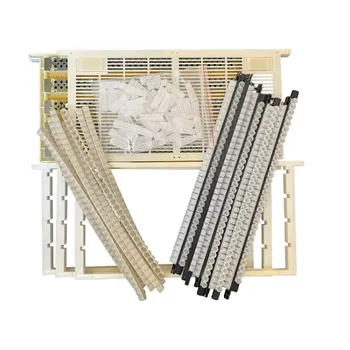
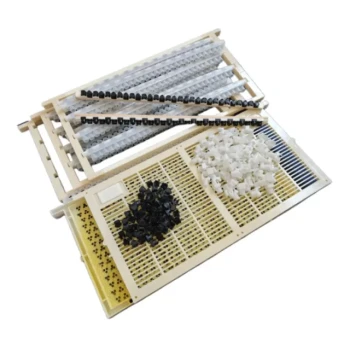
Queen-rearing equipment
Artificial insemination is only one stage of commercial queen production. Queen-rearing tools support the development, handling, and replacement of queens before and after insemination.
A complete setup enables breeders to connect queen rearing, controlled mating, colony establishment, performance evaluation, and subsequent propagation within one managed workflow.
Why This Matters for Commercial Genetic Improvement
Traits can be selected systematically
Commercial breeding programs need more than individual high-performing queens. They need a repeatable process for selecting, testing, and propagating traits across generations.
Controlled insemination supports that process by making the genetic contribution of the parents more traceable. This improves the value of performance records and helps breeders determine whether desirable results are repeatable.
Brood viability can be monitored more reliably
The primary reference identifies professional queen-rearing and instrumental insemination equipment as supporting brood viability above 85% when used within a controlled breeding program.
That figure should be understood as a program outcome rather than a guaranteed equipment specification. Queen quality, semen handling, technician skill, colony conditions, and post-insemination care all influence results.
Breeding can be adapted to local conditions
Controlled breeding allows commercial operators to select bees suited to specific climates, forage conditions, disease pressures, and management systems. This is particularly important when developing colonies for regions with demanding or changing environmental conditions.
The same approach can support the evaluation of breeds such as Caucasian, Carniolan, and Anatolian bees, as well as selected local populations and defined hybrids.
Understanding the Trade-offs
Equipment does not replace technical expertise
Artificial insemination is a precision procedure. Purchasing instruments alone does not guarantee successful insemination, strong queens, or superior colonies.
Operators also need training in semen collection, queen handling, equipment sanitation, insemination technique, recordkeeping, and post-procedure colony management.
Genetic control must be balanced with diversity
The objective is not to narrow a population as far as possible. Excessive inbreeding can reduce vigor and brood performance, so breeding programs must balance trait fixation with the preservation of genetic diversity, including sex-allele diversity.
A well-designed program therefore requires breeding records and a clear mating strategy, not only high-precision instruments.
Maintenance and supply reliability matter
Insemination needles, syringes, pumps, immobilization devices, and related components must be clean, functional, and compatible. Delays in replacement parts or consumables can interrupt time-sensitive breeding schedules.
For distributors and B2B buyers, supplier reliability is therefore part of the technical solution. Product availability, rapid response, dedicated support, and efficient fulfillment directly affect operational continuity.
Results require a complete workflow
A breeder may achieve accurate insemination but still obtain poor colony performance if queen rearing, nutrition, colony establishment, or evaluation is inadequate.
The strongest commercial systems combine specialized equipment with standardized operating procedures, traceable breeding records, and appropriate quality control.
Choosing Equipment for a Commercial Program
Specialized equipment should be evaluated according to the breeding objective and the scale of operation.
- If your primary focus is pure-line maintenance: Prioritize precise semen collection and insemination tools, queen immobilization systems, and reliable recordkeeping that preserve intended parentage and genetic integrity.
- If your primary focus is hybrid queen production: Choose an integrated setup that supports repeatable crosses, selected drone-line semen pooling, queen rearing, and batch-to-batch consistency.
- If your primary focus is trait improvement: Select equipment that enables controlled selection for productivity, disease resistance, hygienic behavior, Varroa resistance, and regional adaptation.
- If your primary focus is commercial scale: Work with a supplier offering a full-spectrum product portfolio, technical expertise, rapid response, dependable customer service, and fast order fulfillment for equipment and replacement components.
- If your primary focus is operational reliability: Confirm that the system includes compatible precision instruments, handling equipment, carbon dioxide apparatus, and the consumables required for uninterrupted breeding work.
With the right equipment, expertise, and breeding records, commercial queen producers can make genetic improvement more controlled, repeatable, and scalable.
Summary Table:
| Aspect | Natural Mating | Instrumental Insemination |
|---|---|---|
| Genetic Control | Low - random drone pool | High - selected drone parentage |
| Repeatability | Poor - weather dependent | Excellent - controlled conditions |
| Hybrid Production | Unpredictable | Predictable heterosis (34-50% increase) |
| Brood Viability | Variable | >85% with proper program |
| Line Maintenance | Difficult | Precise line breeding |
| Sex-Allele Diversity | Unmanaged | Deliberate management |
Elevate your commercial breeding program with HONESTBEE's specialized artificial insemination equipment. Our comprehensive range includes precision insemination instruments, queen immobilization systems, and essential consumables, all backed by rapid response and dedicated support. For distributors and B2B resellers, we offer OEM/ODM services, certifications, and reliable supply chains to ensure your operations run smoothly. Take control of your genetic outcomes and boost productivity — contact us today to discuss your requirements!
Related Products
- Queen Bee Artificial Insemination Instrument Equipment for Instrumental Insemination
- Double Head Beekeeping Grafting Tools for Beekeepers
- Plastic Chinese Queen Grafting Tool for Bee Queen Rearing
- Retractable Chinese Queen Rearing Grafting Tools Equipment
- Stainless Steel Queen Grafting Tool for Beekeeping and Bee Queen Grafting
People Also Ask
- Why is maintaining sanitary conditions important during artificial insemination? Protect Your Queen from Fatal Infections
- Why are artificial insemination instruments critical in bee hybridization? Master Genetic Control & Pure Breeding
- What is the core value of bee artificial insemination instruments in breed improvement? Achieve Precise Genetic Control
- Why is professional bee artificial insemination equipment considered a core tool for genetic control in honeybee breeding? Ensure 100% Purity
- Why is high-purity CO2 used for queen bee artificial insemination? Unlock Precision Breeding & Faster Egg-Laying