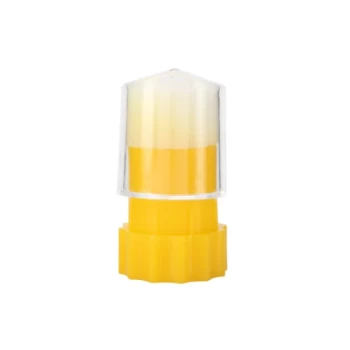
Specialized non-toxic marking paint is applied to the thoracic dorsal plate of a queen bee to enable precise individual identification and long-term tracking without harming the insect. This specialized application allows technicians and beekeepers to rapidly assess critical data points such as the queen's lifespan, egg-laying performance, and retention status during swarming seasons, all while ensuring her physiological functions remain uncompromised.
The primary value of this marking technique lies in its ability to permanently tag a high-value biological asset without introducing chemical volatility that could disrupt the colony. It transforms a queen bee from an anonymous insect into a trackable data point, enabling multi-year analysis of genetic performance and colony stability.
The Critical Role of Non-Toxic Formulation
Preserving Physiological Function
The queen bee is the central biological engine of the colony. The primary requirement for any marking substance is that it must not compromise her physiological functions.
Specialized paints are formulated to be non-toxic to ensure the chemical composition does not leach into the queen's system or cause physical distress.
Preventing Olfactory Disruption
Honey bee colonies rely heavily on pheromones for communication and organization. Standard industrial paints often contain aggressive solvents that can alter the queen's specific scent profile.
If a queen's odor is masked or altered by strong chemical solvents, the worker bees may reject or attack her. Specialized markers, such as those using aliphatic hydrocarbon solvents or water-based acrylics, dry rapidly and minimize interference with the queen's natural pheromones.
Enabling Long-Term Data Tracking
Assessing Lifespan and Retention
High-value queens are often part of breeding programs where longevity is a key trait. The marking paint provides a clear visual identifier that allows technicians to confirm the queen's presence over multiple seasons.
This allows for the immediate assessment of retention status, specifically verifying if a queen has survived swarming events or wintering periods.
Detecting Supersedure
A major challenge in beekeeping is knowing if the queen currently in the hive is the original high-value queen or a replacement raised by the colony (supersedure).
Because the paint is durable and lasts the duration of the queen's life, the absence of a mark on a queen in a previously marked hive confirms that the original queen has been replaced. This ensures the accuracy of breeding data and performance metrics.
Durability and Application Mechanics
One-Time Application
To minimize stress on the queen, the handling process must occur as infrequently as possible. The paint used is designed for high durability, typically lasting the queen's entire life without the need for reapplication.
Precision and Visibility
The application utilizes tools like water-based art pens or markers with soft tips. This allows for the delivery of highly pigmented, vibrant color in a single, gentle touch.
This high visibility makes it significantly easier to locate the queen among thousands of workers, speeding up hive inspections and reducing the time the hive is left open.
Understanding the Trade-offs
Drying Time vs. Toxicity
While enamel paints offer a wide range of colors, they often have longer drying times compared to correction fluids or specialized markers.
A slower drying time increases the risk of the paint smearing or the queen being released back into the colony while the solvent smell is still potent, potentially triggering aggression from worker bees.
Application Risks
Even with non-toxic paint, the physical act of marking carries risk. The applicator tip must be the appropriate size and softness.
If the paint is applied too heavily, it can run into the queen's joints or spiracles (breathing holes). If applied too roughly, the physical pressure can cause injury.
Making the Right Choice for Your Goal
When selecting a marking method for high-value queens, your choice depends on the balance between durability and ease of application.
- If your primary focus is longevity and research: Prioritize high-durability enamel or acrylic markers that are proven to withstand years of wear, ensuring data integrity over the queen's full lifespan.
- If your primary focus is rapid inspection and safety: Utilize quick-drying water-based acrylic pens or correction fluids to minimize the holding time and reduce the risk of olfactory rejection by the colony.
By utilizing specialized non-toxic markers, you ensure that the collection of vital breeding data never comes at the cost of the queen’s health or the colony’s stability.
Summary Table:
| Feature | Specialized Marking Paint | Standard Industrial Paint |
|---|---|---|
| Toxicity | Non-toxic; safe for bee physiology | Potential for chemical leaching/harm |
| Scent Profile | Low-odor; prevents colony rejection | Strong solvents; disrupts pheromones |
| Durability | High; lasts the queen's entire lifespan | Variable; may flake or wear off |
| Drying Speed | Rapid; reduces handling stress | Often slow; increases smearing risk |
| Application | Precision tips for delicate anatomy | Broad applicators; risk of injury |
Maximize Your Apiary's Potential with HONESTBEE
At HONESTBEE, we understand that high-value queen bees are the heart of your operation. Whether you are managing a commercial apiary or supplying the industry as a distributor, our mission is to provide the specialized tools you need to succeed.
We offer a comprehensive wholesale range of beekeeping tools, machinery, and essential consumables, including specialized hardware like hive-making and honey-filling machines. From precision marking tools to honey-themed cultural merchandise, we help you enhance efficiency and preserve the health of your colonies.
Ready to upgrade your equipment? Contact us today to explore our wholesale catalog and see how our premium solutions can scale your business.
References
- Ricardo Gonçalves Santos, Lionel Segui Gonçalves. Comparative study of the performance of africanized bees managed in thermal stress and thermal comfort in a semiarid region. DOI: 10.21708/avb.2023.17.4.12083
This article is also based on technical information from HonestBee Knowledge Base .
Related Products
- Queen Bee Marking Pen POSCA Queen Marking Pens for Beekeeping Bee Markers
- Queen Bee Marking Pen UNI Medium Point for Queen and Bee Marking
- Plastic Long Marker Device for Catching and Marking Bees Queen Bee Marking Tube and Cage
- One Hand Yellow Queen Marking Catcher Tube Cage Beekeeper Tool Accessory for Queen Bee
- Queen Bee Catcher Plastic Bee Marker Bottle with Piston Marking Tube
People Also Ask
- What role do specialized marking pens and color-coding systems play in honeybee tracking? Enhance Research Precision
- Why are specialized marking pens used for stingless bee queens? Essential Tools for Large-Scale Breeding Success
- How should a new paint pen be primed before marking a queen bee? Essential Tips for Safe & Clear Markings
- How should a queen bee marking pen tip be properly primed? Master the Art of Safe Queen Marking
- What specifications are required for a high-quality queen bee marking pen? Ensure Safety and Precision for Your Colony