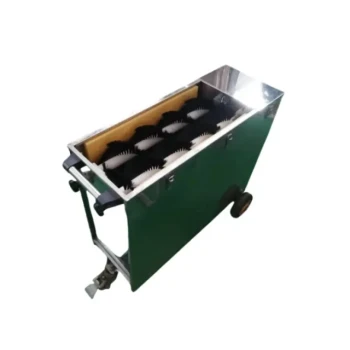
Specialized Swarm Control equipment is essential for large-scale operations to prevent the natural division of strong colonies during peak honey-flow periods. Without this equipment, a hive inevitably loses a significant portion of its foraging workforce to swarming, which drastically reduces nectar collection and overall production capacity.
By utilizing swarm prevention dividers and splitting tools, beekeepers can maintain maximum colony density during critical harvest windows, ensuring the workforce is dedicated to production rather than reproduction.
The Economics of Workforce Retention
The Cost of Natural Swarming
In a natural setting, a strong colony will eventually swarm to reproduce. This process involves a large percentage of the bees leaving the hive to establish a new home.
For a commercial beekeeper, this is an immediate loss of assets. The departure of these bees creates a sudden deficit in the "workforce" responsible for gathering nectar.
Timing is Critical
Swarming typically coincides with peak honey-flow periods. This is the exact moment when a hive needs the maximum number of foragers to capitalize on available resources.
If a colony swarms during this window, the remaining population is often too small to effectively harvest the honey crop, resulting in missed production targets.
Systematic Colony Management
Controlling Expansion
Specialized tools, such as swarm prevention dividers and splitting tools, allow the beekeeper to intervene in the hive's natural biology.
Instead of allowing the bees to dictate when a split occurs, these tools enable the beekeeper to manage expansion systematically. This ensures that splits happen on a schedule that aligns with production goals, not against them.
Maximizing Resource Collection
The primary goal of using this equipment is to keep the colony "strong"—meaning populous and active—without triggering the swarming impulse.
By maintaining high population density without a split, the colony retains its full foraging capacity. This allows for the maximization of nectar collection from the surrounding environment.
Understanding the Trade-offs
Active vs. Passive Management
Implementing specialized swarm control requires a shift from passive observation to active management.
The use of dividers and splitting tools implies a systematic approach that demands monitoring and intervention. While this increases labor and attention to detail, it is the only way to guarantee consistent yields in a large-scale operation.
Making the Right Choice for Your Goal
To determine how heavily to invest in swarm control equipment, assess your primary operational objectives.
- If your primary focus is Maximum Honey Production: Prioritize prevention dividers to keep your workforce intact and focused on foraging during the peak flow.
- If your primary focus is Apiary Expansion: Utilize splitting tools to create new colonies systematically, but schedule this outside of your main honey-flow windows to avoid sacrificing yield.
Effective swarm control turns a biological impulse into a managed asset.
Summary Table:
| Feature | Swarm Prevention Dividers | Systematic Splitting Tools |
|---|---|---|
| Primary Goal | Maximize nectar collection | Controlled apiary expansion |
| Mechanism | Suppresses swarming impulse | Manages hive division timing |
| Key Benefit | Maintains peak foraging workforce | Increases total colony count |
| Best Used | During peak honey-flow periods | Outside of main harvest windows |
Scale Your Honey Production with HONESTBEE Precision Equipment
Don't let your assets fly away. At HONESTBEE, we empower commercial apiaries and distributors with the specialized machinery needed to maintain maximum workforce density. Whether you require high-efficiency swarm prevention dividers, hive-making machines, or honey-filling systems, our comprehensive wholesale range is designed for industrial-scale success.
From essential hardware to cultural merchandise, we provide the tools to turn biological impulses into managed profits. Partner with HONESTBEE today to secure your supply of premium beekeeping equipment and optimize your operation's yield.
References
- Abel Adebayo Ayansola, Banjo Adedoyin Davies. Honeybee Floral Resources in Southwestern Nigeria. DOI: 10.5296/jbls.v3i1.1720
This article is also based on technical information from HonestBee Knowledge Base .
Related Products
- HONESTBEE Collapsible Tiered Bee Swarm Catcher for Beekeeping
- HONESTBEE Professional Telescopic Pole Bee Swarm Catcher
- Portable Electric Bee Vacuum with Lithium Battery and 20L Collection Bucket
- Compact Circular Bee Mite Treatment Dispenser
- Beehive Entrance Reducer Guardian Metal Hive Entrance for Bees
People Also Ask
- What should be done if the swarm is situated on the bottom of a tree limb? A Guide to Methodical Bee Capture
- What role do swarm catchers play in maintaining the production scale of an apiary? Turn Colony Loss into Growth.
- What role does a Swarm Catcher play in the process of expanding apiary colony scale? Optimize Growth & Reduce Costs
- What information should be gathered before attempting to catch a swarm of bees? A Safe and Successful Guide
- What precautions can be taken to prevent a newly captured swarm from absconding? Secure Your Swarm with Proven Methods