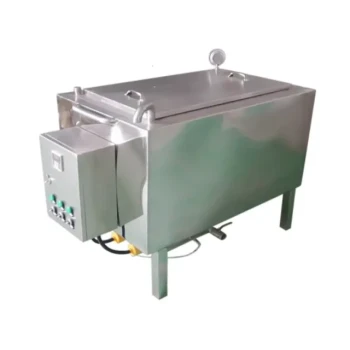
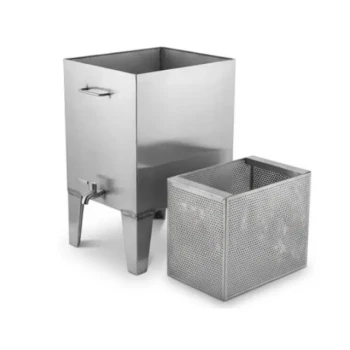
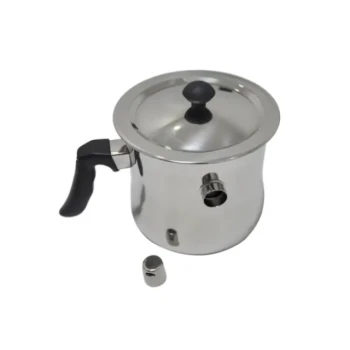
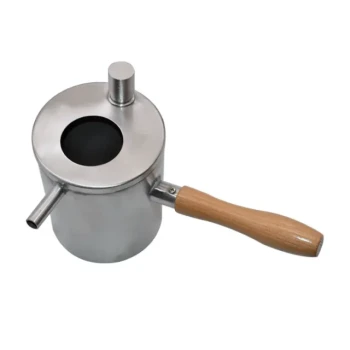
Stainless steel is the definitive material choice for beeswax melting equipment primarily due to its exceptional chemical inertness and corrosion resistance. Unlike other common metals, it does not chemically react with beeswax during the liquefaction process, ensuring the final product remains pure, safe, and free from discoloration caused by metal ions.
The core value of stainless steel lies in its passivity; it prevents the chemical reactions common with other metals that lead to discoloration and heavy metal contamination, ensuring the wax retains its natural quality.
The Chemistry of Wax Preservation
Preventing Chemical Discoloration
When beeswax is heated, it becomes chemically active and susceptible to reacting with its container. Ordinary steel, aluminum, zinc, and copper are known to react with hot wax.
This reaction introduces metal ions into the mixture, causing the liquid wax to darken significantly. Stainless steel is chemically stable, preventing this interaction and preserving the natural bright color of the wax.
Eliminating Heavy Metal Risks
Beyond cosmetic issues, material selection is a safety imperative. Containers made of lead or low-grade alloys can introduce severe heavy metal contamination.
Stainless steel eliminates this risk entirely. Its superior chemical inertness ensures that the honeycomb foundation and processed wax remain pure and safe for use.
Operational Durability and Standards
Resistance to Oxidation and Corrosion
Beeswax processing environments are characterized by high humidity and constant operating temperatures. Ordinary metals degrade quickly under these conditions, leading to rust and structural failure.
Stainless steel offers exceptional oxidation resistance. It maintains its structural integrity over the long term, even in the demanding conditions of industrial-scale production.
Meeting Industry Compliance
The use of stainless steel aligns with strict food processing standards. Because beeswax is often used in cosmetics, food wraps, and pharmaceuticals, maintaining a contaminant-free environment is essential.
By resisting corrosion and preventing leaching, stainless steel equipment helps producers comply with hygiene regulations and quality control standards.
Common Pitfalls to Avoid
The "Good Enough" Trap
A common mistake is substituting stainless steel with galvanized steel or aluminum to reduce initial equipment costs. While these materials may physically hold the wax, the chemical cost is immediate.
Using reactive metals results in a lower-grade, darker wax product that commands a lower market price. The perceived savings on equipment are often lost to the devaluation of the final product.
Ignoring Environmental Factors
Operators sometimes overlook the impact of the processing environment on the equipment itself. High humidity accelerates the corrosion of non-stainless components.
Failing to use stainless steel for core components can lead to equipment failure and rust contamination, necessitating expensive repairs or replacements sooner than expected.
Making the Right Choice for Your Goal
To select the appropriate equipment for your specific needs, consider your primary output objectives:
- If your primary focus is producing high-grade cosmetic or candle wax: Prioritize stainless steel to ensure the wax retains its lightest, most natural color and purity.
- If your primary focus is industrial longevity: Invest in stainless steel to withstand high humidity and continuous heating without succumbing to rust or oxidation.
- If your primary focus is safety compliance: Use stainless steel to meet food safety standards and eliminate the risk of heavy metal contamination.
By choosing stainless steel, you effectively future-proof your operation against both physical equipment failure and chemical product degradation.
Summary Table:
| Feature | Stainless Steel | Other Metals (Al, Zn, Cu, Lead) |
|---|---|---|
| Chemical Stability | High (Inert/Passive) | Low (Reactive with hot wax) |
| Wax Color Preservation | Maintains natural brightness | Causes darkening/discoloration |
| Contamination Risk | Zero heavy metal leaching | High risk of heavy metal ions |
| Corrosion Resistance | Excellent (Anti-rust) | Poor (Oxidizes in high humidity) |
| Safety Standards | Meets food/pharma grades | Often fails hygiene compliance |
Elevate Your Wax Processing with HONESTBEE
Don't compromise the purity of your beeswax with subpar equipment. At HONESTBEE, we specialize in providing professional-grade, stainless steel beekeeping machinery designed for commercial apiaries and distributors.
Our comprehensive wholesale range includes:
- Precision Honey-Filling and Wax-Processing Machines
- Durable Hive-Making Equipment
- Specialized Hardware & Essential Beekeeping Tools
- Honey-Themed Cultural Merchandise
Whether you are upgrading an industrial facility or supplying the next generation of beekeepers, HONESTBEE ensures your wax retains its premium value and safety.
Ready to scale your production? Contact us today to explore our full equipment catalog!
References
- M. A. Al-Rajhi, A. El-Sheikha. Application of Solar Energy to Liquify Beewax. DOI: 10.46592/turkager.1343229
This article is also based on technical information from HonestBee Knowledge Base .
Related Products
- Electric Commercial Beeswax Melter for Factory Use
- Steam Beeswax Melter Wax Warmer for Wax Processing
- Beeswax Melter for Candle Making Honey Bee Wax Melter
- Solar Beeswax Melter Easy Solar Wax Melter for Beeswax
- Beeswax Machine Press Embosser Wax Foundation Mold Printer Bee Hive Equipment Making Sheet
People Also Ask
- Why might a commercial beekeeper prefer an electric beeswax melter? Maximize Profit with Speed & Scale
- What safety precautions should be taken when melting beeswax? A Guide to Flammable Wax Handling
- What types of beeswax melters are available for different scales of beekeeping? Solar vs. Electric Melters Compared
- What are the three popular methods for melting beeswax? Safely Process Your Wax with Ease
- How do you melt beeswax without making a mess? Master Safe & Clean Techniques