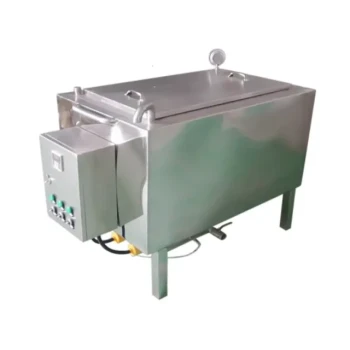
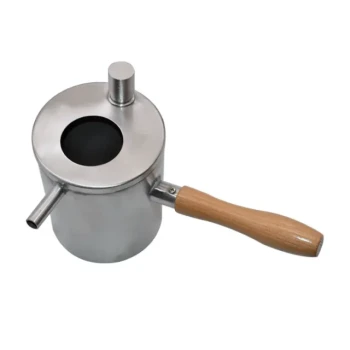
Integrated electric heating tubes offer superior efficiency and operational simplicity. Unlike traditional steam systems that rely on separate, external boiler houses, these electric tubes are installed directly at the base of the beeswax press housing. This direct integration significantly reduces energy costs, minimizes thermal loss, and allows a single operator to manage the entire processing workflow.
By eliminating the need for complex external infrastructure, integrated electric heating transforms beeswax processing from a resource-heavy operation into a streamlined, precise workflow that reduces both physical footprint and labor requirements.
Transforming Thermal Efficiency
Direct Heat Application
The core advantage of this system lies in the placement of the heating elements. The electric tubes are installed directly at the base of the press housing.
This ensures that thermal energy is generated exactly where the beeswax processing occurs. There is no need to transport heat from a remote source, which ensures immediate and precise temperature control.
Minimizing Energy Waste
Traditional steam heating systems inevitably suffer from heat loss as steam travels from the boiler to the press.
Integrated electric tubes eliminate this transmission loss entirely. By converting energy to heat right at the source, the system maximizes efficiency and significantly lowers the energy costs associated with maintaining temperature.
Streamlining Operations and Infrastructure
Removing the Boiler House
Steam heating is infrastructure-intensive, often requiring a separate boiler house to generate the necessary thermal energy.
Switching to integrated electric heating removes this requirement completely. This frees up valuable industrial floor space and eliminates the capital expense and maintenance associated with operating a boiler facility.
Optimizing Labor Efficiency
Complex steam systems often require dedicated personnel to monitor pressure, fuel levels, and distribution lines.
The electric solution simplifies the machinery enough that a single operator can manage large-scale processing equipment. This allows for a leaner workforce and reduces the technical overhead required to run the production line.
Understanding the Trade-offs
Energy Source Dependency
While electric heating eliminates the need for a boiler, it ties your operational costs directly to industrial electricity rates.
In regions where electricity is significantly more expensive than the fuel used for steam boilers (such as natural gas or biomass), the efficiency gains must be weighed against the local cost per kilowatt-hour.
System Isolation
This solution is designed as a self-contained unit.
If your facility already possesses a central steam plant used for other processes, adding an electric-only unit creates a separate maintenance requirement. It does not leverage existing steam infrastructure, which may be a consideration for fully integrated factories.
Making the Right Choice for Your Goal
When deciding between integrated electric heating and traditional steam, assess your current infrastructure and labor constraints.
- If your primary focus is Reducing Infrastructure: Choose integrated electric heating to eliminate the need for constructing or maintaining a separate boiler house.
- If your primary focus is Labor Optimization: Choose the electric solution to enable a single operator to manage large-scale production without specialized boiler support.
Ultimately, integrated electric heating represents a modern shift toward leaner, more autonomous manufacturing capable of delivering high precision with minimal waste.
Summary Table:
| Feature | Integrated Electric Heating | Traditional Steam Heating |
|---|---|---|
| Infrastructure | Built-in (no boiler required) | Requires separate boiler house |
| Thermal Efficiency | Direct application; zero transport loss | Significant loss during steam transport |
| Labor Requirement | Single operator management | Multiple personnel for monitoring |
| Space Usage | Compact and self-contained | High (requires facility for boiler) |
| Control | Precise temperature monitoring | Complex pressure and flow monitoring |
Revolutionize Your Beeswax Production with HONESTBEE
Are you looking to streamline your apiary operations and reduce infrastructure costs? At HONESTBEE, we specialize in providing high-efficiency beekeeping machinery and tools designed for commercial apiaries and global distributors.
Our integrated heating solutions eliminate the need for costly boiler houses, allowing you to maximize output with minimal labor. Beyond specialized hardware like beeswax presses, hive-making, and honey-filling machines, we offer a comprehensive wholesale portfolio of industry consumables and honey-themed merchandise to support every aspect of your business.
Partner with the industry experts to scale your production today.
Contact HONESTBEE for Wholesale Inquiries
References
- V.M. Piaskivskyi, Yu.S. Kulakov. Beekeeping wax with improved technology in the conditions of «Bjolovod LTD» Agro firm. DOI: 10.32851/2226-0099.2020.111.30
This article is also based on technical information from HonestBee Knowledge Base .
Related Products
- Beeswax Machine Press Embosser Wax Foundation Mold Printer Bee Hive Equipment Making Sheet
- Manual Beeswax Flat Sheet Machine for Beeswax Processing
- Electric Commercial Beeswax Melter for Factory Use
- 10L Stainless Steel Honey Wax Press Extractor for Wax Cappings
- Stainless Steel Manual Honey Press with Guard for Pressing Honey and Wax
People Also Ask
- What equipment is needed to make beeswax foundation? A Guide to DIY Wax Sheet Production
- What miscellaneous equipment is needed for making foundation? A Guide to the Essential Tools
- What miscellaneous equipment is useful when making beeswax foundation? Essential Support Tools for Beekeepers
- What specific equipment is required for making beeswax foundation? Essential Tools for High-Quality Production
- What is the recommended temperature for melting beeswax to make foundation sheets? Master the 70°C-80°C Ideal Range