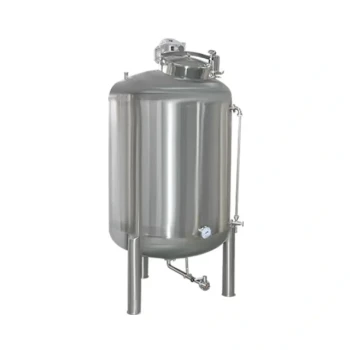
The establishment of a structured honey processing facility is the non-negotiable foundation for regulatory compliance, product safety, and commercial viability. These facilities provide a controlled, hygienic environment that utilizes specialized machinery—such as filtration, dehydration, and centrifugation units—to prevent environmental contamination during production. This infrastructure is a mandatory prerequisite for obtaining the municipal inspection certificates and international quality certifications required to move honey through formal B2B distribution channels.
Core Takeaway: A structured facility transforms raw honey from an inconsistent agricultural byproduct into a standardized, low-risk commercial commodity. For distributors and wholesalers, this infrastructure serves as the ultimate guarantee of legal compliance, shelf stability, and market readiness.
The Role of Infrastructure in Risk Mitigation
Physical Barriers and Contamination Control
A professional extraction room acts as a vital hygienic barrier, isolating the product from external contaminants, dust, and pests. This physical separation is essential for maintaining the physicochemical properties and flavor profile of the honey during the sensitive extraction phase.
Technical Standardization via Specialized Machinery
Integrating industrial-grade equipment like centrifugation and filtration machinery ensures the removal of impurities without compromising the honey's integrity. These systems allow for precise moisture control, preventing fermentation and ensuring the product meets international purity standards.
Precision Filling and Packaging Accuracy
Automated filling equipment provides quantitative packaging that ensures accurate net weight and eliminates the human error associated with manual bottling. High-specification sealing technology is used to extend shelf life and protect the brand image for high-end retail environments.
Scaling Market Access Through Certification
Securing Organic and International Standards
Organic honey production requires areas to remain entirely free of chemical substances and residues. Dedicated machinery and uncontaminated storage tanks are necessary to meet the stringent physical isolation requirements of international organic certifying bodies.
Enabling Entry into Formal Distribution
Formal commercial channels and export markets require municipal inspection certificates that can only be granted to structured facilities. This infrastructure allows cooperatives and suppliers to transition from low-priced bulk sales to high-value-added terminal products.
Preservation of Nutritional Bioactivity
Industrial-grade processing utilizes precise temperature control to regulate moisture levels while preserving active enzymes and nutritional content. This balance is critical for maintaining the "premium" status of the honey, which is a key selling point for B2B resellers.
Understanding the Trade-offs
Operational Overhead vs. Market Premium
The primary trade-off in establishing a structured facility is the significant initial capital expenditure required for industrial-grade machinery. However, this investment is offset by the ability to secure premium market pricing and avoid the legal risks associated with non-compliant products.
Processing Intensity vs. Enzyme Integrity
Over-processing or excessive heat during dehydration can damage the honey's natural enzymes. Expertly managed facilities must balance efficient moisture reduction with the need to maintain the biological activity that distributors and health-conscious consumers demand.
Throughput Speed vs. Filtration Quality
While rapid response times are critical for wholesalers, rushing the filtration process can lead to clarity issues or residual impurities. Professional facilities solve this by using multi-stage filtration systems that maintain high flow rates without sacrificing product purity.
Making the Right Choice for Your Goal
As a distributor or wholesaler, your choice of supply partner should be dictated by the specific requirements of your target market and the robustness of their processing infrastructure.
- If your primary focus is international export and high-end retail: Prioritize partners with fully automated, industrial-grade production lines and comprehensive municipal certifications to ensure seamless customs clearance.
- If your primary focus is the premium organic sector: Ensure your supplier utilizes dedicated, chemical-free processing environments and holds verified international organic certifications.
- If your primary focus is rapid order fulfillment and supply chain stability: Look for facilities with integrated cold storage and high-capacity packaging capabilities to ensure consistent stock availability.
Partnering with a facility that prioritizes structured processing ensures your business is backed by professional expertise and a product that meets the highest global standards.
Summary Table:
| Facility Component | Key Function | B2B Market Impact |
|---|---|---|
| Specialized Machinery | Filtration, dehydration, & centrifugation | Ensures standardized purity and international grade quality. |
| Hygienic Extraction Room | Physical barrier against pests and dust | Guarantees product safety and protects brand reputation. |
| Automated Packaging | Quantitative filling and precision sealing | Enhances shelf life and ensures accurate net weight for retail. |
| Structured Infrastructure | Foundation for municipal/organic certificates | Unlocks access to formal distribution and high-value exports. |
| Climate Control | Regulated moisture and temperature | Preserves bioactivity and natural enzymes for premium status. |
Elevate Your Honey Business with HONESTBEE’s Professional Solutions
Are you a distributor, wholesaler, or B2B reseller looking to dominate the honey market? HONESTBEE is your premier one-stop sourcing partner, providing the infrastructure and expertise needed for compliant, high-volume production.
We supply a comprehensive full-spectrum portfolio designed for commercial success, including:
- Advanced Machinery: From hive-making to precision honey-filling and dehydration units.
- Essential Consumables: A wide array of high-quality tools and industry-specific supplies.
- Value-Added Support: Deep professional expertise, OEM/ODM capabilities, and rapid response times.
Partner with HONESTBEE to benefit from ultra-fast delivery and dedicated customer service that ensures your supply chain remains reliable and profitable.
Ready to scale your operation with world-class equipment?
Contact HONESTBEE Today for a Wholesale Quote
References
- MONICA FRANCHI CARNIELLO, MARIANA ARANHA DE SOUZA. A APICULTURA COMO TECNOLOGIA SOCIAL NO DESENVOLVIMENTO LOCAL DA REGIÃO IMEDIATA DE ITAJUBÁ.. DOI: 10.29327/xiiicicted24.956147
This article is also based on technical information from HonestBee Knowledge Base .
Related Products
- Double Wall Honey Heating Stirring Homogenizer Mixing Machine with Various Capacity
- Honey Concentrating and Filtering Dehumidifier Machine 2T Capacity for Honey
- Electric Double Wall Honey Filtering Machine Purifier Equipment for Honey Processing Plant
- 0.5T Capacity Honey Dehumidifier Dryer with Vacuum Heating and Thickening Filtering Machine
- Heavy Duty Stainless Steel Honey Processing Machine Decrystallizing Tank
People Also Ask
- What impact do homogenizers or oscillating equipment have on honey microbial detection? Ensure Testing Accuracy
- Why is thorough mechanical stirring and homogenization emphasized in honey processing? Ensure Sample Accuracy
- How do heating equipment and homogenizers liquefy crystallized honey? Expert Guide to Professional Honey Processing
- How does the honey mixer handle different types of honey? Master Viscosity for Perfect Blends
- What are the main components of the honey mixer? Engineered for Gentle, Efficient Honey Processing