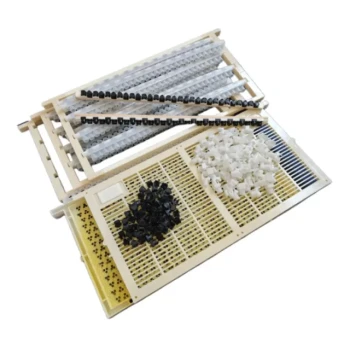
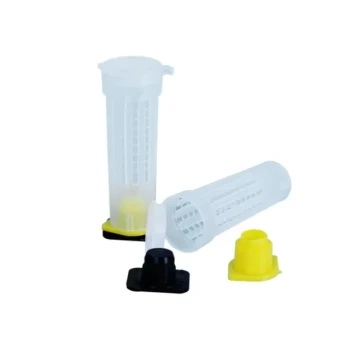
Precision is the bridge between artificial tools and biological acceptance. Standardized wooden sticks act as exact molding templates for molten beeswax, replicating the specific internal geometry of natural queen cells. By adhering to strict dimensions—such as a 0.54 cm bottom diameter—these tools ensure the resulting artificial cells are indistinguishable to worker bees from natural structures. This dimensional accuracy is the single most critical factor in convincing the colony to accept and rear the transferred larvae.
The success of artificial queen rearing hinges on mimicry; precise wooden sticks create wax cells that mirror natural Apis cerana geometry. Without this exact physical correspondence, worker bees are likely to reject the introduced larvae, undermining the entire grafting process.
The Geometry of Acceptance
Mimicking Natural Architecture
The wooden stick serves as a rigid molding template for molten beeswax. Its primary function is to enforce a consistent internal shape for the artificial cell cup. This allows beekeepers to produce cells that physically match the structures bees create in nature.
The Specific Dimensions Required
To successfully mimic natural Apis cerana queen cells, the stick must adhere to specific measurements. The standard requires a bottom diameter of 0.54 cm and a top diameter of 0.71 cm.
Ensuring Proper Depth
In addition to diameter, the length of the mold is critical. A standard length of 0.85 cm ensures the cell is deep enough to protect the larva while remaining accessible to nurse bees.
The Biological Impact
Increasing Larval Acceptance
Physical consistency is not an aesthetic choice; it is a biological requirement. When the artificial cell matches natural geometry, worker bees perceive it as a legitimate environment for a queen. This recognition is the primary driver for high acceptance rates of transferred larvae.
Simulating the Growth Environment
High-precision tools are designed to simulate the natural growth environment of a queen bee. By using standardized molds, you reduce the stress on the colony, allowing them to focus on feeding rather than repairing or rejecting "foreign" structures.
Scaling Genetic Success
Consistency in molding allows for the large-scale replication of superior maternal genetics. By removing variable cell quality from the equation, beekeepers can maintain the production vitality and genetic consistency of the apiary through systematic queen replacement.
Understanding the Trade-offs
The Risk of Deviation
If the wooden stick deviates even slightly from the standard dimensions, the beeswax mold will be flawed. Worker bees are highly sensitive to these anomalies and will often clean out or destroy larvae placed in irregular cells.
Material Limitations
While wooden sticks are effective, they are organic materials subject to wear. A stick that is chipped or warped loses its precision, which will immediately degrade the uniformity of your cell cups and the subsequent success of your grafting.
Making the Right Choice for Your Goal
To maximize the effectiveness of your queen rearing, align your tool selection with your specific objectives:
- If your primary focus is maximizing acceptance rates: Ensure your wooden sticks maintain the strict 0.54 cm bottom and 0.71 cm top diameters to effectively trigger the worker bees' rearing instincts.
- If your primary focus is large-scale production: Implement a protocol to regularly check your sticks for wear to ensure every batch of cells maintains the geometric consistency required for systematic replacement.
Ultimately, the wooden stick is not just a simple tool, but the foundational standard that ensures the continuity and vitality of your apiary.
Summary Table:
| Specification | Dimension | Importance for Queen Rearing |
|---|---|---|
| Bottom Diameter | 0.54 cm | Triggers biological acceptance by worker bees |
| Top Diameter | 0.71 cm | Mimics natural Apis cerana cell geometry |
| Standard Length | 0.85 cm | Ensures optimal depth for larval development |
| Material | Wood | Provides a rigid template for beeswax molding |
Maximize Your Apiary’s Potential with HONESTBEE
Precision is the difference between a failed graft and a thriving hive. At HONESTBEE, we understand the specialized needs of commercial apiaries and distributors. We provide the industry's most reliable beekeeping tools—from high-precision queen rearing equipment to advanced honey-filling machines and hive-making hardware.
Whether you are scaling your production or supplying the next generation of beekeepers, our comprehensive wholesale offering ensures you have the essential consumables and machinery to succeed.
Ready to upgrade your equipment? Contact us today to learn how our professional-grade tools can enhance your productivity and genetic consistency.
References
- Ustadi Ustadi, Djati Batoro. The Difference Queen Cup Materials on the Acceptance Grafted Larvae and Wing Morphometrics in <i>Apis cerana</i> Queen Rearing. DOI: 10.2991/absr.k.220401.051
This article is also based on technical information from HonestBee Knowledge Base .
Related Products
- 10-Cell Silicone Beeswax Bee Queen Cups Forming Mold
- JZBZ Type Wide Base Plastic Queen Cell Cups for Base Mounting and Queen Rearing
- Clear Black Plain Polystyrene Queen Bee Grafting Cell Cups No Lug for Bee Queen Cup
- Premium Nicot Style Cell Bar Holder and Queen Cell Cup Holder System
- Brown Nicot Queen Cell Cups for Breeding Queen Bees Beekeeping
People Also Ask
- How do beeswax queen cell cups function? Optimize Queen Rearing with Biological Mimicry
- What is the biological function of beeswax queen cell cups? Boost Acceptance in Artificial Queen Rearing
- What role do specialized queen rearing tools play in developing mite-resistant honeybee stock? Master Genetic Selection
- What materials are used to make artificial queen cell cups for grafting? Beeswax vs. Plastic Guide
- What roles do specialized queen cell cups play in royal jelly production? Optimize Your Hive's Secretion and Yield