The use of 1/8 inch metal wire mesh and silicone caulk is the industry standard for durability and precision. To successfully bee-proof a structure, you must seal all openings larger than 1/4 inch. These specific materials create a permanent physical barrier that withstands environmental factors and prevents bees from re-entering spaces they are biologically conditioned to inhabit.
The Core Objective: Bee-proofing is not merely about plugging holes; it is about breaking the cycle of re-infestation. By using materials that bees cannot chew through or bypass, you prevent future swarms from being drawn in by residual pheromone odors, thereby stopping secondary nesting before it begins.
The Mechanics of Exclusion
The 1/4 Inch Threshold
Bees are capable of navigating surprisingly small spaces. The critical threshold for entry is an opening larger than 1/4 inch.
Any gap exceeding this size invites exploration by scout bees. If a scout enters and deems the space suitable, the entire swarm will follow.
Why 1/8 Inch Mesh is Critical
To block a 1/4 inch gap effectively, the barrier must be significantly smaller than the opening. 1/8 inch hardware cloth (wire mesh) is the ideal standard.
It provides a necessary safety margin. It is far too small for any bee to squeeze through, yet it is robust enough to act as a permanent shield.
Unlike soft screens or plastic, metal hardware cloth cannot be easily chewed through or displaced by determined insects.
Addressing the Biological Drive
The Pheromone Trap
When a colony is removed, it leaves behind a chemical imprint. Residual pheromone odors cling to the nesting site long after the bees are gone.
These odors act as a beacon. They signal to passing swarms that the location is a safe, established habitat.
Preventing Secondary Infestations
The primary role of the barrier is to prevent secondary nesting.
If the site is not sealed with impermeable materials like silicone and metal mesh, new swarms attracted by the scent will re-occupy the void.
The physical barrier negates the scent's pull by making the source physically inaccessible.
Critical Material Properties
The Role of Silicone Caulk
Wire mesh handles large vents and voids, but silicone caulk is essential for irregular cracks and seams.
Silicone is chosen for its permanence and flexibility. It expands and contracts with the building structure without cracking, ensuring the seal remains airtight over time.
It is used to adhere the mesh to the building and to fill smaller gaps where mesh cannot be applied.
Common Pitfalls to Avoid
Material Degradation
Using expanding foam or standard latex caulk is a common error.
Bees can chew through dried foam, and latex eventually dries out and cracks, reopening the entry point. Metal mesh and silicone provide the necessary longevity.
Incomplete Sealing
A 99% seal is a 0% success rate in bee-proofing.
Leaving even a single gap larger than 1/4 inch renders the entire proofing effort useless. The pheromones will guide bees directly to that single weakness.
Securing Your Property Against Recurrence
To ensure your bee-proofing holds up against future swarms, match the material to the specific structural vulnerability:
- If your primary focus is ventilation (e.g., attic vents, crawl spaces): Use 1/8 inch hardware cloth to block entry while maintaining necessary airflow.
- If your primary focus is structural gaps (e.g., siding cracks, pipe penetrations): Use silicone caulk to create a flexible, airtight, and permanent seal.
True bee-proofing requires a zero-tolerance approach to gaps, using materials that outlast the persistent biological drive of the insect.
Summary Table:
| Material | Function | Key Benefit |
|---|---|---|
| 1/8 Inch Metal Mesh | Vents & Large Voids | Durable barrier that prevents entry while maintaining airflow. |
| Silicone Caulk | Cracks & Seams | Flexible, permanent seal that resists weathering and cracking. |
| Hardware Cloth | Structural Reinforcement | High-strength protection that bees cannot chew through. |
| Pheromone Blocking | Exclusion Strategy | Negates scent markers to stop secondary nesting cycles. |
Scale Your Professional Bee-Proofing with HONESTBEE
At HONESTBEE, we understand that professional beekeepers and commercial apiaries require more than just basic supplies; they need precision-engineered tools to manage and protect their colonies. As a premier partner for distributors and commercial apiaries, we offer a comprehensive wholesale portfolio ranging from specialized hive-making and honey-filling machinery to essential industry consumables and bee-themed cultural merchandise.
Whether you are scaling your manufacturing capabilities or stocking professional exclusion materials, we provide the industrial-grade equipment needed to ensure long-term success.
Ready to elevate your beekeeping operations? Contact us today to explore our wholesale solutions and discover how HONESTBEE can drive value for your business.
References
- Michael K. O’Malley, Philip G. koehler. Removal of Swarms and Colonies for Pest Control Operators. DOI: 10.32473/edis-in778-2008
This article is also based on technical information from HonestBee Knowledge Base .
Related Products
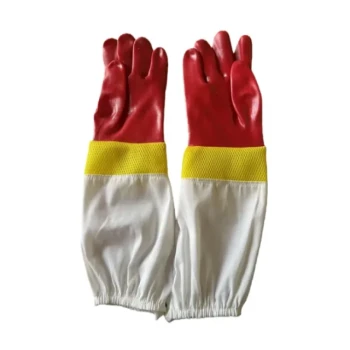
- Heavy Duty Red Rubber Beekeeping Gloves with Vented Mesh Cotton Sleeves
- Professional Square Folding Wire Mesh Beekeeping Veil
- High-Definition Beekeeper Hat with Round Veil Mesh for Beekeeping
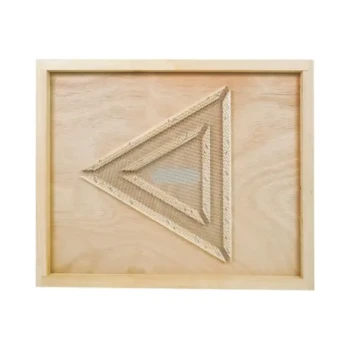
- HONESTBEE Wooden Bee Escape Board with Triangle Mesh Design for Beekeeping
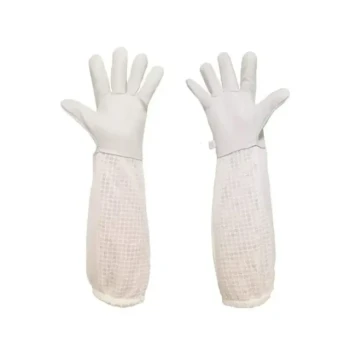
- Premium Ventilated Goatskin Beekeeping Gloves with Full 3-Layer Mesh Sleeve
People Also Ask
- What are the differences between cow leather and goat leather for beekeeping gloves? Protection vs. Dexterity
- Why is it important to clean beekeeping gloves regularly? A Guide to Hive Health & Safety
- Which type of beekeeping gloves are the most sting-resistant? Top Protective Gear for Beekeepers
- Why do some experienced beekeepers choose not to wear gloves? For Superior Dexterity & Hive Welfare
- What type of gloves are recommended for beekeeping? Find the Best Fit for Protection & Dexterity