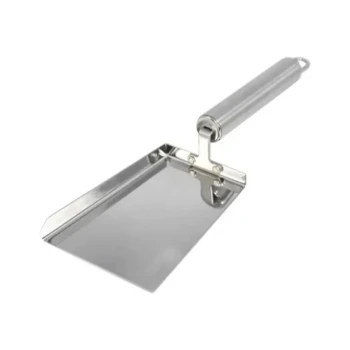
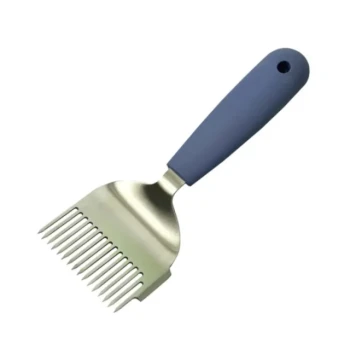
Using a specialized extraction spatula is critical because six-day-old honeybee larvae are incredibly fragile, and standard tools often cause damage to the delicate cuticle or introduce significant contamination. This tool is engineered with precise dimensions to navigate the honeycomb cell, ensuring the sample remains pure and intact for analysis.
The validity of your research hinges on sample integrity; without this specialized tool, weight data regarding protein feeding becomes unreliable due to physical damage or royal jelly impurities.
Preserving Biological Integrity
Precision in Restricted Spaces
Six-day-old larvae reside at the very bottom of honeycomb cells. A specialized extraction spatula is designed with precise physical dimensions tailored to fit this specific environment.
This allows the user to slide the tool beneath the larvae without scraping the cell walls or applying uneven pressure.
Protecting the Larval Cuticle
The cuticle of a six-day-old larva is extremely delicate and prone to rupture. Using improper tools increases the risk of puncturing or tearing this outer layer.
The specialized spatula provides the necessary control to lift the larvae gently, ensuring the physical structure remains undamaged during extraction.
Ensuring Data Accuracy
Minimizing Contaminants
For accurate analysis, the sample must consist of the larvae alone, not its food source. Non-specialized tools often scoop up excessive royal jelly along with the specimen.
The specific design of the extraction spatula minimizes the surface area in contact with the surrounding food, drastically reducing impurities.
The Foundation of Valid Weight Data
The ultimate goal of this extraction is often to measure the influence of protein feeding on body weight. If a sample is covered in royal jelly or has leaked fluids due to damage, the weight measurement will be incorrect.
Using the correct spatula ensures the integrity and purity of the sample, which is the only way to obtain valid, reproducible data.
Common Pitfalls to Avoid
The Cost of Improper Tools
It may be tempting to use standard tweezers or generic laboratory spatulas, but these tools lack the specific geometry required for honeycomb cells.
The trade-off for using generic tools is a high probability of compromised data. You risk either falsely high readings from contamination or falsely low readings from fluid loss due to cuticle damage.
Making the Right Choice for Your Goal
To ensure your study on honeybee development yields publishable results, apply the tool based on your specific metric of success:
- If your primary focus is sample survival: Use the specialized spatula to prevent rupturing the fragile larval cuticle during removal.
- If your primary focus is statistical accuracy: Use the specialized spatula to ensure weight measurements reflect actual larval growth, not royal jelly contamination.
Precision in extraction is the prerequisite for precision in analysis.
Summary Table:
| Feature | Specialized Extraction Spatula | Standard Laboratory Tools |
|---|---|---|
| Geometry | Tailored for honeycomb cell dimensions | Often too wide or bulky |
| Sample Integrity | Protects delicate larval cuticle from rupture | High risk of puncturing or tearing |
| Contamination | Minimizes royal jelly pickup | Scoops excess food/impurities |
| Data Quality | Accurate weight and protein analysis | Unreliable data due to fluid loss or contamination |
Elevate Your Beekeeping Operations with HONESTBEE
Precision is the foundation of success in both apiary research and commercial production. At HONESTBEE, we understand the technical demands of the industry. We provide a comprehensive wholesale range of high-quality beekeeping tools, specialized machinery, and essential consumables designed for commercial apiaries and distributors worldwide.
From delicate extraction tools to advanced hive-making and honey-filling machines, our portfolio empowers you to maintain the highest standards of purity and efficiency. Partner with us to access the specialized equipment your business needs to thrive.
Ready to scale your production? Contact us today to explore our wholesale solutions!
References
- O. Mischenko, D. Kryvoruchko. The efficiency of using hydrocarbon-protein feeding for honey bees. DOI: 10.31073/agrovisnyk202103-05
This article is also based on technical information from HonestBee Knowledge Base .
Related Products
- Stainless Steel Pollen Shovel with Wooden Handle
- Plastic Beekeeping Honey Bee Larvae Grafting Tools for Queen Rearing and Chinese Grafting
- Professional Stainless Steel Pry-Bar Hive Tool
- Heavy-Duty Ergonomic Stainless Steel Pollen Shovel
- Professional Multi-Function Uncapping Fork with Ergonomic Rubber Grip
People Also Ask
- How do bee pollen collection tools affect the quality of bee pollen used in functional dairy ice cream production?
- Why should commercial apiaries focus on the collection of diversified bee products? Maximize Your Hive’s Profit Potential
- How does a specialized pollen collector facilitate the harvesting of diverse bee products? Automate High-Value Yields
- What is the impact of pollen collectors and associated equipment on the cost structure of pollen production? Maximize ROI
- What is the technical significance of using specialized cutting tools for propolis? Master Precision Pollen Harvesting