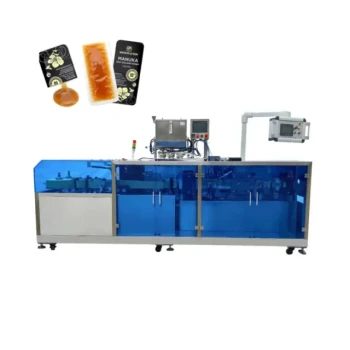
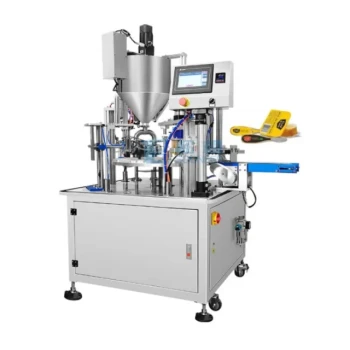
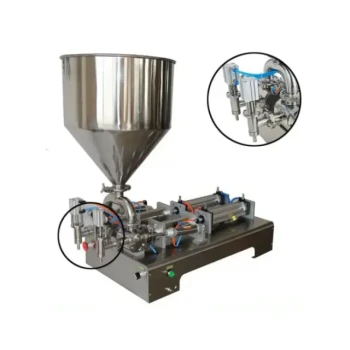
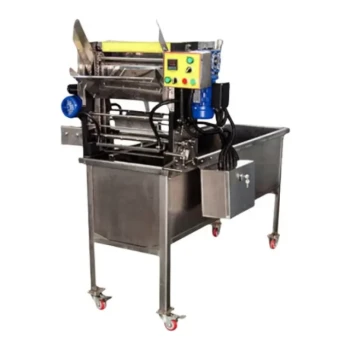
The necessity of industrial automatic filling machines lies in their capacity to package forest honey without contamination while strictly preserving its original bioactive components. For premium monofloral varieties, such as willow or linden honey, these systems are the only reliable method to ensure the consistent product quality and precise metering required to enter high-end markets.
Manual handling creates variability and contamination risks that high-value forest honey cannot tolerate. Industrial automation provides the strictly enclosed environment and precision controls necessary to lock in unique flavor profiles, prevent spoilage, and satisfy the rigorous standards of international trade.
Preserving the Integrity of the Product
Protecting Bioactive Components
Forest honey is valued for its specific medicinal and nutritional properties. Industrial filling machines utilize advanced sealing technologies that package the product without altering its chemical structure. This ensures that the original bioactive components remain active from the hive to the consumer.
Preventing Environmental Degradation
Honey is hygroscopic, meaning it absorbs moisture from the air, which can lead to fermentation and spoilage. Automatic filling machines operate in enclosed environments that prevent contact with air and moisture. This effectively stops fermentation and significantly extends the product's shelf life.
Retaining Volatile Aromas
Monofloral honeys, such as Linden or Eucalyptus, rely on distinct, volatile flavor profiles for their market value. Open or manual filling exposes these aromas to evaporation. Industrial machinery minimizes this exposure, locking in the unique physicochemical properties and specific tastes that distinguish forest honey from generic blends.
Meeting Market and Compliance Standards
Achieving Precision and Consistency
High-end markets demand exactness. Automated systems utilize quantitative filling technology to ensure high measurement precision, regardless of the honey's viscosity. This standardization is a core requirement for commercial retail, ensuring every jar meets stated weight and volume specifications.
Ensuring Hygiene and Traceability
For organic or export-grade honey (such as those targeting EU markets), the hygiene chain cannot be broken. Industrial-grade equipment offers a fully enclosed process that eliminates the risk of secondary contamination from human contact. This level of process control is vital for meeting strict traceability safety requirements.
Handling Physical Variations
Forest honey varies significantly in texture and viscosity. Automated machines use high-precision flow control to manage these variations without sacrificing speed or cleanliness. This capability allows producers to transform raw, variable forest products into standardized commercial goods.
Understanding the Trade-offs
The Cost of Complexity
While automation guarantees quality, it introduces a high initial capital expenditure. These systems require significant upfront investment compared to manual packing lines.
Maintenance and Operation Demands
Industrial machines are complex systems requiring specialized maintenance. Producers must ensure they have skilled operators to manage temperature controls and calibration. Incorrect settings, particularly regarding heat, can damage the very bioactive properties the machine is meant to protect.
Flexibility Limitations
Highly automated lines are optimized for efficiency and standardization. Switching between very different container sizes or honey types may require downtime for re-calibration and cleaning, potentially reducing agility for smaller, multi-variety batches.
Making the Right Choice for Your Goal
To maximize the value of your forest honey resources, align your processing strategy with your market objectives:
- If your primary focus is entering high-end export markets: Prioritize machines with advanced sealing and hygiene certifications to meet strict regulatory standards like those of the EU.
- If your primary focus is preserving unique flavor profiles: Select equipment with enclosed, low-temperature filling capabilities to prevent aroma loss and thermal degradation.
- If your primary focus is scaling production volume: Choose systems with high-speed, viscosity-adaptive metering to maximize throughput while minimizing material loss.
Standardized mechanical filling is not just a convenience; it is the technical requirement for transforming a raw forest resource into a high-value, shelf-stable commercial product.
Summary Table:
| Feature | Benefit for Forest Honey | Market Impact |
|---|---|---|
| Enclosed Filling | Prevents moisture absorption and fermentation | Extends shelf life and stabilizes quality |
| Precision Metering | Ensures consistent volume/weight regardless of viscosity | Meets strict retail and export standards |
| Bioactive Preservation | Protects delicate medicinal and nutritional properties | Maintains premium "monofloral" status |
| Aroma Locking | Retains volatile flavor profiles (e.g., Linden, Willow) | Ensures high-end consumer satisfaction |
| Hygiene Control | Eliminates secondary contamination from human contact | Facilitates EU/Organic certification |
Elevate Your Apiary Operations with HONESTBEE
At HONESTBEE, we specialize in empowering commercial apiaries and distributors with the professional tools needed to succeed in the global market. Whether you are processing rare monofloral forest honey or scaling a large-scale distribution network, our comprehensive range of industrial honey-filling machines, hive-making hardware, and essential beekeeping consumables ensures your product maintains its peak value.
Our Value to You:
- Precision Engineering: Achieve exact metering and hygiene standards for high-end export.
- End-to-End Solutions: From specialized machinery to honey-themed cultural merchandise.
- Industry Expertise: Wholesale support tailored to the needs of professional beekeeping enterprises.
Don’t let manual processing limit your growth. Contact us today to find the perfect automation solution for your business!
References
- V. Solomakha, Василь Леонович Шевчик. ОСОБЛИВОСТІ ПОШИРЕННЯ НЕКТАРОНОСНИХ І ПИЛКОНОСНИХ РОСЛИН У ДЕРЕВНИХ І ЧАГАРНИКОВИХ УГРУПОВАННЯХ БАСЕЙНУ НИЖНЬОЇ СУЛИ. DOI: 10.46913/beekeepingjournal.2022.10.08
This article is also based on technical information from HonestBee Knowledge Base .
Related Products
- Fully Automatic Honey Filling Packaging Machine for Processing Line
- Automatic Honey Filling and Filtering Machine for Beekeeping Bottle Filling
- Precision Durable Efficient HONESTBEE Rotary Honey Filling Machine
- Semi Automatic Small Honey Bottle Filling Machine Honey Filler
- Automatic Single-Dose Snap & Squeeze Honey Sachets Packing Machine
People Also Ask
- Why are fully automatic honey filling and packaging lines essential? Boost Your Honey's Market Value and Quality
- What is a fully-automatic honey filler? Streamline Your Production with High-Precision Automation
- How do automated honey filling and packaging machines affect profitability? Boost Margins with HONESTBEE Technology
- How do automated honey filling and packaging machines contribute to the market value of honey products? Maximize Your ROI
- How do industrial-grade automated honey filling and packaging machines mitigate the risk of physical contamination?