A Paradox in the Apiary
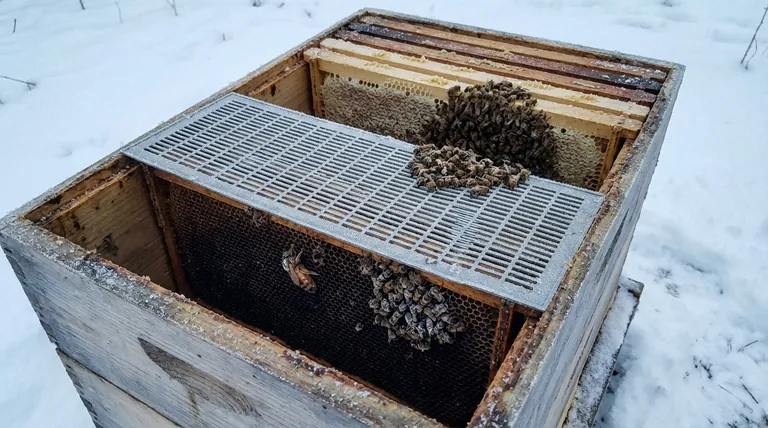
Imagine opening a hive in early spring. It's heavy with honey, yet eerily silent. Inside, you find the entire colony dead, a small, frozen cluster of bees far from their food stores. At the bottom of the hive, you find the queen, alone.
This isn't a case of disease or starvation in the traditional sense. It’s a systemic failure, caused by a single piece of equipment left in the hive by mistake: the queen excluder.
This is the story of how a tool designed for productivity becomes an instrument of destruction, creating a conflict between a beekeeper's goals and a honeybee colony's ancient survival code.
The Physics of Survival
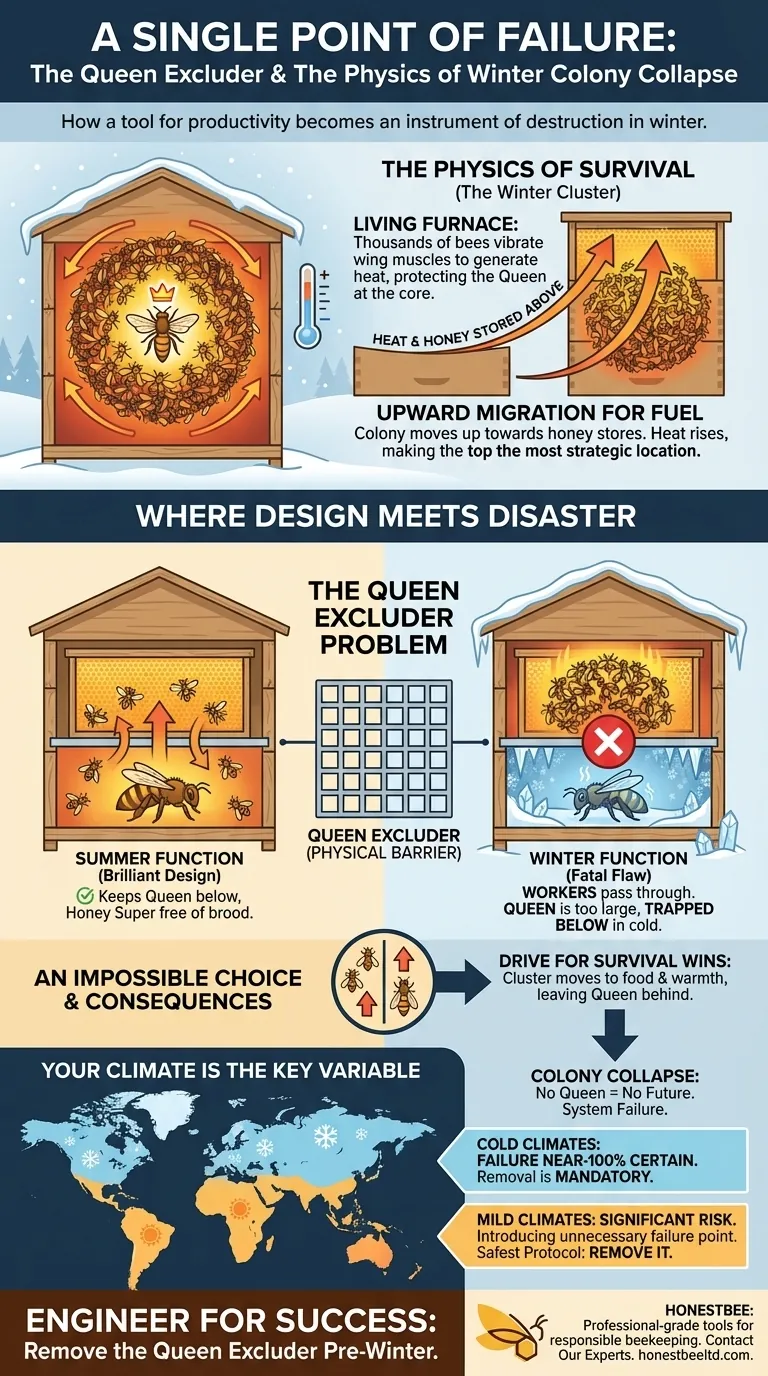
To grasp the danger, you first have to appreciate the engineering marvel of the winter bee cluster. Honeybees don’t hibernate; they create their own pocket of livable weather.
A Living Furnace
The colony forms a tight sphere of thousands of bees. By vibrating their massive wing muscles, they generate metabolic heat, keeping the core of the cluster at a stable, survivable temperature, even as the world freezes around them.
The Queen: The Colony's Nucleus
At the absolute center of this living furnace, protected and warm, is the queen. The colony’s survival is entirely dependent on her survival. The workers are programmed with one objective: keep the queen alive at all costs.
The Slow March for Fuel
As winter progresses, this entire cluster slowly, methodically, moves upwards. Why up? Because that’s where the honey—their winter fuel—is stored. Heat also rises, making the top of the hive the most strategic place to be. This upward migration isn't a suggestion; it's a non-negotiable survival protocol.
Where Design Meets Disaster
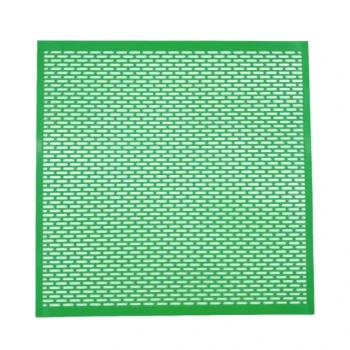
The queen excluder is a simple grid. Its function in summer is brilliant: keep the larger queen in the lower brood boxes while allowing the smaller worker bees to pass through into the honey supers above. This ensures the honey you harvest is free of eggs and larvae.
But that brilliant design feature becomes a fatal design flaw in winter.
An Inevitable Separation
As the winter cluster begins its slow march upwards towards the honey, the worker bees slip through the excluder's grid without a problem.
The queen, however, cannot. She is physically too large to pass.
The system now faces a catastrophic error. The workers are above the barrier, with the food and rising warmth. The queen is trapped below, in the increasingly cold and empty part of the hive.
An Impossible Choice
The cluster is faced with a choice dictated by physics and instinct. Do they abandon their upward march to stay with the queen and starve? Or do they follow their programming towards food and warmth, leaving her behind?
The drive for immediate survival always wins. The cluster will move on, leaving the queen to her fate.
Separated from the warmth of the cluster, the queen quickly freezes and dies. Without a queen, the colony is functionally dead. It has no future and will perish long before spring.
Your Climate is the Key Variable
Whether this scenario is a certainty or just a risk depends entirely on your local climate.
- In Cold Climates: In regions with harsh, freezing winters (like much of North America and Europe), removing the excluder is mandatory. The tight clustering and necessary upward migration make this failure mode a near-100% certainty.
- In Milder Climates: In places where winters are mild and bees may not form such a tight, migratory cluster, you might get away with it. But you are still introducing a significant, unnecessary point of failure into the system. The safest protocol is always to remove it.
| Management Action | System Logic | Consequence of Failure |
|---|---|---|
| Remove Excluder Pre-Winter | Allows the entire colony "superorganism" to migrate as one unit. | Colony successfully tracks its food and warmth, ensuring survival. |
| Leave Excluder In Place | Creates a physical barrier that fractures the colony's structure. | Queen is isolated and freezes; the colony collapses. |
Engineer for Success
Successful beekeeping is less about imposing our will on bees and more about understanding their system and removing obstacles to their survival. The queen excluder in winter is a classic example of a human tool creating a fatal bug in a natural process.
Ensuring your colonies have the best chance of survival means aligning your practices with their needs. It starts with sound knowledge and is supported by durable, reliable equipment built for the realities of beekeeping. At HONESTBEE, we supply commercial apiaries and distributors with the professional-grade tools needed to manage hives effectively and responsibly through every season.
Preparing a colony for winter is the ultimate test of a beekeeper’s foresight. Let us help you equip your operation for success. Contact Our Experts
Visual Guide
Related Products
- High Performance Plastic Queen Excluder for Beekeeping and Apiary Management
- Professional Plastic Queen Excluder for Modern Beekeeping
- Lightweight Durable Plastic Queen Excluder Scraper for Beekeeping
- Metal Queen Bee Excluder for Beekeeping
- Premium Wood Framed Metal Wire Queen Bee Excluder
Related Articles
- How Plastic Queen Excluders Improve Hive Longevity and Colony Health
- Plastic Queen Excluders vs. Alternatives: A Beekeeper’s Guide to Smarter Hive Management
- Why Plastic Queen Excluders Outperform Metal and Wood: Science, Savings, and Hive Protection
- How to Choose Queen Excluders Based on Colony Behavior and Queen Traits
- The Geometry of Order: Why the Queen Excluder is a Beekeeper's Most Strategic Tool