The Beekeeper's Dilemma: A Chore or a Critical Control Point?
An experienced beekeeper approaches a stack of used frames. Some are dark with old comb, others sticky with propolis. The immediate task seems simple: clean them.
But the real question isn't how to clean them. It's why.
Is this a routine rotation of equipment from a thriving, healthy apiary? Or are these frames from a "dead-out," a colony that mysteriously collapsed, its demise a potential warning sign of lurking pathogens?
This decision point separates routine maintenance from critical risk management. The choice of cleaning method reflects a beekeeper's entire philosophy on disease prevention and the long-term resilience of their operation.
Two Paths, Two Mindsets
Every decision in an apiary carries weight. When it comes to cleaning plastic frames, you are choosing between managing for efficiency and managing for sanitation. These are not the same thing.
Path 1: Mechanical Scraping (The Assumption of Health)
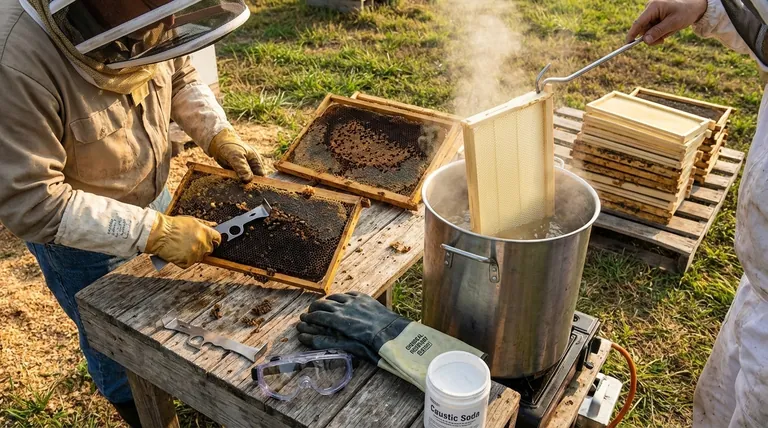
Scraping old wax and propolis from a frame with a hive tool is the most direct approach. It's a physical task with a clear, tangible result: a frame ready for bees to draw new comb.
This method operates on the assumption that the hive of origin was healthy. It’s an act of renewal, not sterilization. It’s fast, requires no chemicals, and is perfectly suitable for cycling out old comb in a vigorous, productive system.
Path 2: Boiling with Caustic Soda (The Assumption of Risk)
Submerging frames in a boiling solution of caustic soda (sodium hydroxide) is a different act entirely. This is not just cleaning; it is a complete chemical reset.
The process dissolves every last trace of wax, propolis, and biological matter. More importantly, it destroys the invisible threats: the resilient spores of diseases like American Foulbrood (AFB) that can persist for decades and wipe out entire apiaries.
This method assumes that risk is always present and must be actively neutralized.
A Sobering Look at the Trade-Offs
The choice between these two methods is a classic case of balancing risk, effort, and reward. Your decision has consequences.
The Hidden Cost of "Easy"
Scraping is deceptively simple. Its primary drawback is what it leaves behind.
While the frame may look clean, microscopic pathogens can remain embedded in the plastic's cell bases and crevices. In a commercial operation, moving such a frame from one colony to another is a potential vector for disease transmission. What seems like an efficient shortcut can become the origin point of a catastrophic, and expensive, outbreak.
The Calculated Risk of "Sterile"
Boiling with caustic soda offers true sterilization, but it is an inherently hazardous process.
Caustic soda is highly corrosive. It can cause severe chemical burns on contact with skin or eyes. The process demands discipline, a controlled outdoor environment, and unwavering adherence to safety protocols. It is a professional-grade solution that carries professional-grade risks if handled improperly.
Non-Negotiable Safety Protocol for Boiling
This is not a task for shortcuts. Full Personal Protective Equipment (PPE) is mandatory.
- Eyes: Chemical-resistant splash goggles.
- Hands: Heavy-duty, chemical-resistant gloves.
- Body: Long sleeves and pants.
- Environment: Outdoors, in a well-ventilated area away from pets and children.
The System is the Solution: A Procedural Checklist
To manage risk effectively, rely on process, not guesswork.
Protocol 1: Mechanical Debridement (Scraping)
- Remove Bulk Wax: Use a sharp hive tool or putty knife to slice the old comb off the plastic foundation.
- Scrape Surfaces: Methodically scrape the flat surfaces to clear away remaining wax and propolis.
- Detail Corners: Use the corner of the tool to clean out stubborn residue from the deeper grooves of the molded plastic.
Protocol 2: Chemical Sterilization (Boiling)
- Prepare Solution: In a large steel vessel (never aluminum), slowly add approximately one part caustic soda to twenty parts water. Always add the chemical to the water, not the other way around.
- Boil: Bring the solution to a rolling boil outdoors, while wearing full PPE.
- Submerge Frames: Carefully lower the frames into the solution for 5-10 minutes. All wax and propolis will dissolve completely.
- Rinse Thoroughly: Using a hook, remove the frames and immediately submerge or rinse them in a separate container of clean water to neutralize and remove all caustic residue.
- Dry: Allow frames to air dry completely before storage or reuse.
A Decision Matrix for the Professional Apiary
Your choice should be a conscious one, aligned with the specific situation and your operational goals.
| Method | Best For | Key Advantage | Key Disadvantage |
|---|---|---|---|
| Mechanical Scraping | Rotating old comb from verified healthy hives | Simple, safe, no hazardous chemicals | Does not sterilize; leaves potential pathogens behind |
| Boiling w/ Caustic Soda | Disease prevention, dead-outs, high-volume use | Complete sterilization, highly efficient | Requires hazardous materials & strict safety protocols |
Building a Resilient Operation
For commercial apiaries and equipment distributors, equipment is not just a tool; it's a long-term asset. The ability to effectively clean and sterilize frames season after season is fundamental to profitability and herd health. This requires equipment designed to endure these demanding cycles.
HONESTBEE is a wholesale supplier dedicated to the needs of serious beekeeping operations. Our durable, high-quality plastic frames are engineered to withstand the rigors of both mechanical scraping and repeated chemical sterilization, ensuring a long service life. We understand that in a commercial setting, reliable and resilient equipment is the foundation of a healthy business.
Protect your investment and the health of your colonies with equipment built for the task. Contact Our Experts
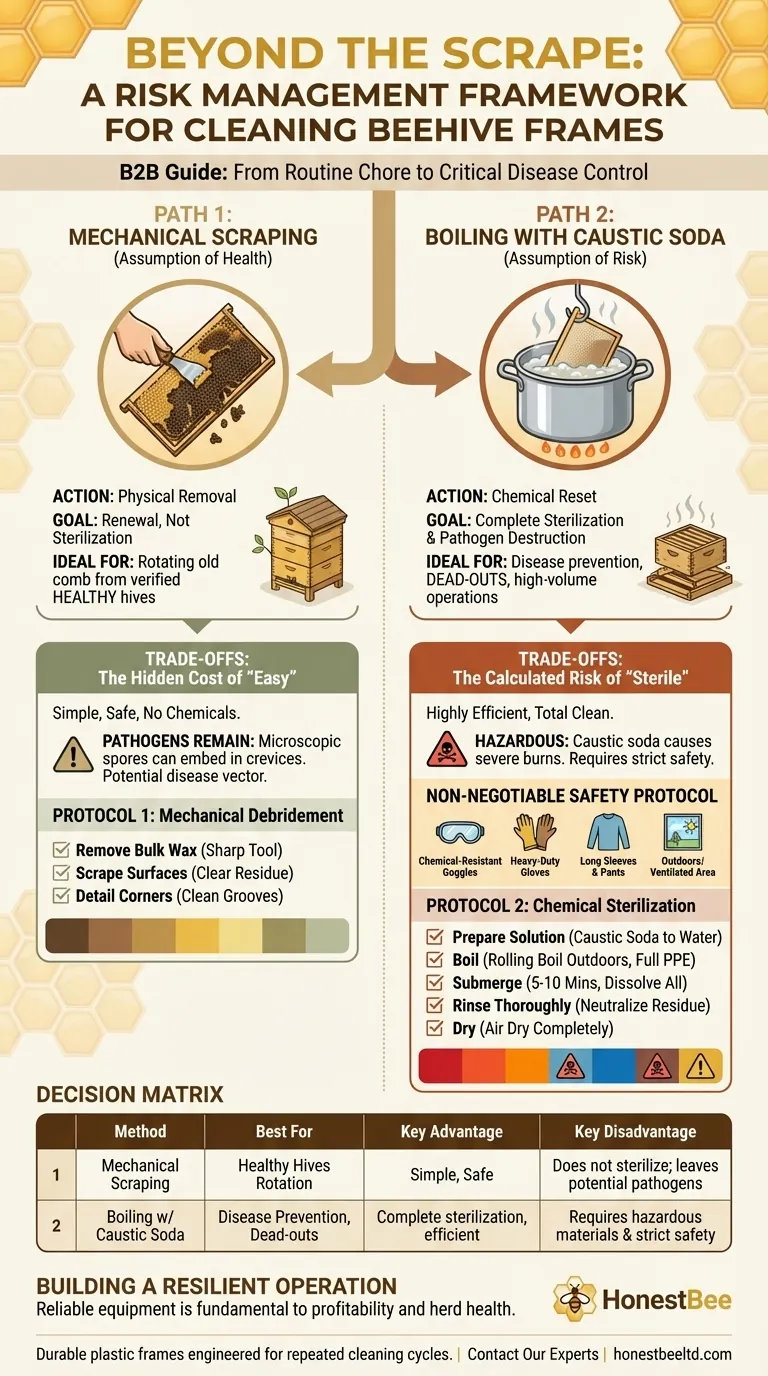
Visual Guide
Related Products
- Wooden Bee Hive Frames for Beekeeping and Wholesale
- Assembled Wooden Bee Frames with Plastic Foundation for Durability and Convenience by HONESTBEE
- HONESTBEE Wired and Assembled Wooden Bee Frames Foundation for a Thriving Hive
- Heavy-Duty Stainless Steel Clip-On Frame Perch
- Professional Galvanized Steel Frame Rest for Beehives
Related Articles
- Wooden vs. Plastic Bee Hive Frames: Balancing Sustainability and Practicality
- Assembled vs. Unassembled Frames: A Beekeeper’s Time-Value Analysis
- The Beekeeper's Trade-Off: Engineering Efficiency vs. Honoring Instinct
- How to Choose Beehive Frames: Balancing Bee Health, Honey Yield, and Beekeeper Convenience
- The Unseen Enemy: Why Mold on Beehive Frames Is a Symptom, Not the Disease