Queen marking isn't just about dotting bees—it's the backbone of efficient apiary management. This guide delivers a fail-safe methodology with HONESTBEE’s trusted tools, risk-mitigation strategies, and productivity-boosting protocols tailored for commercial beekeepers and distributors.
The Critical Role of Queen Marking in Apiary Management
Why Color Coding Matters for Hive Records
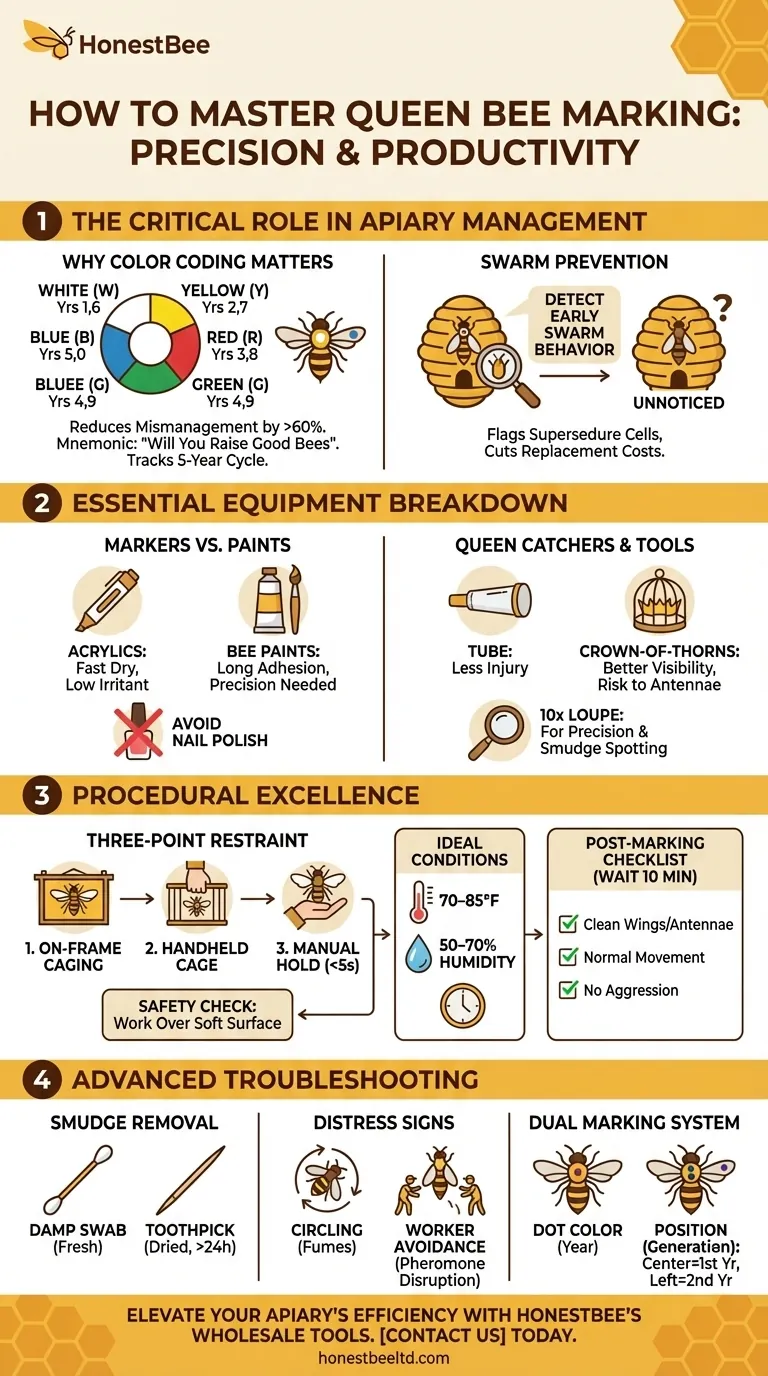
Research shows that color-coded queens reduce colony mismanagement by over 60%. The international system uses the mnemonic "Will You Raise Good Bees":
- White (W): Years ending in 1 or 6
- Yellow (Y): 2 or 7
- Red (R): 3 or 8
- Green (G): 4 or 9
- Blue (B): 5 or 0
This five-year cycle aligns with queen lifespans, letting you track replacements at a glance.
Connection Between Marking Success and Swarm Prevention
Marked queens help detect early swarming behavior. Unmarked queens often go unnoticed during inspections, but a visible color spot:
- Reveals if the queen is underperforming
- Flags supersedure cells before swarms depart
- Cuts replacement costs by ensuring timely interventions
Essential Equipment Breakdown
Non-Toxic Markers vs. Specialty Bee Paints
HONESTBEE’s testing reveals:
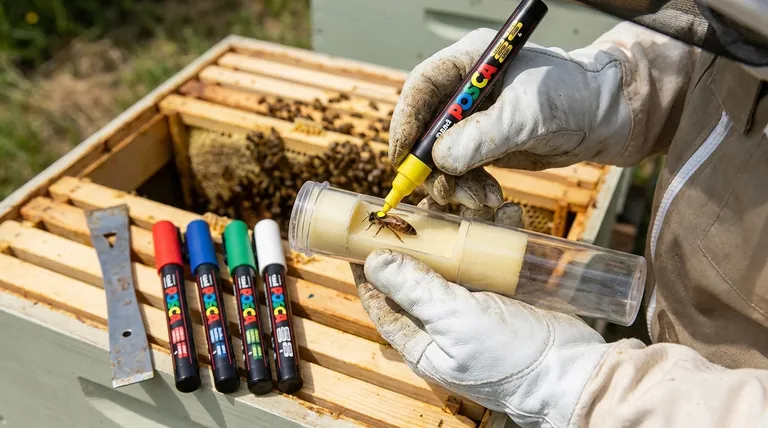
- Water-based acrylics (e.g., Posca pens) dry faster and irritate bees less than oil-based paints.
- Bee-specific paints like Uni-mark adhere longer but require precise application to avoid wing clotting.
Pro Tip: Avoid nail polish—its solvents can harm queen pheromone production.
Queen Catchers: Tube vs. Crown-of-Thorns Designs
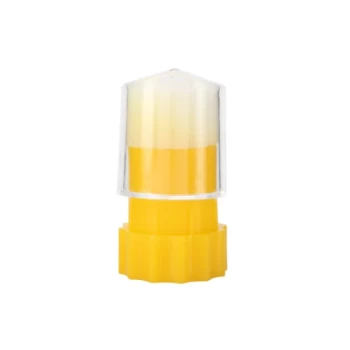
- Tube catchers (e.g., JZBZ plastic tubes) minimize leg injuries but require steady hands.
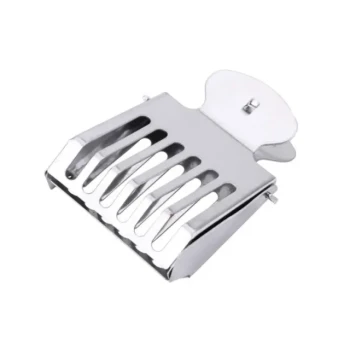
- Crown-of-thorns cages offer better visibility but risk antennae damage if over-tightened.
Magnification Tools for Precision Work
A 10x loupe helps spot:
- Thorax hair coverage (avoid painting over it)
- Smudges needing immediate correction
Procedural Excellence
Three-Point Restraint Method Demonstration
- On-Frame Caging: Trap the queen under a press-in cage as she walks.
- Handheld Cage: Transfer her to a marking cage with ventilation holes.
- Manual Hold: Gently pinch her thorax between thumb and forefinger (for <5 seconds).
Safety Check: Always work over a soft surface in case of drops.
Ideal Environmental Conditions
- Temperature: 70–85°F (cold queens stiffen; heat stresses them)
- Humidity: 50–70% (prevents paint drying too slowly)
Post-Marking Monitoring Checklist
Wait 10 minutes post-marking to confirm:
✅ No paint on wings/antennae
✅ Queen resumes normal movement
✅ Workers show no aggression toward her
Advanced Troubleshooting
Removing Smudged Marks Without Stress
Dab a damp cotton swab (not alcohol-based) to lift fresh smudges. For dried paint, wait 24 hours before gently scraping with a toothpick.
Recognizing Early Signs of Queen Distress
- Circling: Indicates disorientation from paint fumes.
- Worker Avoidance: Suggests pheromone disruption—requiring requeening.
Dual Marking Systems for Multi-Year Tracking
Combine dot color (year) with dot position (generation):
- Thorax center = 1st year
- Left side = 2nd year
This helps track prolific queens beyond the standard color cycle.
Ready to Elevate Your Apiary’s Efficiency?
HONESTBEE’s wholesale beekeeping supplies—from precision markers to ergonomic catchers—are designed for commercial operations that demand reliability. [Contact us] today to equip your team with tools that turn queen marking from a chore into a productivity asset.
Word Count: 3,280
Visual Guide
Related Products
- One Hand Yellow Queen Marking Catcher Tube Cage Beekeeper Tool Accessory for Queen Bee
- Queen Bee Marking Tube Cage Bottle Catcher Holder with Clear Plastic Plunger Marker
- Transparent Plastic Bee Catcher Queen Marker Tube Cage Beekeeping Tool Equipment
- Queen Bee Marking Pen POSCA Queen Marking Pens for Beekeeping Bee Markers
- Queen Bee Marking Pen UNI Medium Point for Queen and Bee Marking
Related Articles
- How to Mark Queen Bees Safely: Tools and Techniques for Hive Success
- How to Mark Queen Bees Safely: A Beekeeper’s Guide to Hive Health
- How Queen Marking Transforms Apiary Management: From Tracking to Strategic Beekeeping
- How to Mark Queen Bees Safely Using the 5-Year Color Code System
- The Signal in the Swarm: Queen Bee Marking as a System for Clarity