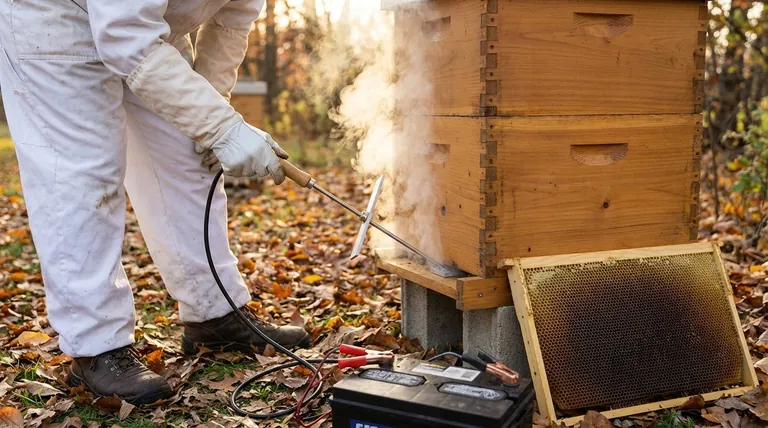
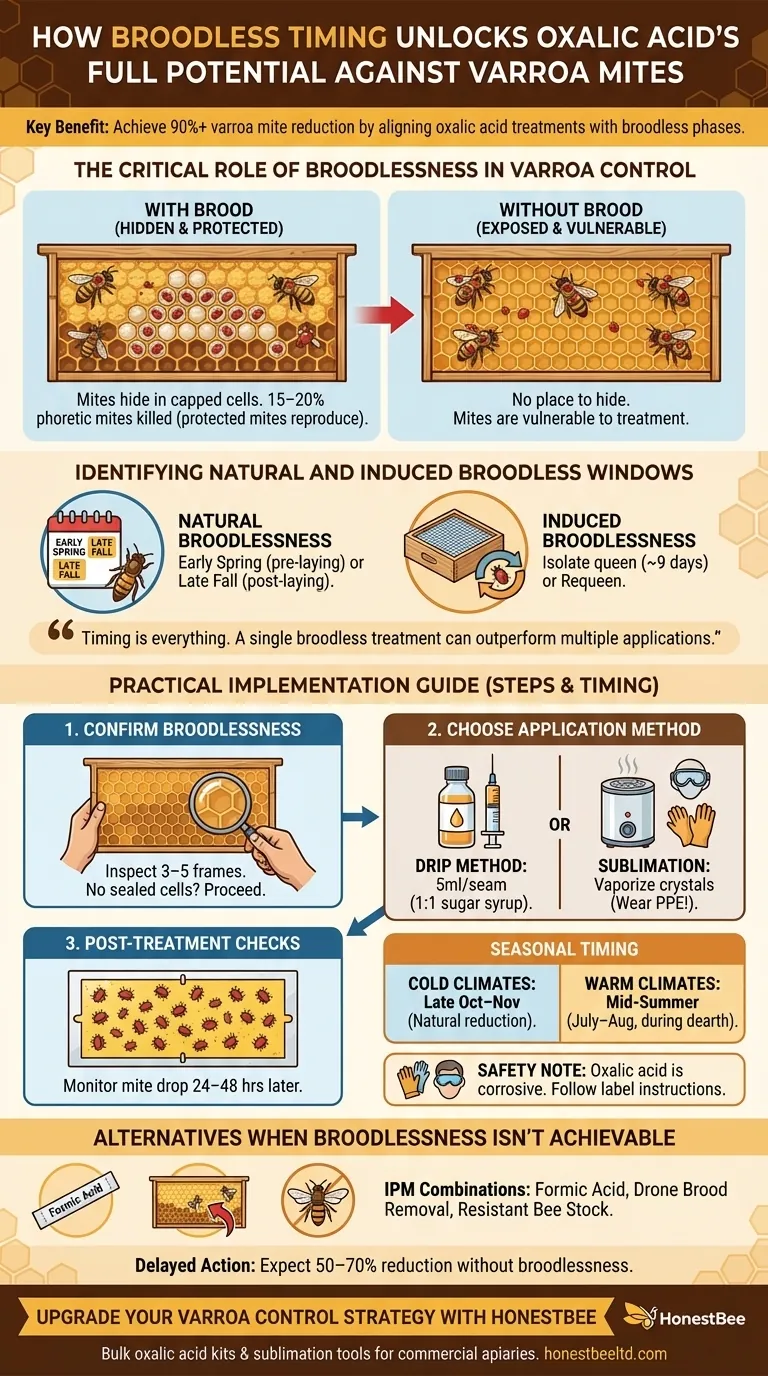
Key Benefit for Beekeepers: Achieve 90%+ varroa mite reduction by aligning oxalic acid treatments with broodless phases—here’s the science-backed protocol.
The Critical Role of Broodlessness in Varroa Control
Why Varroa Mites Exploit Brood Cycles
Varroa mites are cunning parasites that hide their reproductive cycle inside capped brood cells. While adult bees carry phoretic mites (visible on their bodies), the real damage occurs when mated female mites infiltrate brood cells. There, they lay eggs that feed on developing bee larvae, weakening future generations of your colony.
Research shows:
- Only 15–20% of phoretic mites die from oxalic acid when brood is present (protected mites continue reproducing).
- Mites in capped cells evade direct contact with treatments, requiring staggered applications.
Identifying Natural and Induced Broodless Windows
Broodlessness—when a colony has no sealed brood—creates a rare opportunity. Without capped cells, mites have nowhere to hide, making them vulnerable to oxalic acid.
Two scenarios to leverage:
- Natural Broodlessness: Occurs in early spring (before queens ramp up egg-laying) or late fall (after brood rearing slows).
-
Induced Broodlessness: Temporarily restrict the queen’s egg-laying by:
- Using a queen excluder to isolate her for ~9 days (the time needed for existing brood to hatch).
- Requeening (new queens often pause laying briefly).
"Timing is everything. A single broodless treatment can outperform multiple applications during active brood cycles."
Practical Implementation Guide
Seasonal Timing for Different Climates
Cold Climates (e.g., Northern U.S., Canada):
- Best Window: Late October–November, after honey harvest and before winter clustering.
- Why? Natural brood reduction occurs as colonies prepare for winter.
Warm Climates (e.g., Southern U.S., Mediterranean):
- Best Window: Mid-summer (July–August) during nectar dearths.
- Pro Tip: Combine with hive splits to create artificial brood breaks.
Step-by-Step Hive Preparation Protocol
-
Confirm Broodlessness:
- Inspect 3–5 frames in the brood chamber. No sealed cells? Proceed.
-
Choose Application Method:
- Drip Method: Mix oxalic acid with sugar syrup (1:1 ratio). Apply 5ml per seam of bees.
- Sublimation: Vaporize oxalic acid crystals (wear PPE!). Requires no hive disassembly.
-
Post-Treatment Checks:
- Monitor mite drop counts 24–48 hours later. A sharp increase confirms efficacy.
Safety Note: Oxalic acid is corrosive. Use gloves, goggles, and follow label instructions.
Alternatives When Broodlessness Isn’t Achievable
Integrated Pest Management (IPM) Combinations
If broodlessness isn’t feasible, pair oxalic acid with:
- Formic Acid Strips: Effective against mites in capped brood but temperature-sensitive.
- Drone Brood Removal: Mites prefer drone cells; culling these reduces populations.
- Resistant Bee Stock: Some honeybee strains (e.g., Russian hybrids) groom mites off themselves.
Risks and Efficacy Trade-offs
- Repeated Oxalic Acid Doses: May irritate bees’ tracheal systems. Limit to 2–3 treatments per season.
- Delayed Action: Without broodlessness, expect 50–70% mite reduction per application.
Expert Insight: "Think long-term. Rotate treatments and breed mite-resistant queens to reduce chemical dependence."
Upgrade Your Varroa Control Strategy with HONESTBEE
For commercial apiaries and distributors, HONESTBEE’s bulk oxalic acid kits and sublimation tools simplify large-scale treatments. Pair our equipment with the timing strategies above to protect your colonies—and your bottom line.
Final Thought: Varroa mites evolve, but so do beekeepers. By mastering broodless-phase treatments, you turn a biological loophole into your greatest weapon.
Visual Guide
Related Products
- Durable 12V Oxalic Acid Vaporizer for Varroa Mite Treatment Beehive Beekeeping Tool
- Heavy Duty 12V Oxalic Acid Evaporator Vaporizer for Bee Varroa Mite Treatment Beekeeping Fumigator Atomizer
- Oxalic Acid Vaporizer 12V for Bee Varroa Mite Treatment
- 12V Bee Mite Removal Evaporator Oxalic Acid Vaporizer for Bee Fumigation Treatment 180W Atomization
- Adjustable Formic and Acetic Acid Dispenser for Bee Mite Treatment
Related Articles
- How to Master Oxalic Acid Vaporization for Safe and Effective Varroa Mite Control
- Optimizing Varroa Control: A Science-Backed Rotation Guide for Beekeepers
- How Oxalic Acid Vaporization Safely Controls Mites While Protecting Bees
- How Beekeepers Can Control Varroa Mites Without Harming Their Colonies
- How to Detect and Defeat Varroa Mite Syndrome in Your Beehives





