For commercial honey producers, filtration isn't just about clarity—it's a strategic decision affecting regulatory approval, product quality, and profitability. This guide explores how modern filtration systems balance purity standards with honey's natural integrity, helping operations maximize both compliance and revenue.
The Science Behind Honey Filtration
Mesh Gradients and Microbial Control
Honey filtration begins with mesh selection, where pore size directly influences:
- Pathogen removal: Filters with openings below 50 microns capture yeast and bacteria spores, reducing fermentation risks
- Pollen retention: Coarser meshes (200+ microns) preserve pollen counts for raw honey certification while still removing wax debris
- Flow efficiency: Multi-stage gradient filters (e.g., 600→400→200 micron progression) prevent premature clogging during high-volume processing
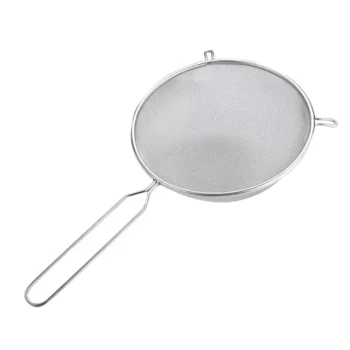
Research indicates that 70-90% of commercial operations now use stainless steel mesh filters over nylon, as steel maintains pore integrity during repeated thermal sterilization cycles.
Thermal Management in Enzyme Preservation
Heat is filtration's silent partner. Excessive temperatures (above 40°C/104°F) degrade:
- Glucose oxidase, reducing honey's natural antimicrobial properties
- Diastase enzymes, which some EU markets test to verify minimal processing
Modern systems combat this through:
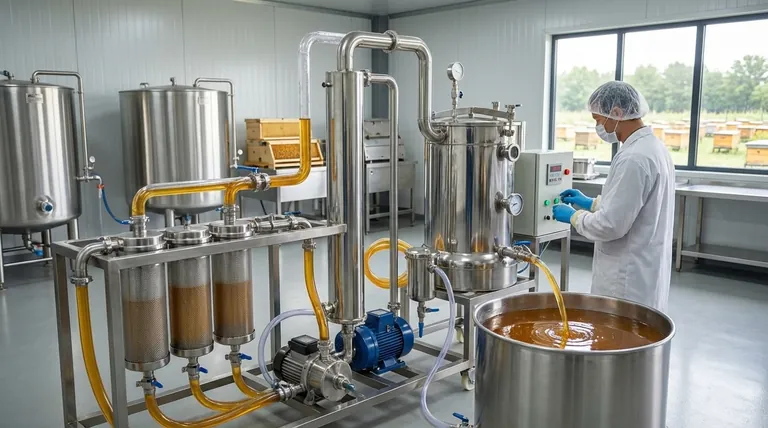
✔ Jacketed filter housings with circulating water temperature control
✔ In-line infrared sensors triggering flow pauses if honey exceeds 35°C
✔ Insulated piping that maintains viscosity without supplemental heating
Industry Compliance Frameworks
CODEX HMF Limits and Filter Temperature Correlation
Hydroxymethylfurfural (HMF) levels—a key quality marker—rise exponentially with heat exposure. Filter systems impact this through:
| Process Factor | HMF Increase Potential | Mitigation Strategy |
|---|---|---|
| Direct heating | 3-5 mg/kg per 10°C | Use gravity-fed filters |
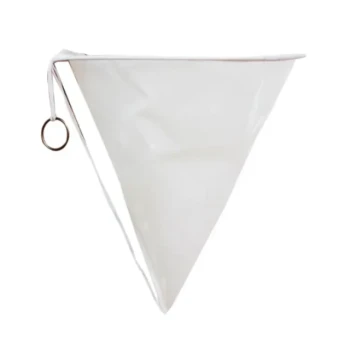
| Extended dwell time | 2 mg/kg per hour | Install high-flow conical filters |
| Metal ion contact | 1.5× baseline rate | Electropolished stainless steel |
The CODEX standard of ≤40 mg/kg HMF (80 mg/kg for tropical honeys) becomes easily achievable with proper filtration design.
Particulate Size Requirements by Market Region
Global markets enforce varying clarity standards:
- EU Raw Honey: Allows particles up to 0.8mm (no fine filtration)
- US Grade A: Requires removal of all >0.3mm matter
- Middle East Premium: Often demands 100-micron filtration for crystal-clear products
Producers serving multiple regions can implement modular filter banks, swapping end-stage meshes without reprocessing.
Commercial Success Patterns
Case Study: Raw Honey Branding with 200-Micron Filters
A Minnesota cooperative increased retail prices by 22% after transitioning to minimal filtration (200 microns), leveraging:
- Lab-tested pollen counts averaging 450,000 grains/10g (meeting "raw" thresholds)
- Marketing visuals comparing their lightly filtered honey against conventional ultra-clear competitors
- Partnership with gastroenterologists promoting pollen-retentive honey for gut health
Bulk Processor Yield Optimization Through Pressure Cycling
A Texas packing facility reduced waste by 18% by:
◉ Installing progressive cavity pumps that maintain ≤2 bar pressure
◉ Using self-cleaning rotary filters that auto-purge wax buildup
◉ Scheduling filtration runs during early morning when honey viscosity is highest (coolest temperatures)
Elevate Your Honey Production with HONESTBEE
Whether you're a boutique apiary or large-scale processor, HONESTBEE's filtration solutions help you:
✓ Meet exacting regional standards without over-processing
✓ Preserve the enzymes and pollen that distinguish premium honey
✓ Scale operations with equipment designed for commercial workloads
Explore our beekeeping equipment range to find systems that align with your compliance needs and brand positioning.
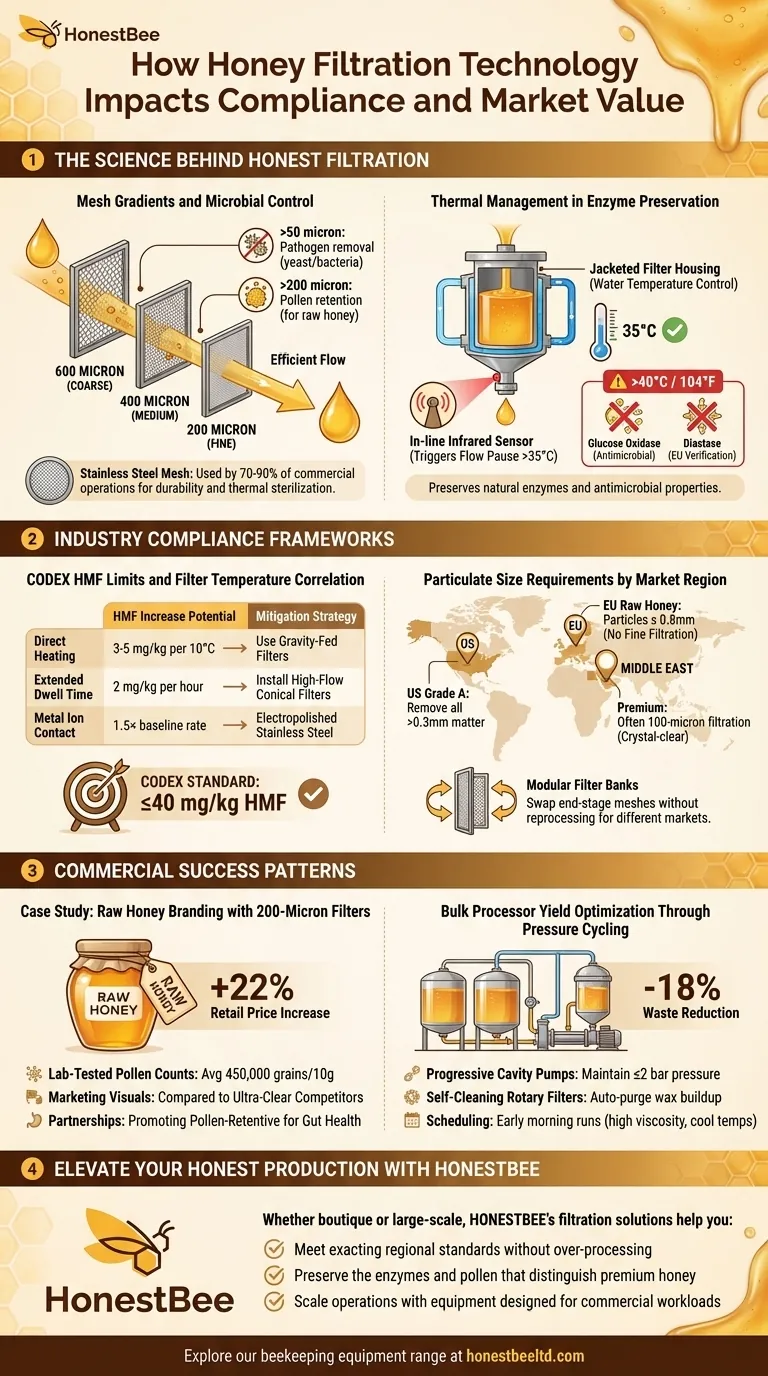
Visual Guide
Related Products
- Electric Double Wall Honey Filtering Machine Purifier Equipment for Honey Processing Plant
- Professional Stainless Steel Honey Filtering Machine with Water Bath Heating for Beekeeping
- Honey Concentrating and Filtering Dehumidifier Machine 2T Capacity for Honey
- Professional Honey Filter with Tripod Support Stand
- Professional Stainless Steel Honey Filter with Support Handle
Related Articles
- From Chaos to Clarity: The Physics and Psychology of Honey Filtering
- How Professional Honey Filtration Preserves Quality While Meeting Food Safety Standards
- The Sticky Bottleneck: Why Your Honey Filtering Fails and How to Fix It for Good
- Why Your Honey Filtering is Slow and Inconsistent—And How to Fix It for Good
- Optimizing Honey Filtration: How Mesh Sizes Shape Quality and Market Appeal