Is this scene familiar? A tank full of freshly extracted, golden honey sits waiting. You pour it into your filtering system, anticipating a steady, clean flow, but instead, you get a frustratingly slow, sticky drip. Before you know it, the filter is clogged, your workflow is stalled, and a task that should be simple has become a major bottleneck.
For commercial apiaries, this isn't just an annoyance; it's a critical operational failure.
The Vicious Cycle of Clogs, Costs, and Compromises
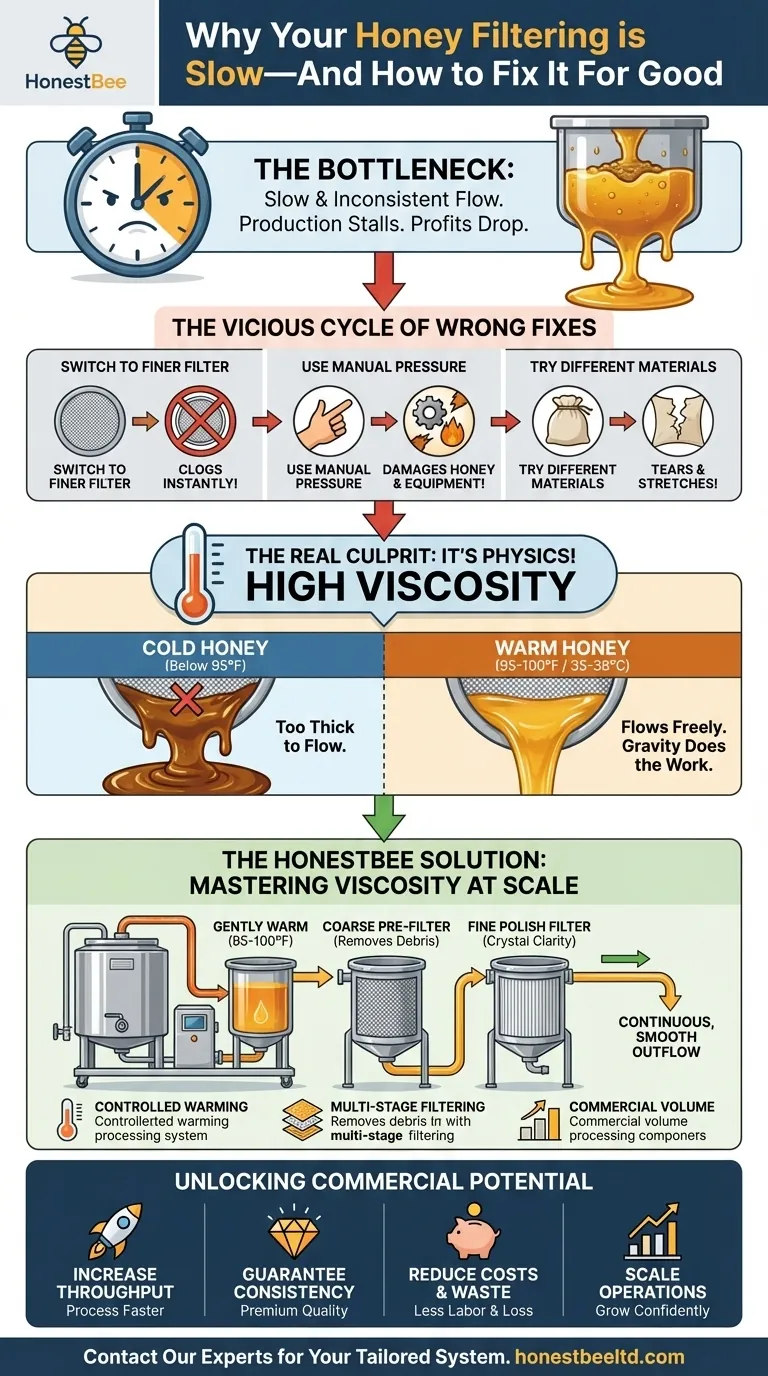
When faced with a slow filtering process, the common instinct is to blame the filter. Beekeepers and their teams often find themselves trapped in a loop of ineffective fixes:
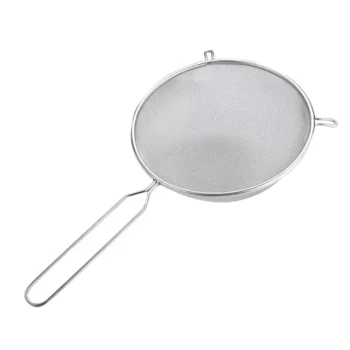
- Switching to a finer filter: You swap your 400-micron screen for a 200-micron one, hoping for better clarity. Instead, it clogs almost instantly, making the problem worse.
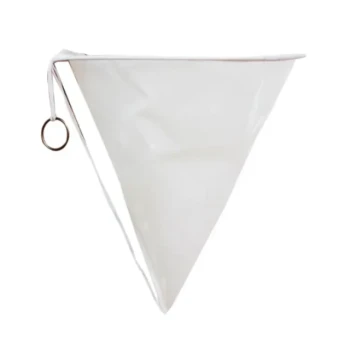
- Trying different materials: You experiment with nylon bags or layers of cheesecloth, only to have them clog, stretch, or tear under the weight of the honey.
- Applying manual pressure: Frustrated teams might try scraping the screens or forcing the honey through, a messy process that can introduce more impurities and damage expensive equipment.
This struggle has significant business consequences. Processing delays mean your team is wasting valuable hours on a low-value task. Production stalls, creating a backlog that can jeopardize delivery timelines for your wholesale clients. Worst of all, in a desperate attempt to speed things up, you might be tempted to apply too much heat, unknowingly cooking your honey and destroying the delicate flavors and enzymes that define its quality.
This isn't just a filtering problem; it's a threat to your efficiency, profitability, and brand reputation.
The Real Culprit: It's Not Your Filter, It's Physics
Here is the turning point: The persistent clogging and slow flow are rarely the fault of your filter screen. The root cause of the problem is honey's high viscosity.
In simple terms, raw honey is thick. At room temperature, it flows like cold molasses. No matter how sophisticated your filter is, it cannot pull honey through; it can only let honey pass through it. The common "solutions" fail because they focus on the gate (the filter) instead of the thing that needs to move (the honey).
Why a Finer Screen Makes Things Worse
Trying to push thick, cold honey through an even finer screen is like trying to drain gravel through a kitchen sieve. The problem isn't the size of the holes; it's that the material itself is not in a state where it can flow freely.
The key to unlocking an efficient filtering process lies not in finding a magical screen, but in mastering one simple physical principle: gently and precisely controlling temperature.
When honey is warmed to a consistent 95-100°F (35-38°C), its viscosity drops dramatically. It flows freely and easily, like warm syrup. At this temperature, gravity does the work for you, pulling the liquid honey through the filter and leaving the wax, propolis, and other debris behind. The challenge, however, is maintaining this perfect temperature—warm enough to flow, but not so hot that it damages the honey's quality.
The Right Tool for the Job: Mastering Viscosity at Scale
To solve the viscosity puzzle, you don't need a better filter; you need a better system—one that is engineered to manage temperature with precision and consistency, batch after batch.
This is precisely why HONESTBEE's wholesale solutions are designed as integrated, professional-grade systems. Our equipment isn't just a collection of parts; it's a purpose-built solution based on a deep understanding of honey's physical properties.
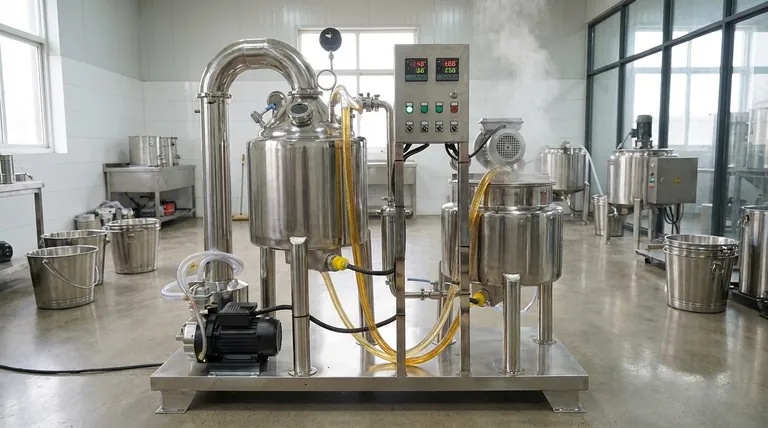
Our commercial-grade stainless steel filter tanks and double-bucket systems are built for durability and ease of use. But their true value is realized when paired with controlled warming systems. They are designed to:
- Gently and Evenly Warm Honey: Maintain the ideal temperature range across the entire batch, ensuring every drop flows freely without creating dangerous hot spots that could scorch the honey.
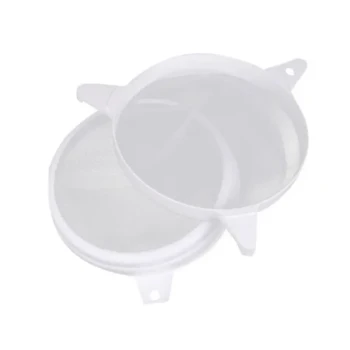
- Enable Multi-Stage Filtering: Our systems allow you to use a coarse screen first to remove large debris, followed by a finer screen (e.g., 200 microns) to achieve crystal-clear polish, all within a single, continuous workflow.
- Handle Commercial Volumes: Built from food-grade, heavy-duty materials, our equipment is made to withstand the demands of a high-volume apiary, ensuring reliability during your busiest harvest seasons.
Instead of fighting against the physics of honey, our systems work with it, turning a frustrating bottleneck into a smooth, predictable, and efficient process.
Beyond the Bottleneck: Unlocking New Commercial Potential
When your filtering process transforms from a source of stress into a streamlined operation, it unlocks potential across your entire business.
With a reliable and scalable system, you can:
- Increase Throughput Dramatically: Process your entire harvest in a fraction of the time, freeing up your team to focus on beekeeping, sales, and other growth-oriented activities.
- Guarantee Product Consistency: Deliver brilliantly clear, high-quality honey to your wholesale distributors with every order, building a reputation for uncompromising quality and reliability.
- Reduce Waste and Labor Costs: Minimize honey loss from clogged equipment and slash the man-hours spent babysitting a dysfunctional setup, directly improving your profit margins.
- Scale Your Operations Confidently: Take on larger contracts and expand your business, knowing your processing infrastructure can handle the increased volume without fail.
An efficient filtering process is the foundation of a scalable and profitable honey business. It’s the difference between being a producer constantly managing problems and a reliable supplier focused on growth.
If you are ready to move past frustrating bottlenecks and build a more resilient and profitable operation, our team is here to help you design a filtering system tailored to your unique scale and goals. Find out how the right equipment can transform your honey processing from a liability into a competitive advantage. Contact Our Experts.
Visual Guide
Related Products
- Professional Stainless Steel Honey Filtering Machine with Water Bath Heating for Beekeeping
- Electric Double Wall Honey Filtering Machine Purifier Equipment for Honey Processing Plant
- Professional Stainless Steel Honey Filter with Support Handle
- Professional Honey Filter with Tripod Support Stand
- Professional Cone-Shaped Honey Filter with Reinforced Steel Ring
Related Articles
- The Sticky Bottleneck: Why Your Honey Filtering Fails and How to Fix It for Good
- Why Your Honey Filtering Process is Failing (And It’s Not the Honey’s Fault)
- The Quality vs. Scale Dilemma: Why Your Honey Filtering Process Is Broken (And How to Fix It for Good)
- Optimizing Honey Filtration: How Mesh Sizes Shape Quality and Market Appeal
- Beyond the Sticky Mess: Why Your Honey Filtering Method Is Secretly Killing Your Growth