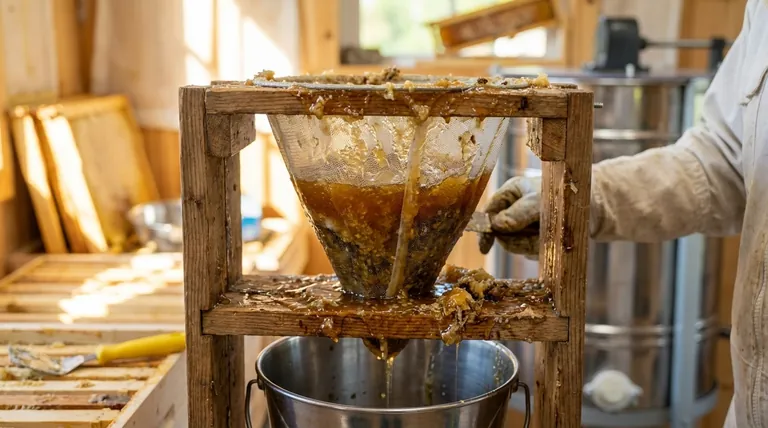
For commercial beekeepers, few moments are as satisfying as seeing a super full of golden honey. But that satisfaction can quickly turn to frustration during extraction. Does this scene sound familiar? Your honey flow, which should be steady, has slowed to a trickle. A quick check reveals the problem: another clogged filter, backing up the entire process. You're left with a sticky mess, a long day ahead, and a critical bottleneck that's costing you time and money.
The Cycle of Clogs, Costs, and Compromise
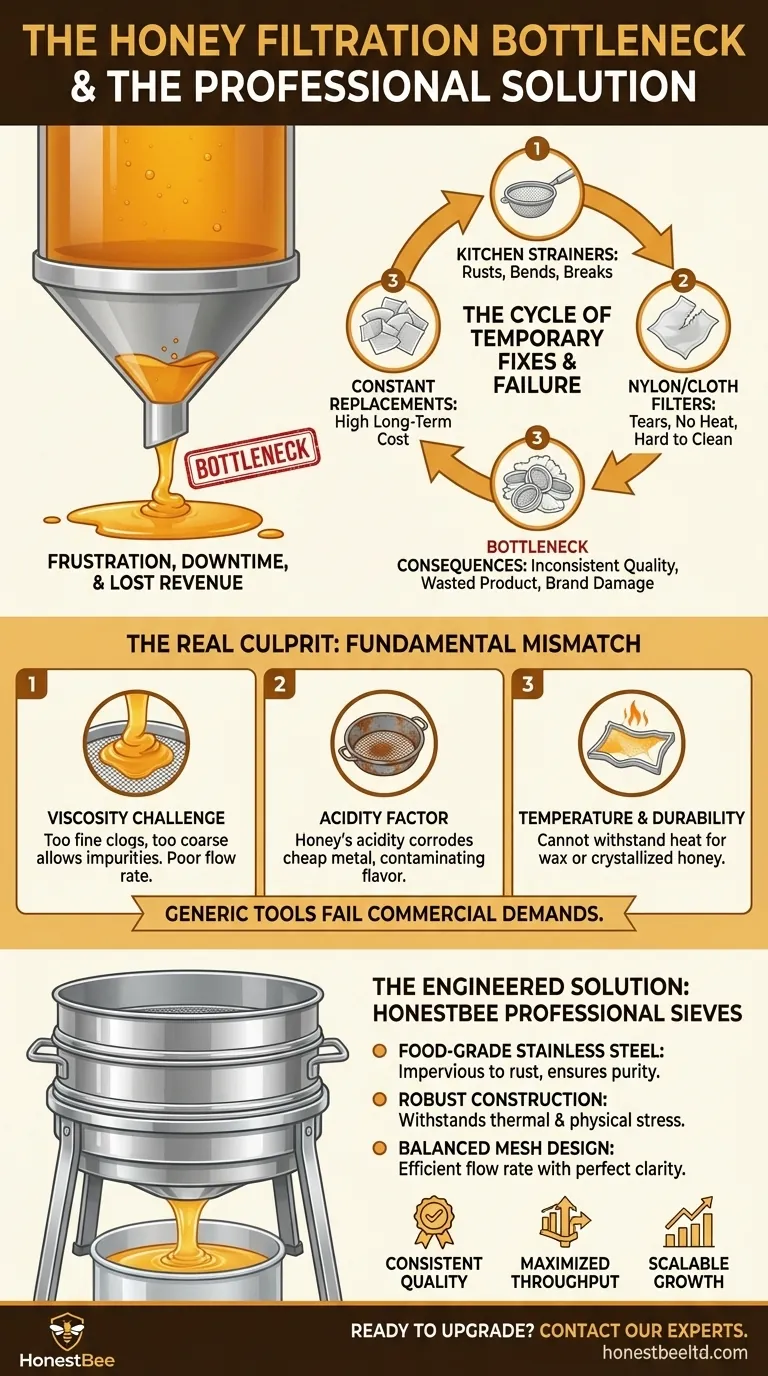
If you're dealing with constant filtering issues, you're not alone. It's one of the most common operational headaches in the beekeeping industry. To fight it, many apiaries find themselves in a frustrating cycle of temporary fixes:
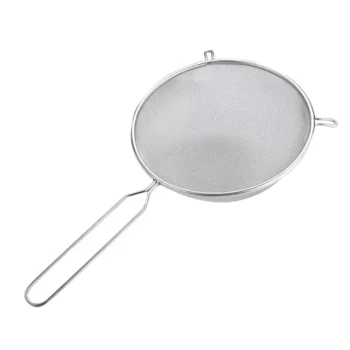
- Using standard kitchen strainers: They seem like a cheap solution, but their thin metal rusts from honey's natural acidity, and the frames bend or break under the weight of a commercial batch.
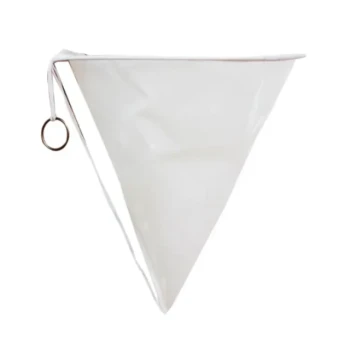
- Relying on nylon or cloth filters: These tear easily, can be difficult to clean thoroughly, and often can't withstand the gentle heat needed to process crystallized honey or wax cappings.
- Constantly replacing cheap equipment: The "savings" from buying inexpensive filters quickly evaporate when you have to buy new ones for every harvest season, or even multiple times within a season.
This isn't just an inconvenience; it has direct business consequences. Each clogged filter means downtime, reducing the amount of honey you can process per day. Inconsistent filtering leads to a final product with wax flecks or other impurities, hurting your brand's reputation for quality. And every bit of honey wasted in a clogged, inefficient system is revenue you can't recover.
The Real Culprit: A Fundamental Mismatch
After struggling with these issues, it's easy to conclude that filtering honey is just inherently difficult. But what if the problem isn't the honey? What if the problem is that you've been given the wrong tool for the job?
The common solutions fail because they don't account for the unique physics and chemistry of honey and beeswax. A standard sieve is simply not engineered to handle the demands of a commercial apiary.
Why Your Strainer Is Set Up to Fail
- The Viscosity Challenge: Honey is exceptionally viscous (thick and slow-flowing). A generic sieve's mesh isn't optimized for this. Too fine, and it clogs almost instantly. Too coarse, and it fails to remove fine wax particles and impurities. It’s a constant battle between flow rate and filtration quality.
- The Acidity Factor: Honey is naturally acidic. This acid slowly corrodes low-grade metals, causing rust that can contaminate your honey and impart off-flavors. It's why that cheap strainer you bought last year is already showing spots of rust.
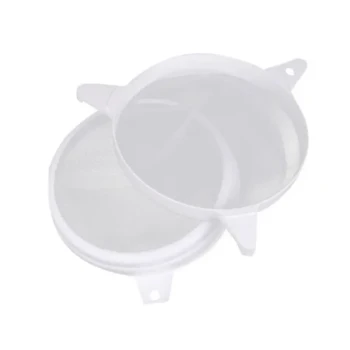
- The Temperature and Durability Demand: Processing wax cappings or reliquefying crystallized honey requires heat. Plastic frames warp, and flimsy metal sieves deform under thermal stress and the physical demands of a high-volume operation.
These "common solutions" only treat the symptom (the clog) without addressing the root cause: a fundamental mismatch between the tool and the task.
The Solution Embodied: A Sieve Engineered for Beekeepers
To permanently solve the filtration bottleneck, you don't need just another strainer. You need a sieving system designed from the ground up with a deep understanding of honey and wax. You need a tool built to:
- Resist corrosion from honey's natural acidity.
- Withstand the thermal and physical stress of a commercial operation.
- Balance fine particle removal with an efficient flow rate for viscous liquids.
This is precisely the thinking behind HONESTBEE's professional-grade stainless steel sieves. They are not a generic tool adapted for beekeeping; they are the direct solution to the problems commercial apiaries face every day.
Our sieves are built with food-grade stainless steel, making them impervious to rust and ensuring the purity of your honey's flavor. The robust construction guarantees they won't warp when used with warmed honey or for rendering wax. Most importantly, the mesh is engineered to provide the perfect balance—capturing fine impurities to produce brilliantly clear honey without creating the frustrating clogs that bring your workflow to a standstill.
Beyond the Fix: Unlocking Your Apiary’s Potential
When your filtration bottleneck is gone, something powerful happens. It’s not just about less frustration; it's about unlocking new potential for your business.
With a reliable and efficient filtering system, you can:
- Guarantee Product Consistency: Deliver perfectly clear, premium-quality honey with every single batch, strengthening your brand and justifying a premium price.
- Maximize Throughput: Process your harvest significantly faster, increasing your capacity during the most critical time of the year and boosting your overall revenue.
- Scale with Confidence: Grow your operation knowing that your equipment can handle increased volume without becoming a point of failure. You're free to focus on expanding your colonies, not on fixing broken gear.
Solving a persistent technical problem like filtration is the first step toward building a more resilient, profitable, and scalable beekeeping business. If you're ready to move beyond temporary fixes and invest in a permanent solution, our team is here to help you find the right equipment for your specific operational needs. Let's talk about the unique challenges of your apiary and how the right tools can transform your workflow. Contact Our Experts.
Visual Guide
Related Products
- Professional Stainless Steel Honey Filtering Machine with Water Bath Heating for Beekeeping
- Professional Stainless Steel Honey Filter with Support Handle
- Professional Honey Filter with Tripod Support Stand
- Electric Double Wall Honey Filtering Machine Purifier Equipment for Honey Processing Plant
- Professional Cone-Shaped Honey Filter with Reinforced Steel Ring
Related Articles
- Why Your Honey Filtering Process is Failing (And It’s Not the Honey’s Fault)
- The Quality vs. Scale Dilemma: Why Your Honey Filtering Process Is Broken (And How to Fix It for Good)
- Why Your Honey Filtering is Slow and Inconsistent—And How to Fix It for Good
- Optimizing Honey Filtration: How Mesh Sizes Shape Quality and Market Appeal
- Beyond the Sticky Mess: Why Your Honey Filtering Method Is Secretly Killing Your Growth