For commercial beekeepers, queen rearing is a critical yet labor-intensive process. Traditional grafting methods demand precision and time, but modern solutions like Jenter and Nicot systems offer a graft-free alternative with measurable advantages. This article explores how these systems outperform manual grafting in success rates, scalability, and operational efficiency—backed by practical insights for apiaries.
Graft-Free Queen Production Explained
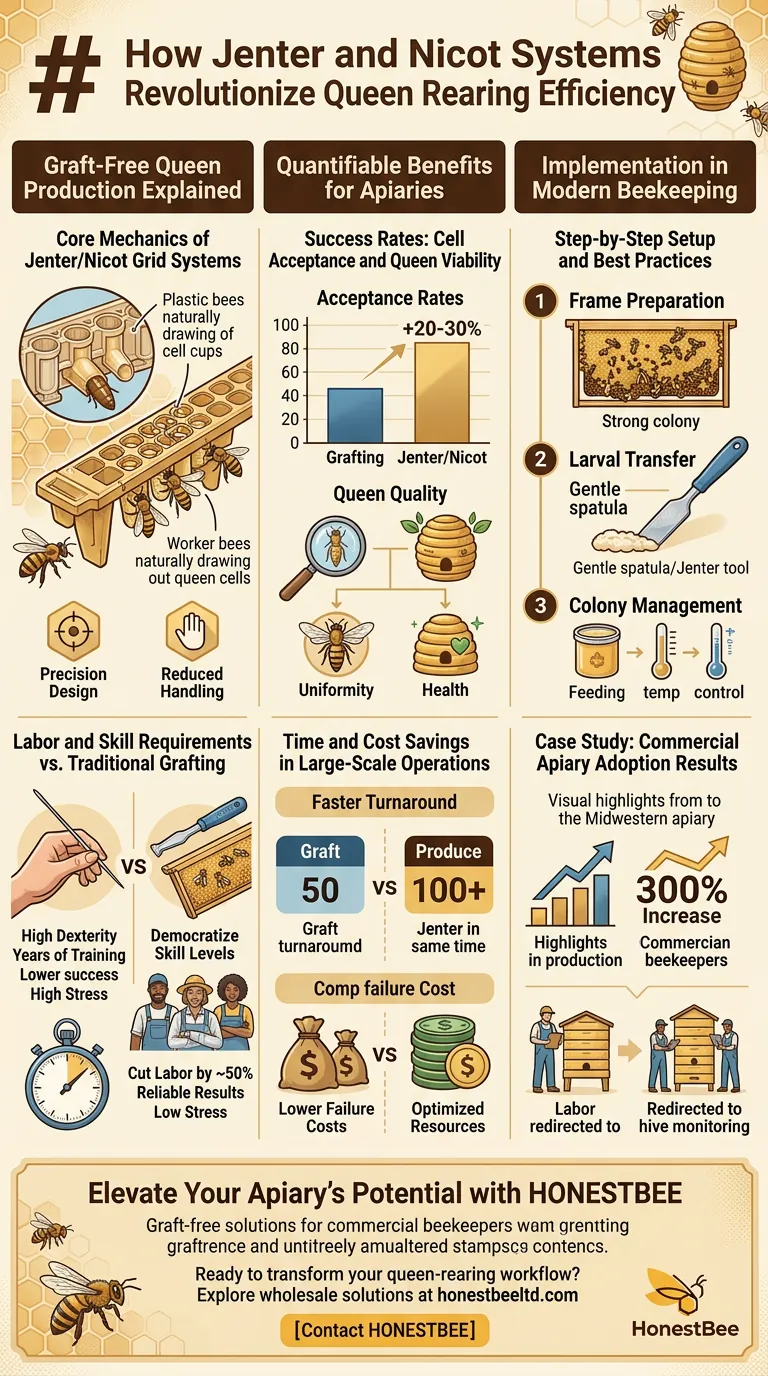
Core Mechanics of Jenter/Nicot Grid Systems
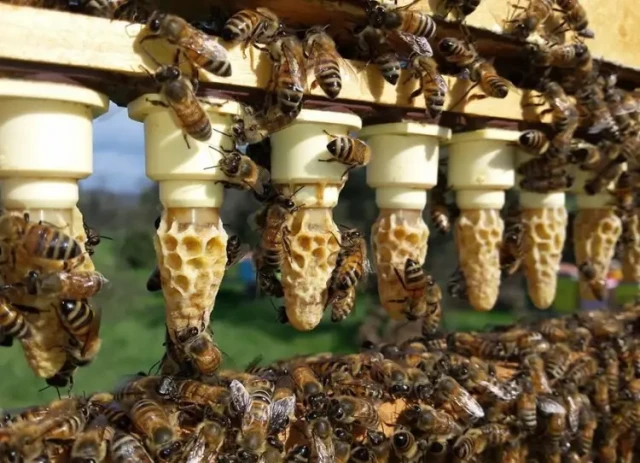
Jenter and Nicot systems eliminate grafting by using specialized plastic frames with pre-formed cell cups. Worker bees naturally draw out queen cells from larvae placed in these cups, mimicking natural queen-rearing conditions. Key features include:
- Precision Design: Cell cups are uniformly spaced to optimize larval acceptance.
- Reduced Handling: Larvae transfer occurs without delicate grafting tools, minimizing stress.
Labor and Skill Requirements vs. Traditional Grafting
Manual grafting requires:
- High Dexterity: Handling tiny larvae with grafting needles.
- Training: Beekeepers often need years to master consistent success.
In contrast, Jenter/Nicot systems: - Democratize Skill Levels: Beginners achieve reliable results.
- Cut Labor by ~50%: Fewer steps mean faster setup and monitoring.
Quantifiable Benefits for Apiaries
Success Rates: Cell Acceptance and Queen Viability
Studies suggest graft-free systems improve:
- Acceptance Rates: Up to 20–30% higher than manual grafting, as larvae remain undisturbed.
- Queen Quality: Uniform cell size promotes healthier queen development.
Time and Cost Savings in Large-Scale Operations
For commercial apiaries, the math is clear:
- Faster Turnaround: Produce 100+ queen cells in the time it takes to graft 50 manually.
- Lower Failure Costs: Reduced larval rejection means fewer wasted resources.
Implementation in Modern Beekeeping
Step-by-Step Setup and Best Practices
- Frame Preparation: Install Jenter/Nicot frames in strong colonies with ample nurse bees.
- Larval Transfer: Gently place young larvae into cups using a spatula (no grafting required).
- Colony Management: Ensure consistent feeding and temperature for optimal cell development.
Case Study: Commercial Apiary Adoption Results
A midwestern apiary reported:
- 300% Increase in annual queen production after switching to Jenter systems.
- Labor Savings redirected to hive health monitoring, boosting overall productivity.
Elevate Your Apiary’s Potential with HONESTBEE
Why struggle with grafting’s steep learning curve? HONESTBEE’s Jenter and Nicot-compatible equipment helps commercial beekeepers and distributors scale production reliably. Explore our wholesale solutions to streamline your queen-rearing process—because efficiency shouldn’t hinge on manual skill alone.
Ready to transform your queen-rearing workflow? Contact HONESTBEE for bulk pricing on graft-free systems tailored to high-volume operations.
Visual Guide