Beekeeping demands gear that balances protection and practicality—nowhere more critically than in footwear. The right boots prevent painful stings, withstand harsh conditions, and support long hours in the apiary. This guide breaks down material choices, design features, and comfort considerations to help you make an informed decision.
Selecting Beekeeping Boots for Maximum Protection
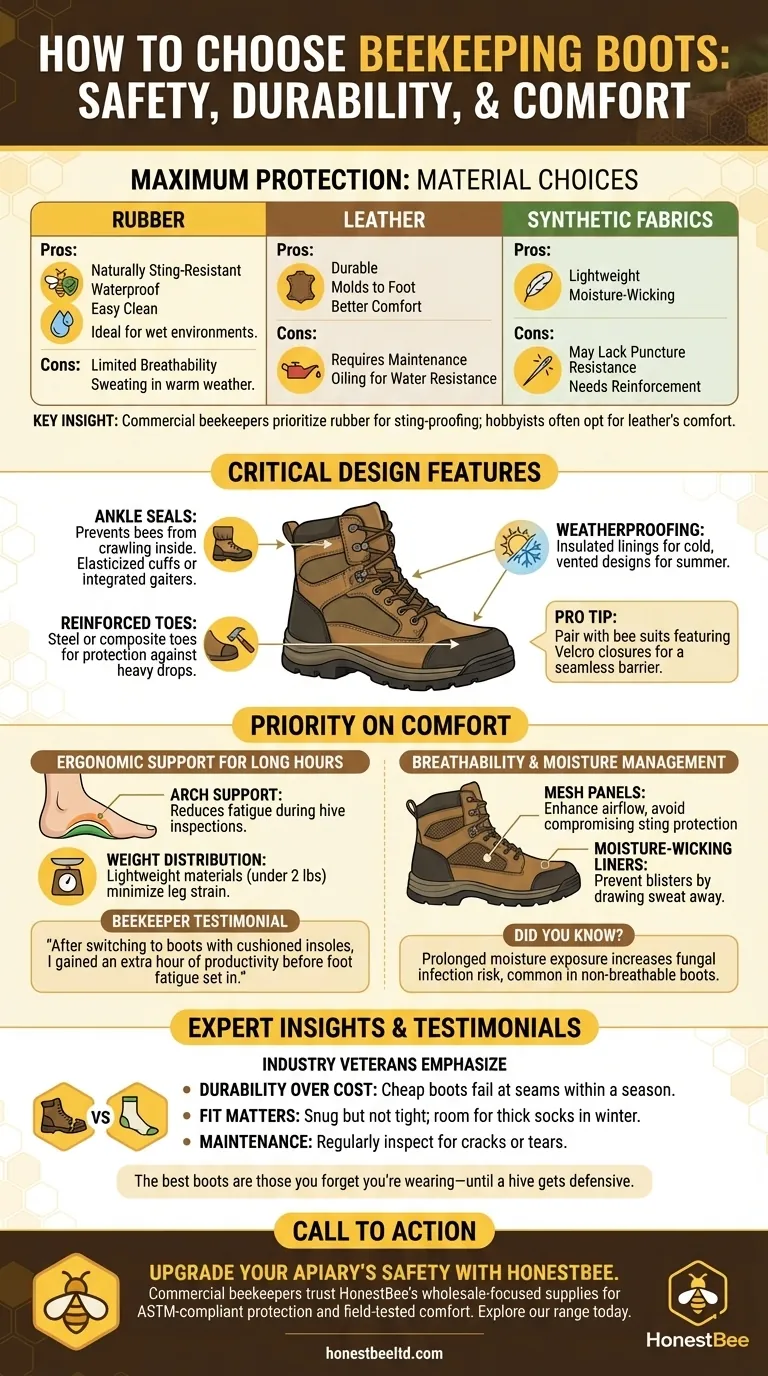
Material Choices: Rubber, Leather, or Synthetic?
Rubber
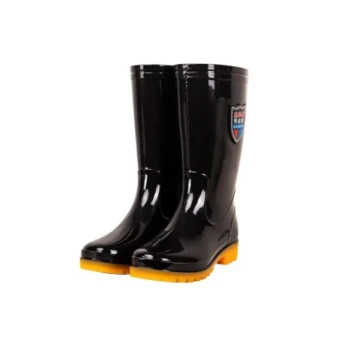
- Pros: Naturally sting-resistant, waterproof, and easy to clean. Ideal for wet environments.
- Cons: Limited breathability; can cause sweating in warm weather.
Leather
- Pros: Durable and molds to the foot over time for better comfort. Often paired with sting-resistant linings.
- Cons: Requires regular maintenance (oiling) to retain water resistance.
Synthetic Fabrics
- Pros: Lightweight and often incorporate moisture-wicking technology.
- Cons: May lack the puncture resistance of rubber or leather unless reinforced.
Key Insight: Research shows that most commercial beekeepers prioritize rubber for its sting-proofing, while hobbyists may opt for leather’s comfort.
Design Features: Ankle Seals, Reinforced Toes, and Weatherproofing
-
Ankle Seals
- Prevents bees from crawling inside boots. Look for elasticized cuffs or integrated gaiters.
-
Reinforced Toes
- Steel or composite toes protect against heavy equipment drops.
-
Weatherproofing
- Insulated linings extend usability into colder months, while vented designs suit summer.
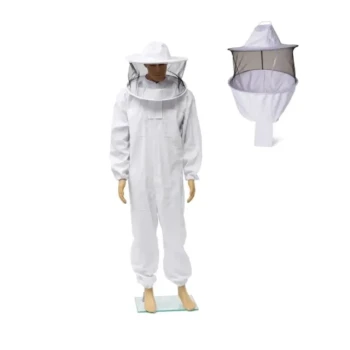
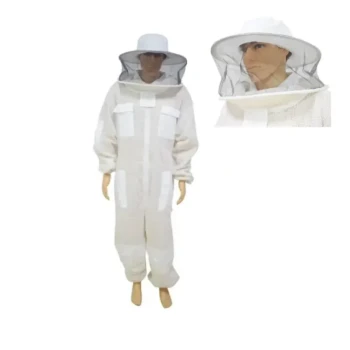
Pro Tip: Pair boots with bee suits featuring Velcro closures at the ankles for a seamless barrier.
Prioritizing Comfort in the Apiary
Ergonomic Support for Long Hours
- Arch Support: Reduces fatigue during repetitive movements (e.g., hive inspections).
- Weight Distribution: Lightweight materials (under 2 lbs per boot) minimize leg strain.
Beekeeper Testimonial: "After switching to boots with cushioned insoles, I gained an extra hour of productivity before foot fatigue set in."
Breathability and Moisture Management
- Mesh Panels: Enhance airflow but should avoid compromising sting protection.
- Moisture-Wicking Liners: Prevent blisters by drawing sweat away from the skin.
Did You Know? Prolonged moisture exposure increases the risk of fungal infections—a common issue reported by beekeepers wearing non-breathable boots.
Expert Insights and Beekeeper Testimonials
Industry veterans emphasize:
- Durability Over Cost: Cheap boots often fail at seams or soles within a season.
- Fit Matters: Snug but not tight; room for thick socks in winter.
- Maintenance: Regularly inspect for cracks or tears (especially in rubber).
Final Thought: The best boots are those you forget you’re wearing—until a hive gets defensive.
Upgrade Your Apiary’s Safety with HONESTBEE
Commercial beekeepers and distributors trust HONESTBEE’s wholesale-focused beekeeping supplies for gear that combines ASTM-compliant protection with field-tested comfort. Explore our range today and keep your focus on the hive—not your footwear.
Visual Guide
Related Products
- Professional PVC Beekeeping Shoes with Integrated Non-Slip Sole
- White PVC Beekeeping Shoes with Non-Slip Safety Sole
- Metal Bee Hive Stand Bee Box Stand for Beekeeping
- Wholesales Dadant Size Wooden Bee Hives for Beekeeping
- Yellow Plastic Bucket Pail Perch for Beekeeping
Related Articles
- How to Choose Beekeeping Shoes That Keep You Cool and Protected
- How to Choose Beekeeping Shoes: Safety Features That Actually Work
- How to Choose Beekeeping Footwear That Stops Stings Without Sacrificing Comfort
- How to Choose Beekeeping Footwear That Prevents Stings Without Sacrificing Comfort
- How to Choose Beekeeping Footwear: Safety, Comfort, and Cost Considerations