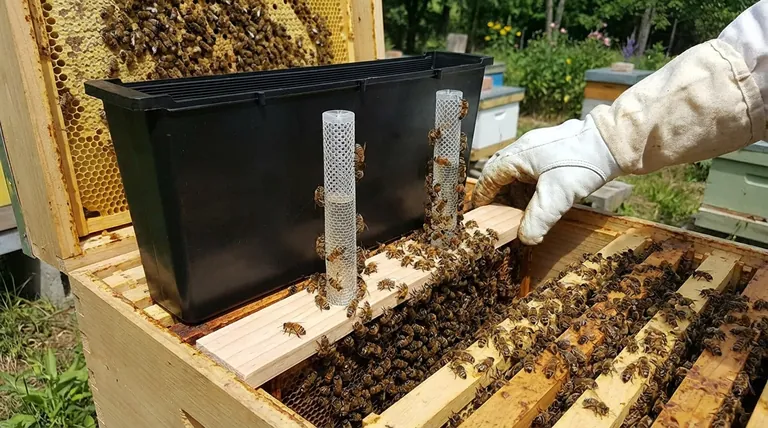
Beekeeping success hinges on precise nutritional support. The right feeder type—whether frame or gravity—can mean the difference between thriving colonies and preventable losses. This guide examines both systems through the lens of hive conditions, weather resilience, and beekeeper practicality, helping you make informed decisions tailored to your apiary's needs.
Bee Feeder Fundamentals
Anatomy of Frame Feeders
Frame feeders integrate directly into the hive body, replacing a comb frame. Their design prioritizes:
- Drowning prevention: Built-in ladders or textured surfaces allow bees safe syrup access while minimizing submersion risks
- Space efficiency: Occupying one frame slot preserves hive structure integrity
- Controlled consumption: Beekeepers can monitor intake and refill without full hive disruption
Research shows frame feeders excel in smaller apiaries where frequent inspection is feasible. Their enclosed design also reduces robbing behavior from neighboring colonies.
Mechanics of Gravity Feeders
Gravity feeders operate through external reservoirs that drip feed into access trays. Key characteristics include:
- High-capacity syrup storage: Ideal for extended nectar dearth periods
- Minimal hive intrusion: Refills occur without opening the brood chamber
- Weather adaptability: Many models feature insulated compartments to prevent freezing
A study of commercial operations revealed gravity systems reduced labor time by approximately 30% compared to frame feeders during peak feeding seasons.
Critical Selection Factors
Hive Population and Feeding Capacity
| Feeder Type | Recommended Colony Size | Refill Frequency |
|---|---|---|
| Frame | 1-20 hives | Every 2-3 days |
| Gravity | 20+ hives | Weekly |
During nectar scarcity, improperly sized feeders force bees to chew through comb—a behavior linked to malnutrition. Gravity feeders' larger reservoirs better support colonies above 40,000 bees.
Weather Resistance Considerations
- Frame feeders: Prone to condensation in humid climates, requiring ventilation modifications
- Gravity feeders: Perform best in temperate zones; may need winterizing wraps below 50°F (10°C)
Beekeepers in hurricane-prone regions report 40% fewer feeder replacements with weighted gravity models versus traditional frame designs.
Swarm Prevention Features
- Frame advantage: Allows simultaneous feeding and comb inspection for swarm cells
- Gravity benefit: Steady syrup flow mimics natural nectar sources, reducing foraging stress
Urban beekeepers should note: frame feeders' internal positioning helps conceal food sources from wasp scouts.
Practical Implementation
Step-by-Step Installation for Urban Beekeeping
- Assess space constraints: Rooftop hives often benefit from low-profile gravity feeders
- Calculate flight paths: Position feeders opposite high-traffic areas to prevent congestion
- Install predator guards: Essential for both feeder types in city environments
A Brooklyn apiary study showed modified frame feeders with ant moats reduced pest intrusions by over 60%.
Winterizing Different Feeder Systems
-
Frame feeders:
- Wrap with insulated fabric sleeves
- Use 2:1 sugar syrup to prevent crystallization
-
Gravity feeders:
- Add floating insulation chips to reservoirs
- Position windbreaks on northern exposures
Mountainous regions require additional thermal mass—some beekeepers surround gravity feeders with straw bales for extra protection.
Ready to equip your apiary with season-smart feeding systems? HONESTBEE's wholesale solutions help commercial beekeepers and distributors optimize hive health with professional-grade feeders designed for real-world conditions. [Contact our apiary specialists] today for volume pricing on durable feeding systems that grow with your operation.
Technologies that sustain colonies through every season—because thriving bees mean flourishing ecosystems.
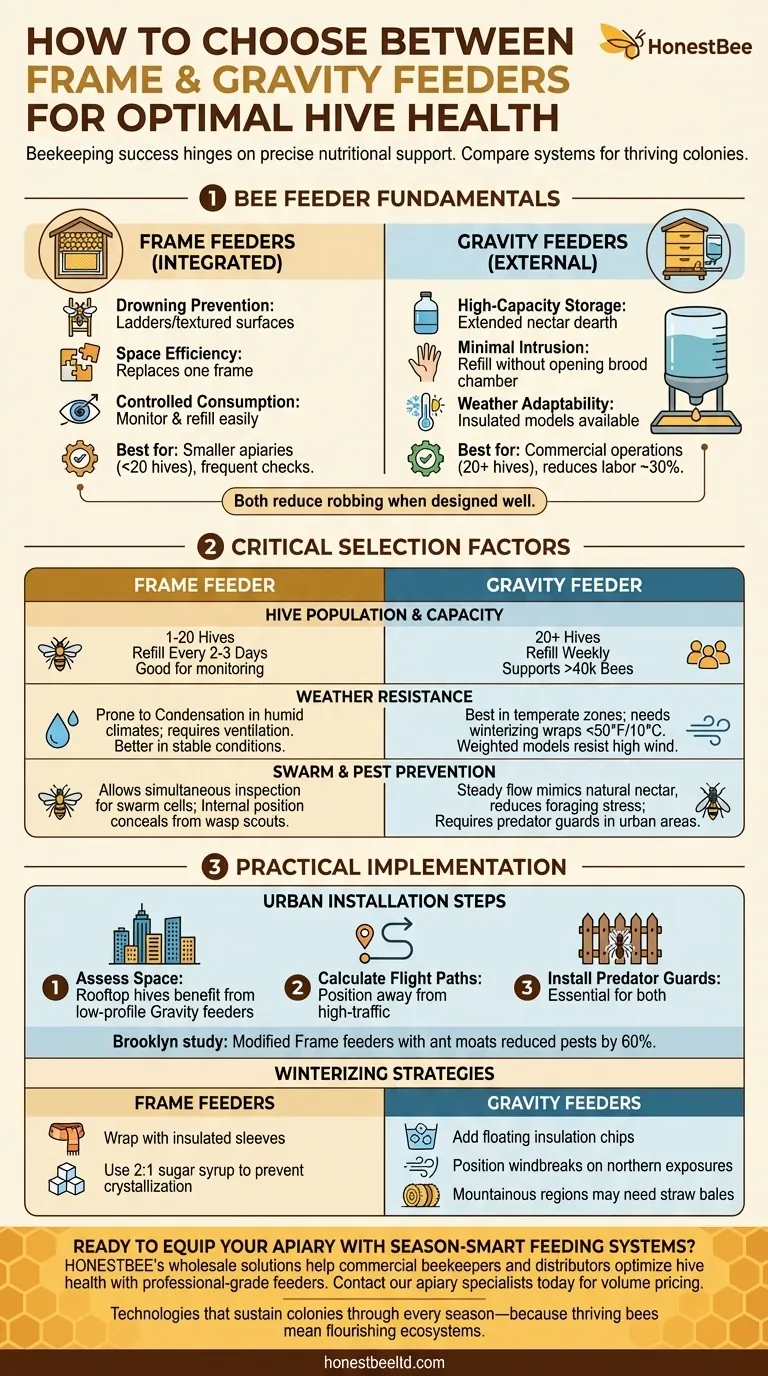
Visual Guide
Related Products
- Professional In-Hive Frame Bee Feeder by HONESTBEE
- 3.5L Plastic Beehive Frame Feeder Deep Frame Water Feeder for In Hive Use
- In-Hive Dual Compartment Frame Bee Feeder for Targeted Colony Nutrition
- Professional In-Hive Bee Feeder HONESTBEE Frame for Beekeeping
- Rapid Bee Feeder White Plastic 2L Round Top Feeder for 8 or 10-Frame Bee Hives
Related Articles
- Why Your Bees Are Starving in Winter (And How the Right Feeder Prevents It)
- How to Choose Between Frame and Gravity Feeders for Healthy Honey Bee Colonies
- How to Choose the Right Bee Feeder for Your Hive’s Health and Efficiency
- An Operator's Calculus: The Hidden Trade-offs of High-Capacity Bee Feeders
- Why Your In-Hive Feeders Leak—And How One Piece of Equipment Prevents Disaster