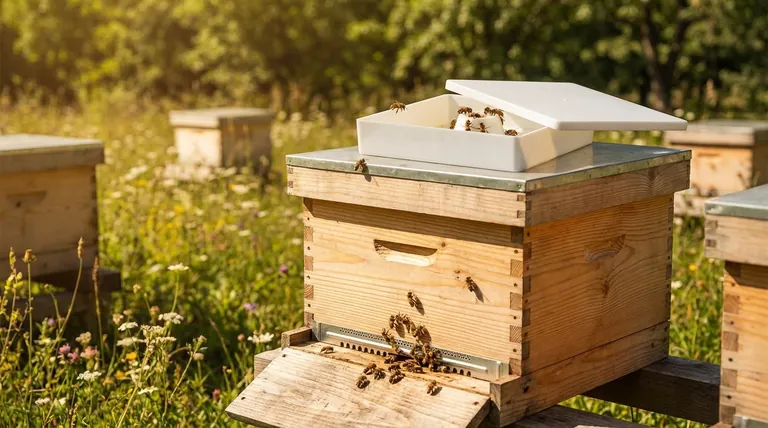
Beekeepers face a critical decision when selecting feeders: the right choice impacts colony survival, honey production, and pest control. This guide breaks down feeder types, seasonal strategies, and cost-effective solutions tailored to your hive’s needs—whether you manage Langstroth, Warre, or specialty setups.
Understanding Bee Feeders
Key Types and Their Mechanics
Bee feeders fall into three primary categories, each with distinct advantages:
-
Division Board Feeders
- How They Work: Replace a frame inside the brood box, holding several liters of syrup.
- Best For: Preventing robbing (enclosed design minimizes scent leakage).
- Reference Insight: Research confirms enclosed feeders reduce robber bee attraction by over half compared to open designs.
-
Entrance Feeders
- How They Work: Attach to the hive entrance with an external syrup reservoir.
- Best For: Quick refills in mild climates (but risk higher robbing in autumn).
-
Top Feeders
- How They Work: Sit above the brood chamber, often with large-capacity reservoirs.
- Best For: Commercial apiaries needing minimal disturbance during refills.
Seasonal and Hive-Size Considerations
- Spring/Summer: Opt for larger-capacity feeders (e.g., top feeders for Langstroth hives) to support rapid colony growth.
- Fall/Winter: Switch to division board feeders to deter robbing during scarce nectar periods.
-
Hive Type Compatibility:
- Langstroth Hives: Adaptable to all feeder types; modular boxes allow easy expansion.
- Warre Hives: Best with internal feeders due to weight constraints during relocation.
Evaluating Feeder Performance
Pros, Cons, and Common Challenges
| Feeder Type | Advantages | Drawbacks |
|---|---|---|
| Division Board | Low robbing risk; integrated design | Limited capacity; harder to clean |
| Entrance | Easy monitoring; affordable | High robbing risk; weather damage |
| Top | High capacity; minimal disturbance | Costly; requires hive disassembly |
Preventing Nectar Robbing and Contamination
- Scent Control: Enclosed feeders (like division boards) reduce syrup odor, a key robber attractant.
- Timing: Feed at dusk when foraging activity is lowest.
- Hive Strength: Weak colonies benefit from entrance feeders with reduced entrances to block invaders.
Did You Know? A study of 50 apiaries found robbing incidents dropped by nearly 60% when using enclosed feeders in late summer.
Advanced Tips and Alternatives
Specialty Feeders for Unique Scenarios
- Frame Feeders: Ideal for nucleus colonies; fit directly into small hive setups.
- Bucket Feeders: Cost-effective for sidelining (drill small holes in lids for drip access).
Maintenance and Cost-Effectiveness
- Cleaning: Opt for feeders with removable parts (e.g., top feeders with detachable reservoirs) to prevent mold.
- Durability: Polyethylene division boards outlast wooden ones in humid climates.
- Budget Tip: Reuse mason jars with perforated lids for DIY emergency feeders.
Upgrade Your Apiary’s Efficiency
For commercial beekeepers and distributors, HONESTBEE’s wholesale-focused supplies offer durable, scalable solutions—from division boards to high-capacity top feeders. Explore our catalog to match your hive’s needs with precision-engineered equipment.
Final Thought: The best feeder aligns with your bees’ behavior, not just convenience. Observe colony responses after installation—are they accessing syrup without stress or competition? Adjustments today prevent losses tomorrow.
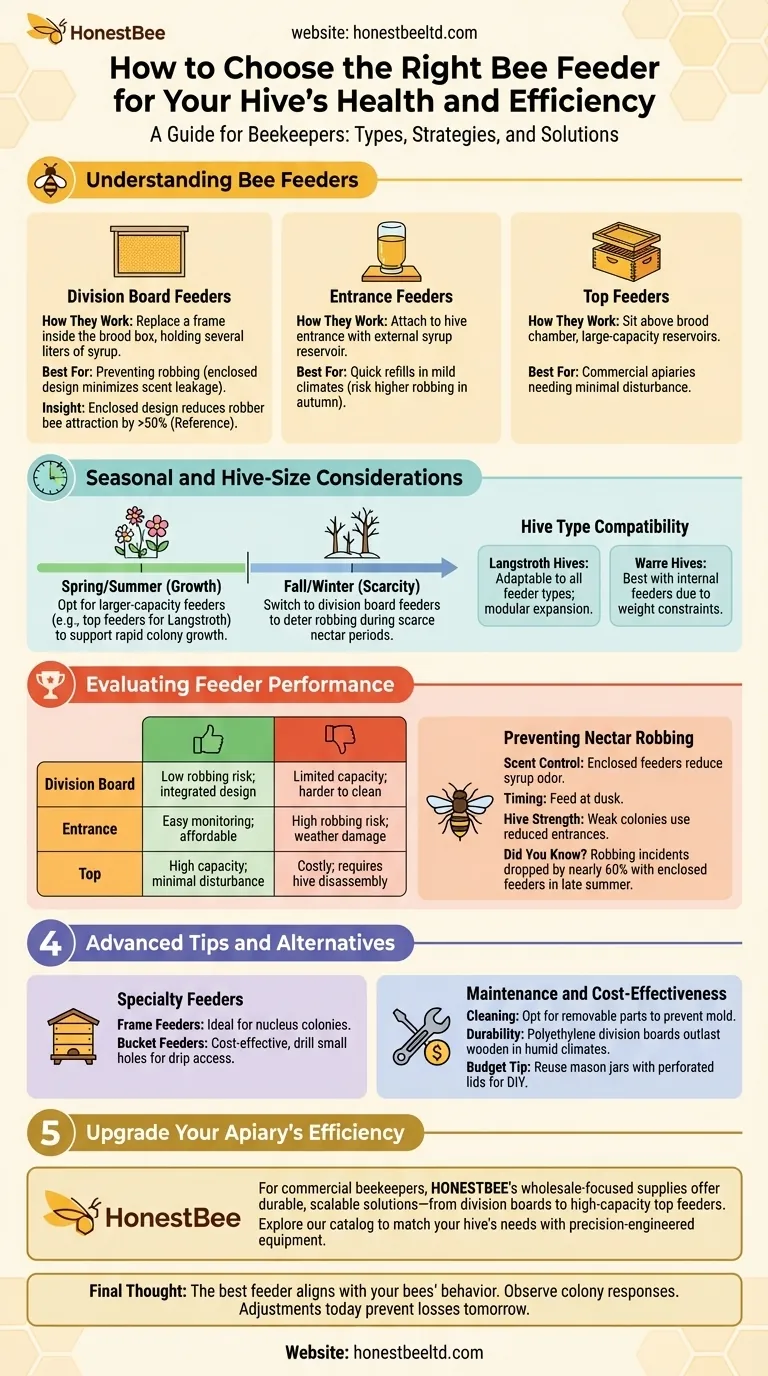
Visual Guide
Related Products
- Rapid Bee Feeder White Plastic 2L Round Top Feeder for 8 or 10-Frame Bee Hives
- White Plastic 0.5L Beekeeping Entrance Feeder for Bees
- HONESTBEE Entrance Bee Feeder Professional Hive Nutrition Solution for Beekeeping
- HONESTBEE Professional Entrance Bee Feeder Hive Nutrition Solution
- Boardman Entrance Bee Feeder Durable Galvanized Steel and Wood Construction for Beekeeping
Related Articles
- How to Choose Between Frame and Gravity Feeders for Healthy Honey Bee Colonies
- Design, Drowning, and the Deceptively Simple Bee Feeder
- The Weight of Winter: A Systems Approach to Pre-Season Bee Feeding
- Beyond the Jar: The Hidden Engineering of Bee Feeder Safety
- How to Accelerate Bee Colony Growth with Science-Backed Feeding Strategies

















