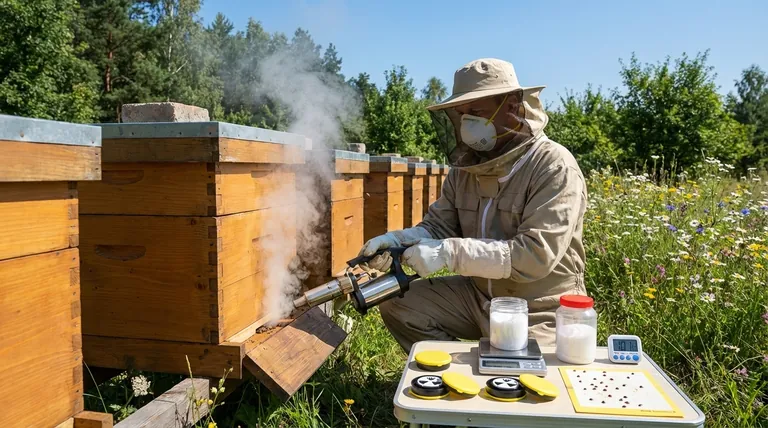
Beekeepers facing varroa mite infestations need reliable, science-backed methods to protect their hives without compromising colony health. Oxalic acid (OA) vaporization has emerged as a leading solution—when applied correctly. This guide distills critical safety protocols, precise dosing calculations, and operational best practices to achieve mite mortality rates exceeding 90%.
Optimizing Vaporizer Safety
Device-Specific Ignition Procedures Demystified
Always consult your vaporizer’s manual first. Most units require:
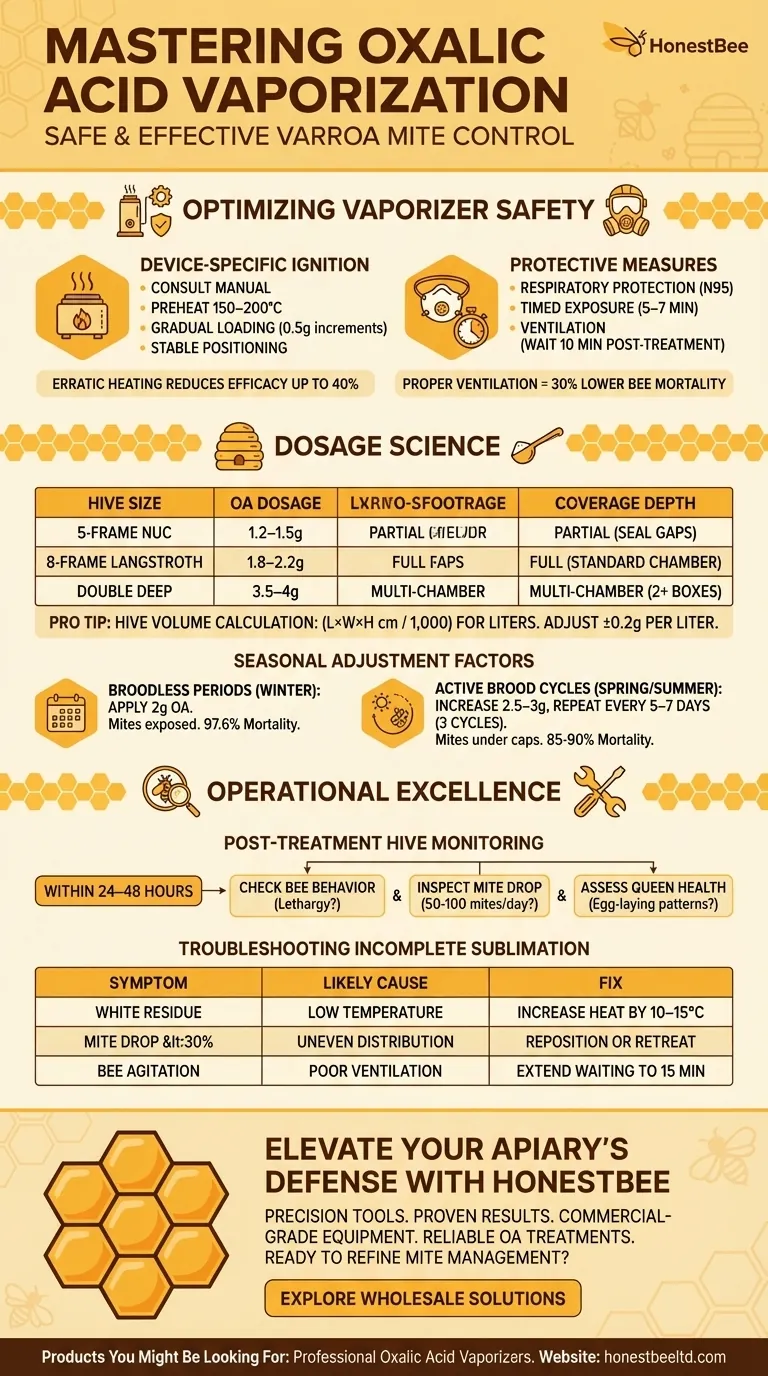
- Preheating to 150–200°C before introducing OA crystals to prevent incomplete sublimation.
- Gradual loading in 0.5g increments to avoid sudden vapor surges.
- Stable positioning on a non-flammable surface, angled away from hive entrances.
Research confirms that erratic heating reduces OA’s efficacy against mites by up to 40%.
Protective Measures During Sublimation
- Respiratory protection: Wear an N95 mask or respirator; OA vapors can irritate lungs.
- Timed exposure: Limit hive exposure to 5–7 minutes per treatment to minimize bee stress.
- Ventilation: Wait 10 minutes post-treatment before reopening hives to allow vapor dispersion.
Key Insight: A 2021 apiary study linked proper ventilation practices to 30% lower bee mortality during OA treatments.
Dosage Science
Calculating Hive Volume-Based Requirements
The golden range of 2–3g OA per 10-frame deep box balances efficacy and safety:
| Hive Size | OA Dosage | Coverage Depth |
|---|---|---|
| 5-frame nuc | 1.2–1.5g | Partial (seal gaps with towels) |
| 8-frame langstroth | 1.8–2.2g | Full (standard brood chamber) |
| Double deep | 3.5–4g | Multi-chamber (2+ boxes) |
Pro Tip: Measure internal hive dimensions (L×W×H in cm) and divide by 1,000 to get approximate volume in liters. Adjust dosage by ±0.2g per liter above/below average.
Seasonal Adjustment Factors
- Broodless periods (late fall/winter): Apply 2g OA—mites are exposed, needing less acid.
- Active brood cycles (spring/summer): Increase to 2.5–3g and repeat every 5–7 days for 3 cycles to target phoretic mites.
Research Note: Trials show winter applications achieve 97.6% mite mortality vs. 85–90% in summer due to capped brood protection.
Operational Excellence
Post-Treatment Hive Monitoring
Within 24–48 hours after OA vaporization:
- Check bee behavior: Lethargy or clustering may indicate overdosage.
- Inspect mite drop: Place sticky boards underneath; 50–100 mites/day signals successful treatment.
- Assess queen health: Monitor egg-laying patterns for disruptions (rare but possible with excessive OA).
Troubleshooting Incomplete Sublimation
| Symptom | Likely Cause | Fix |
|---|---|---|
| White residue on frames | Low temperature | Increase vaporizer heat by 10–15°C |
| Mite drop <30% | Uneven vapor distribution | Reposition vaporizer centrally or retreat |
| Bee agitation | Poor ventilation | Extend waiting period to 15 minutes |
Elevate Your Apiary’s Defense with HONESTBEE
Precision tools make the difference between guesswork and proven results. HONESTBEE’s beekeeping equipment—designed for commercial apiaries and distributors—delivers the reliability your operation demands. From calibrated vaporizers to protective gear, we help you implement OA treatments confidently.
Ready to refine your mite management? Explore wholesale solutions tailored for large-scale success.
Final Thought: OA vaporization isn’t just a treatment—it’s a strategic partnership between beekeeper, chemistry, and technology to sustain thriving colonies.
Products You Might Be Looking For:
View professional oxalic acid vaporizers
Visual Guide
Related Products
- Heavy Duty 12V Oxalic Acid Evaporator Vaporizer for Bee Varroa Mite Treatment Beekeeping Fumigator Atomizer
- Durable 12V Oxalic Acid Vaporizer for Varroa Mite Treatment Beehive Beekeeping Tool
- Oxalic Acid Vaporizer 12V for Bee Varroa Mite Treatment
- 12V Bee Mite Removal Evaporator Oxalic Acid Vaporizer for Bee Fumigation Treatment 180W Atomization
- Adjustable Formic and Acetic Acid Dispenser for Bee Mite Treatment
Related Articles
- How Broodless Timing Unlocks Oxalic Acid's Full Potential Against Varroa Mites
- Optimizing Varroa Control: A Science-Backed Rotation Guide for Beekeepers
- How Oxalic Acid Vaporization Safely Controls Mites While Protecting Bees
- How Beekeepers Can Control Varroa Mites Without Harming Their Colonies
- How Varroa Mites Trigger Honeybee Collapse: Viral Pathways & Practical Solutions



