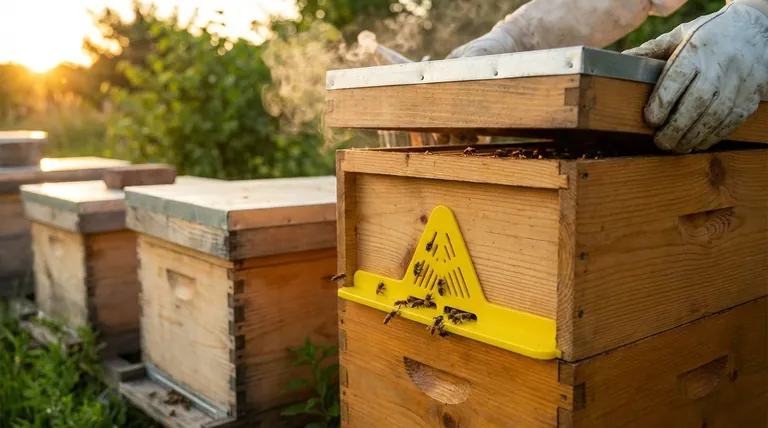
The Controlled Chaos of a Honey Harvest
A mature beehive is a dense, pulsating city of 50,000 individuals. Taking their winter stores is an inherently disruptive act. For the beekeeper, the central challenge is systemic: how do you remove thousands of bees from several boxes of honey without inciting chaos, stressing the colony, and making the work brutally difficult?
Many methods involve force—air blowers or noxious fumes that drive bees out. They are fast, but they are also blunt instruments. The result is often an agitated, defensive colony.
There is a more elegant solution. One that replaces force with psychology. It’s a simple device called a Triangular Escape Board, and its success hinges entirely on the beekeeper’s understanding of the bees' own internal logic.
A One-Way Street Paved with Instinct
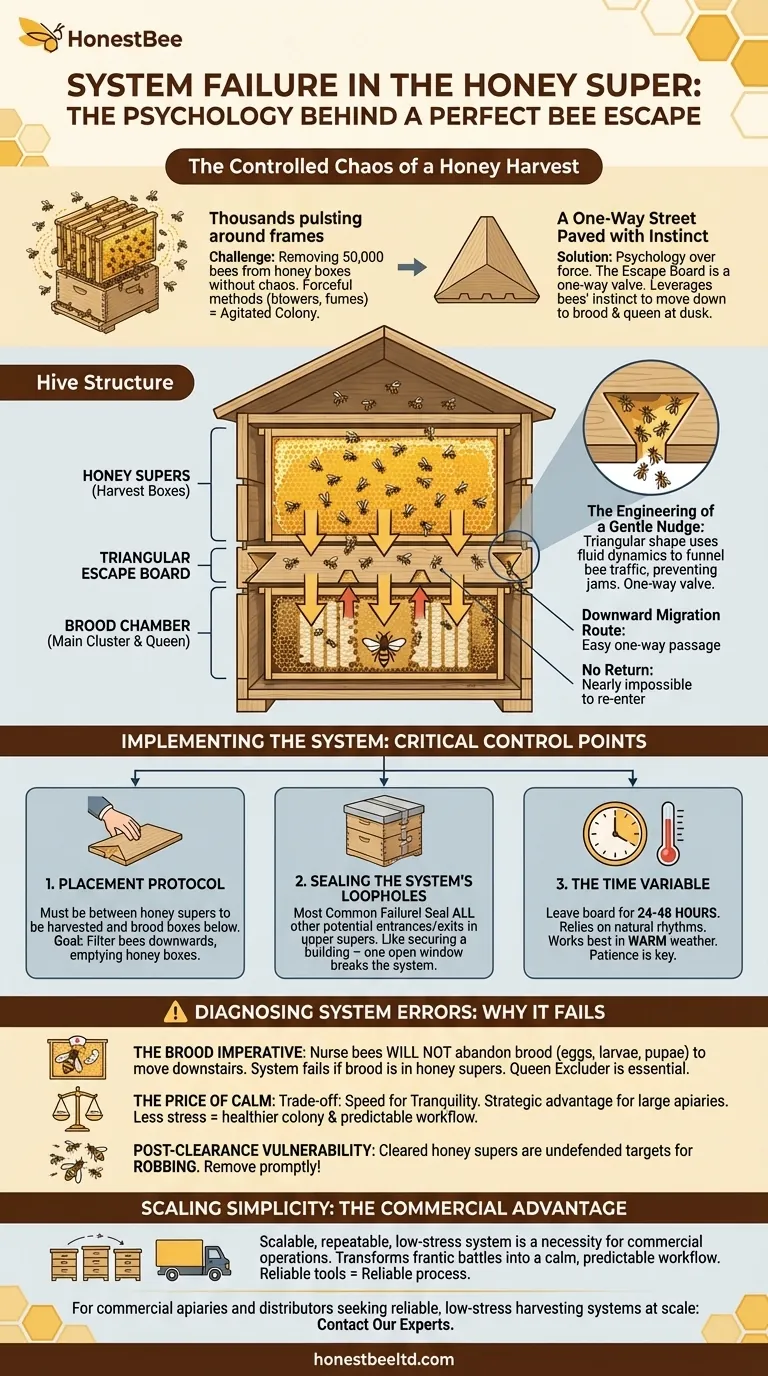
At its core, a bee escape board is a one-way valve. It’s a partition placed between the honey supers (the boxes to be harvested) and the brood chamber below.
Its design leverages a powerful, non-negotiable instinct: bees' tendency to move down towards the brood and the queen, especially as evening falls. The board provides channels that make this downward journey easy.
The Engineering of a Gentle Nudge
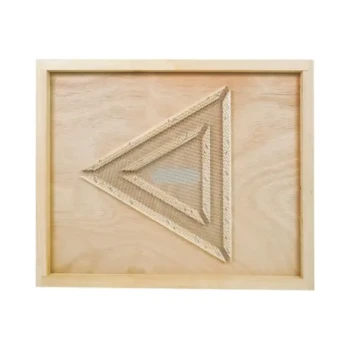
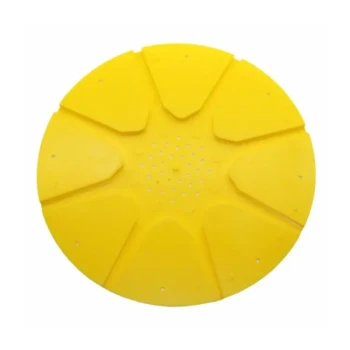
The triangular configuration of the escapes is not for aesthetics; it's a lesson in fluid dynamics. The shape funnels bee traffic towards the small exits, preventing the jams and confusion that can occur with simpler designs.
Crucially, the return trip is nearly impossible. The bees exit into the vastness of the lower hive, and the tiny entrance they just passed through is incredibly difficult to find again from the other side. They don’t fight the system; they simply follow their instincts and are separated from the honey with almost zero stress.
Implementing the System: Critical Control Points
This method is passive, but it is not foolproof. Its success depends on precise execution. A failure at any step doesn't just reduce efficiency; it causes the entire system to collapse.
H3: The Placement Protocol
The board's location is non-negotiable: it must be placed between the honey supers you intend to harvest and the brood boxes below. Any other position renders it useless. The goal is to create a filter that allows bees to move down to the main cluster, leaving the honey boxes above nearly empty.
H3: Sealing the System's Loopholes
This is the most common point of failure. Before installing the escape board, you must seal every other potential entrance or exit in the upper honey supers.
Think of it like securing a building. If you install a high-tech, one-way door but leave a window open, occupants will simply use the window. If bees can fly out of a crack in a box or a poorly-fitted lid, they will bypass your carefully placed escape board entirely.
H3: The Time Variable
Place the board in the hive 24 to 48 hours before your planned harvest. This is not a rushed process. It relies on the bees' natural daily rhythms. The system works best in warmer weather when the colony is active and mobile. Cold temperatures will slow the migration significantly, requiring more patience.
Diagnosing System Errors: Why It Fails
When an escape board doesn't work, it's not a failure of the tool itself. It is a failure to account for the unchangeable rules of the hive's operating system.
H3: The Brood Imperative
An escape board will fail completely if there is brood—eggs, larvae, or pupae—in the honey supers. Nurse bees are biologically programmed with a directive that overrides almost everything else: care for the young. They will not abandon the brood to move downstairs. Placing the board without first ensuring the queen is confined below a queen excluder is setting the system up for failure.
H3: The Price of Calm
This method is a trade-off. You exchange speed for tranquility. For large commercial apiaries managing hundreds or thousands of hives, this trade is a strategic advantage. A less-stressed colony is a healthier, more productive colony in the long run. The calm, predictable workflow allows for a more organized and efficient harvest at scale than the chaos of forced removal methods.
H3: Post-Clearance Vulnerability
Once the board has done its job, the supers are full of honey but empty of their defenders. They become a prime, irresistible target for robbing by bees from other hives. The final step of the process is to remove the cleared supers promptly to prevent this new problem from emerging.
Scaling Simplicity: The Commercial Advantage
For a hobbyist, brushing bees off a few frames is a chore. For a commercial operation, it's an economic impossibility. A system that is repeatable, scalable, and minimizes stress on the primary asset—the bees—is not a luxury; it's a necessity.
This is where the simple elegance of the Triangular Escape Board shines. It transforms the harvest from a series of frantic battles into a calm, predictable workflow. At HONESTBEE, we supply commercial apiaries and distributors with the durable, ready-to-use equipment that forms the backbone of these efficient systems. Reliable tools are the foundation of a reliable process.
By understanding and respecting the psychology of your bees, you can make your harvest a quiet success. For commercial apiaries and distributors seeking to implement reliable, low-stress harvesting systems at scale, having dependable, ready-to-use equipment is the first step. To ensure your operation is built on a foundation of quality and efficiency, Contact Our Experts.
Visual Guide
Related Products
- HONESTBEE Wooden Bee Escape Board with Triangle Mesh Design for Beekeeping
- HONESTBEE Multi Exit Plastic Bee Escape Board for Efficient Honey Harvesting
- HONESTBEE 4-Way Metal Corner Wooden Bee Escape Board
- Slatted Porter Style Bee Escape for Rapid Hive Clearing
- Efficient Hive Clearing: HONESTBEE 8-Way Plastic Bee Escape
Related Articles
- The Quiet Choreography: Mastering the Bee Escape Board for a Systemic Harvest
- How Bee Escape Boards Enable Ethical Honey Harvests Without Colony Stress
- Engineering Empathy: The Quiet Genius of the Bee Escape Board
- Beyond the 24-Hour Rule: The Psychology of the Bee Escape Board
- The Engineer's Gambit: Why Your Bee Escape Board Fails