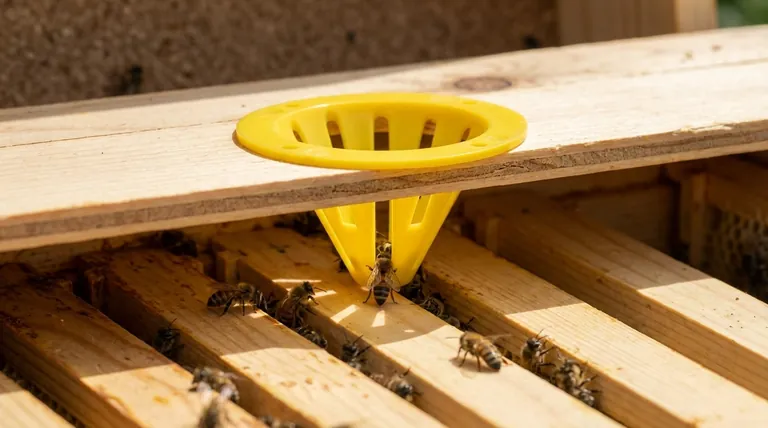
The Controlled Chaos of Harvest Day
For many beekeepers, honey harvest is a battle of attrition. It often involves aggressive smoke, powerful leaf blowers, or frantic brushing to separate thousands of defensive bees from the frames they guard.
This is a system in conflict. The beekeeper’s goal—to efficiently remove honey—runs directly against the colony’s most powerful instinct: to protect its winter stores. The result is stress for everyone involved. The bees are agitated, the beekeeper is on high alert, and the entire apiary is thrown into a defensive uproar.
But what if we could re-engineer the system? What if, instead of forcing the bees out, we simply asked them to leave?
From Force to Persuasion: A Psychological Shift
The most elegant solutions in engineering often come from understanding the inherent nature of a system, not fighting it. The bee escape board is a perfect example of this principle applied to beekeeping.
It’s not just a piece of equipment; it’s a shift in mindset. It replaces brute force with a deep understanding of bee psychology. It works by creating a simple choice and leveraging the colony’s own daily rhythm to achieve the beekeeper's goal.
The tool facilitates a quiet, one-way conversation with the hive.
How the One-Way Conversation Works
The design is brilliantly simple, yet it taps into complex social behaviors.
The Genius of Asymmetry
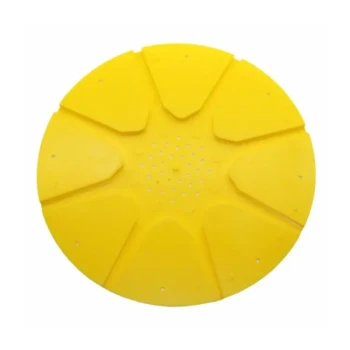
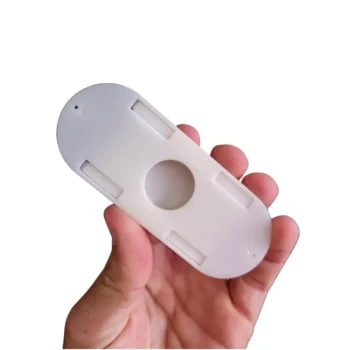
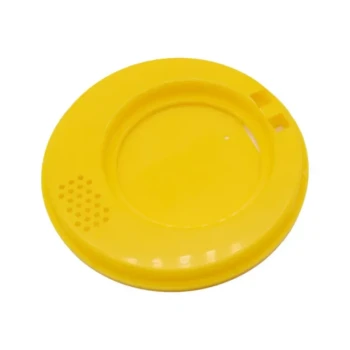
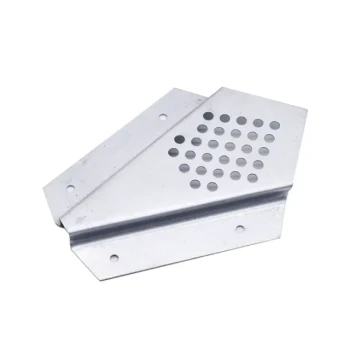
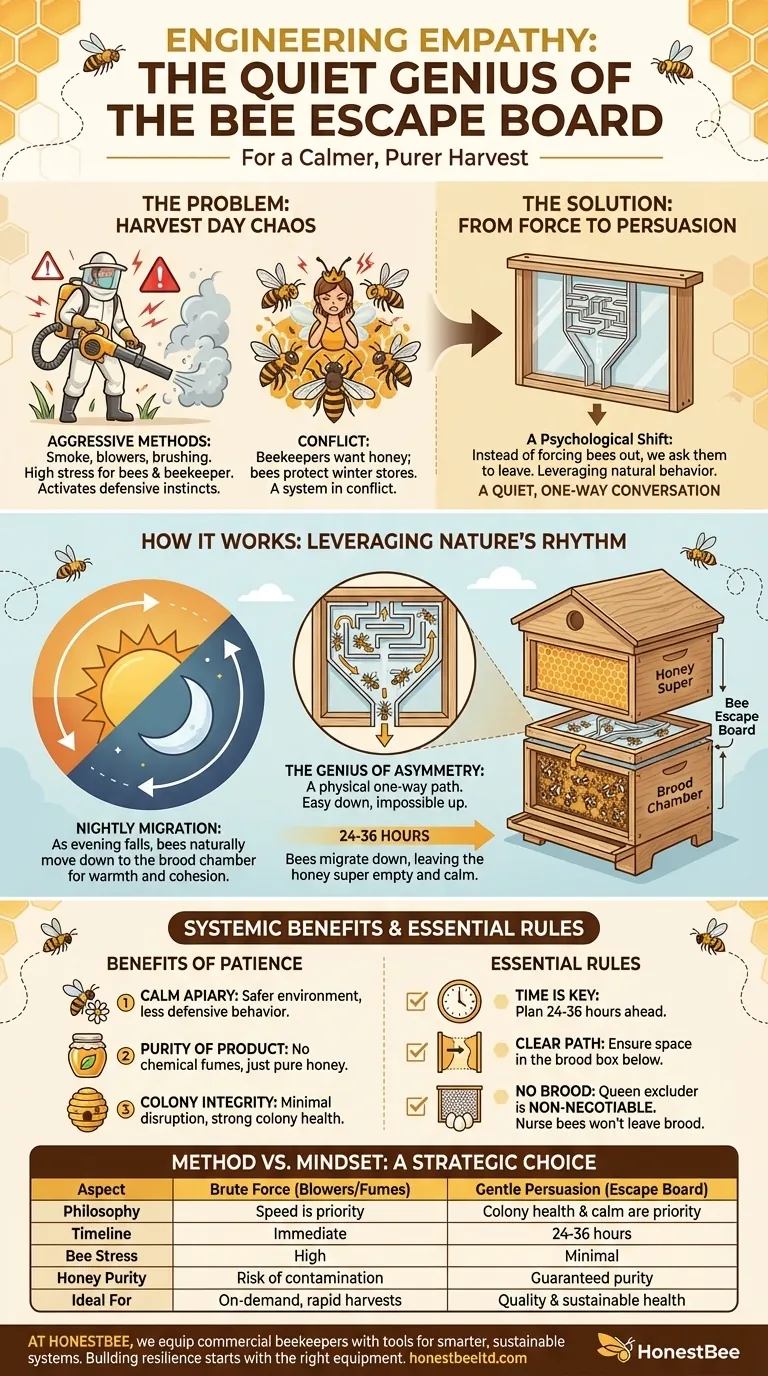
At its core, a bee escape board is a physical manifestation of a one-way path. It contains a small maze or funnel that is easy for a bee to navigate in one direction—downwards, out of the honey super—but almost impossible to figure out in reverse.
It functions like a silent, biological turnstile. It lets bees follow their instincts to move down into the main hive but prevents them from returning.
Leveraging the Colony's Nightly Rhythm
The board's success hinges on a behavior hardwired into every honeybee colony. As evening falls, bees in the outer reaches of the hive (like the honey supers) naturally migrate downwards. They cluster in the central brood chamber for warmth, communication, and social cohesion with the queen.
The escape board doesn't force this movement. It simply waits for it to happen, making the downward journey a one-way trip. After 24 to 36 hours, the honey super is almost entirely empty, left behind by a colony that was never alarmed.
The Systemic Benefits of Patience
Choosing this method is an investment in tranquility and quality. The return on a day or two of patience is immense.
- A Calm Apiary: By eliminating the need for aggressive tactics, the bees remain calm. This creates a safer, more pleasant working environment and prevents the entire apiary from being put on high alert.
- Purity of Product: This method completely avoids the use of chemical fume boards, ensuring no contaminants ever come near the honey. The final product is as pure as the bees made it.
- Colony Integrity: A gentle harvest minimizes disruption. The hive's routine, social structure, and population remain strong and healthy, ready to continue foraging and thriving.
The Essential Rules for an Elegant System
This method is not a magic bullet; it is a strategic process that requires adherence to a few key principles.
- The Price is Time: This is not an instant solution. You must plan ahead, installing the board 24-36 hours before you intend to harvest.
- A Clear Path is Crucial: The bees must have adequate space to move down into. A congested brood box or a blocked hive entrance will render the system ineffective.
- The Unbreakable Bond of Brood: Nurse bees will never abandon eggs, larvae, or pupae. If brood is present in the honey super, the escape board will fail. This is why a queen excluder is a non-negotiable prerequisite for this method to succeed.
For commercial apiaries, managing these variables at scale requires durable and precisely engineered equipment. The reliability of your queen excluders and escape boards is paramount to a predictable, streamlined workflow.
Method vs. Mindset: A Strategic Choice
| Aspect | Brute Force (Blowers/Fumes) | Gentle Persuasion (Escape Board) |
|---|---|---|
| Philosophy | Speed is the priority | Colony health and calm are the priority |
| Timeline | Immediate | 24-36 hours |
| Bee Stress | High | Minimal |
| Honey Purity | Risk of chemical contamination | Guaranteed purity |
| Ideal For | Beekeepers needing on-demand, rapid harvests | Operations focused on quality and sustainable health |
Ultimately, the bee escape board represents a philosophy of working with nature's systems, not against them. It’s a testament to how a small piece of engineering, rooted in behavioral insight, can create a more efficient, peaceful, and productive apiary.
At HONESTBEE, we equip commercial beekeepers and distributors with the high-quality, reliable tools needed to implement these smarter, more sustainable systems. Building a resilient operation starts with the right equipment. Contact Our Experts
Visual Guide
Related Products
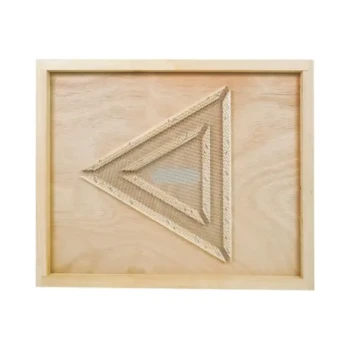
- HONESTBEE Wooden Bee Escape Board with Triangle Mesh Design for Beekeeping
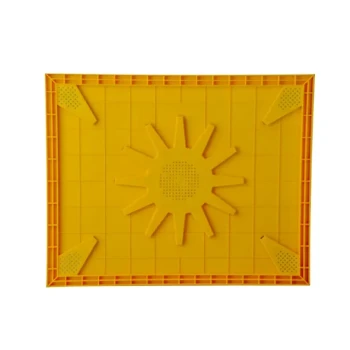
- HONESTBEE Multi Exit Plastic Bee Escape Board for Efficient Honey Harvesting
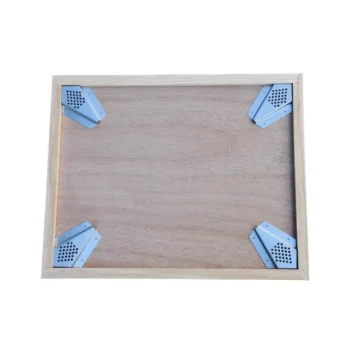
- HONESTBEE 4-Way Metal Corner Wooden Bee Escape Board
- Slatted Porter Style Bee Escape for Rapid Hive Clearing
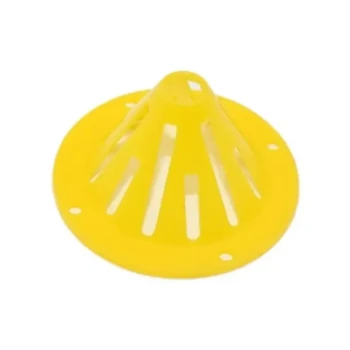
- Professional Cone Style Bee Escape for Efficient Honey Harvesting
Related Articles
- The Quiet Choreography: Mastering the Bee Escape Board for a Systemic Harvest
- How Bee Escape Boards Enable Ethical Honey Harvests Without Colony Stress
- Beyond the 24-Hour Rule: The Psychology of the Bee Escape Board
- The Engineer's Gambit: Why Your Bee Escape Board Fails
- An Elegant Deception: The Behavioral Science of the Bee Escape Board