The Unseen Bottleneck
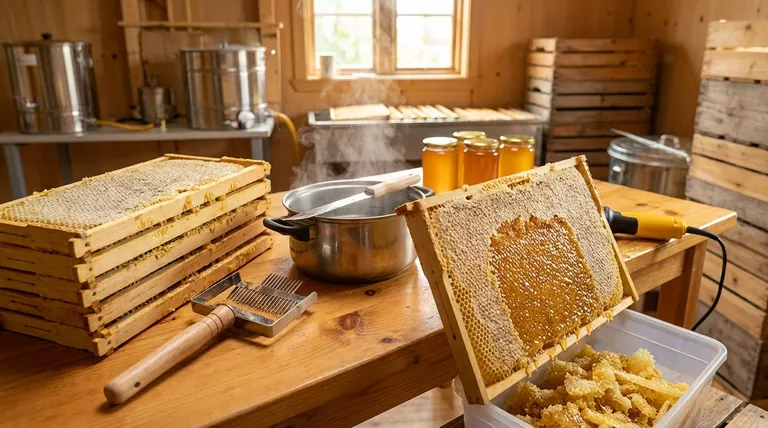
Picture the honey house on harvest day. The air is thick with the sweet, warm scent of beeswax and fresh honey. Frames, heavy and golden, are stacked high, waiting. This is the moment of reward for a season of hard work. But between these full frames and the jars of liquid honey lies a critical process: uncapping.
More than any other step, uncapping the honeycomb dictates the pace of your entire extraction. It is the primary bottleneck. Your choice of tool here is not merely a matter of preference; it’s a reflection of how you value your time, your energy, and the long-term health of your combs. It's a decision about the scale of your ambition.
An Escalation of Commitment
The tool a beekeeper reaches for reveals their psychological relationship with the craft. It's an escalation of commitment, moving from casual curiosity to systematic optimization. Each tool represents a different stage in that journey.
The Cappings Scratcher: The Tool of Curiosity
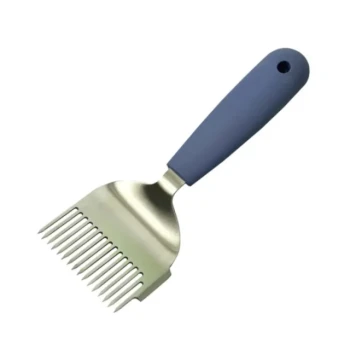
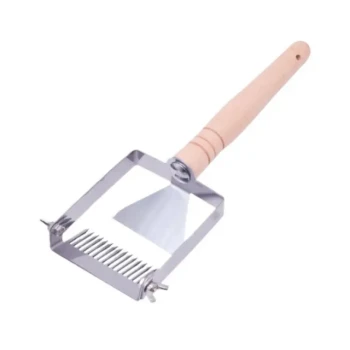
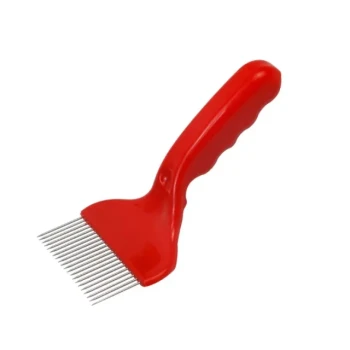
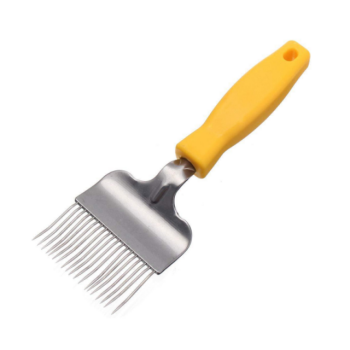
A cappings scratcher, or uncapping fork, is simple. Its sharp tines pierce and tear away the wax caps.
This is the tool for the beekeeper with one or two hives, the one who is still asking, "Is this for me?" The financial investment is almost zero, matching the low commitment. But the cost is paid in time and mess. It’s slow, laborious, and shreds the delicate comb structure, forcing the bees to expend significant energy on repairs.
The Manual Knife: The Mark of a Serious Hobbyist
The manual uncapping knife, heated in a pot of hot water, represents a significant step up. The hot blade doesn't tear the wax; it melts through it with a clean, satisfying slice.
This is the tool of the committed hobbyist. It requires a system—two knives, one heating while the other is in use. The user has decided beekeeping is a long-term pursuit and is willing to invest more effort for a higher-quality outcome. The comb is preserved, saving the bees work, but the process is still bound by the friction of managing an external heat source.
The Electric Knife: The Professional Mindset
The electric uncapping knife, with its self-contained, thermostatically controlled heating element, is the final evolution in this category. It delivers a perfect, consistent temperature for a fast, flawless cut, frame after frame.
This is the tool of optimization. It's for the beekeeper who understands that their time is the most valuable resource. Adopting an electric knife is about more than just managing a few more hives; it’s about adopting a professional mindset. It transforms the workflow from a choppy, start-and-stop task into a smooth, continuous flow, eliminating the bottleneck and unlocking efficiency for the entire harvest.
The Physics of a Clean Cut
The difference between these tools is not just about speed; it's about the energy expenditure of your colony.
A scratcher uses brute force, tearing the hexagonal cell walls. This damage requires the bees to rebuild the structure from the foundation up, consuming precious nectar resources that could have become more honey.
A hot knife uses thermal energy. It severs the cap cleanly, leaving the underlying cell structure almost entirely intact. The bees only need to redraw a thin wax cap, a fraction of the work. This is the elegance of applying the right principle—a clean melt is always more efficient than a ragged tear.
A Decision Matrix for Your Apiary
| Tool Class | Operational Scale | Key Trade-off | The Underlying Psychology |
|---|---|---|---|
| Cappings Scratcher | 1-2 Hives (Exploration) | Cost vs. Time & Comb Health | "Let's see if I like this." |
| Manual Heated Knife | 2-5 Hives (Commitment) | Quality vs. Process Friction | "I'm committed to doing this well." |
| Electric Uncapping Knife | 3+ Hives (Optimization) | Investment vs. Throughput | "My time is valuable; the system must be efficient." |
Scale Your Operation, Not Your Workload
As your apiary grows, the tools must evolve to meet the demand. A tool that is perfectly adequate for two hives becomes an anchor for ten. A system that works for a hobbyist will cripple a commercial operation.
This is the core principle for successful scaling: invest in equipment that eliminates bottlenecks and respects your own labor. For commercial apiaries and wholesale distributors, this isn't a luxury; it's a foundational business requirement. At HONESTBEE, we supply the professional-grade uncapping knives and equipment designed for durability and efficiency at scale, ensuring your harvest is a reflection of your success, not a limitation on it.
Ready to equip your operation for greater efficiency? Contact Our Experts
Visual Guide

Related Products
- Professional Multi-Function Uncapping Fork with Ergonomic Rubber Grip
- Adjustable Stainless Steel Honey Uncapping Fork with Scraper for Beekeeping
- Professional Wide Head Honey Uncapping Fork for Beekeeping
- Wide Adjustable Stainless Steel Honey Uncapping Fork with Scraper
- All-Stainless Steel Pivoting Honey Uncapping Fork for Beekeeping
Related Articles
- How Precision Uncapping Tools Improve Hive Health and Beekeeper Efficiency
- The Uncapping Fork: Precision Over Pace in Honey Extraction
- Precision Over Pace: The Strategic Role of the Uncapping Fork in Honey Harvesting
- How Uncapping Forks Protect Honeycombs and Reduce Beekeeping Costs
- Precision in the Apiary: The Unsung Virtues of the Uncapping Fork