The Moment of Truth in the Honey House
Imagine the scene. It’s late in the season. Stacks of honey-filled supers stand waiting, monuments to a summer of hard work by thousands of bees. The air is thick with the sweet, heavy scent of raw honey. This is the moment of reward, but it's also the start of a bottleneck.
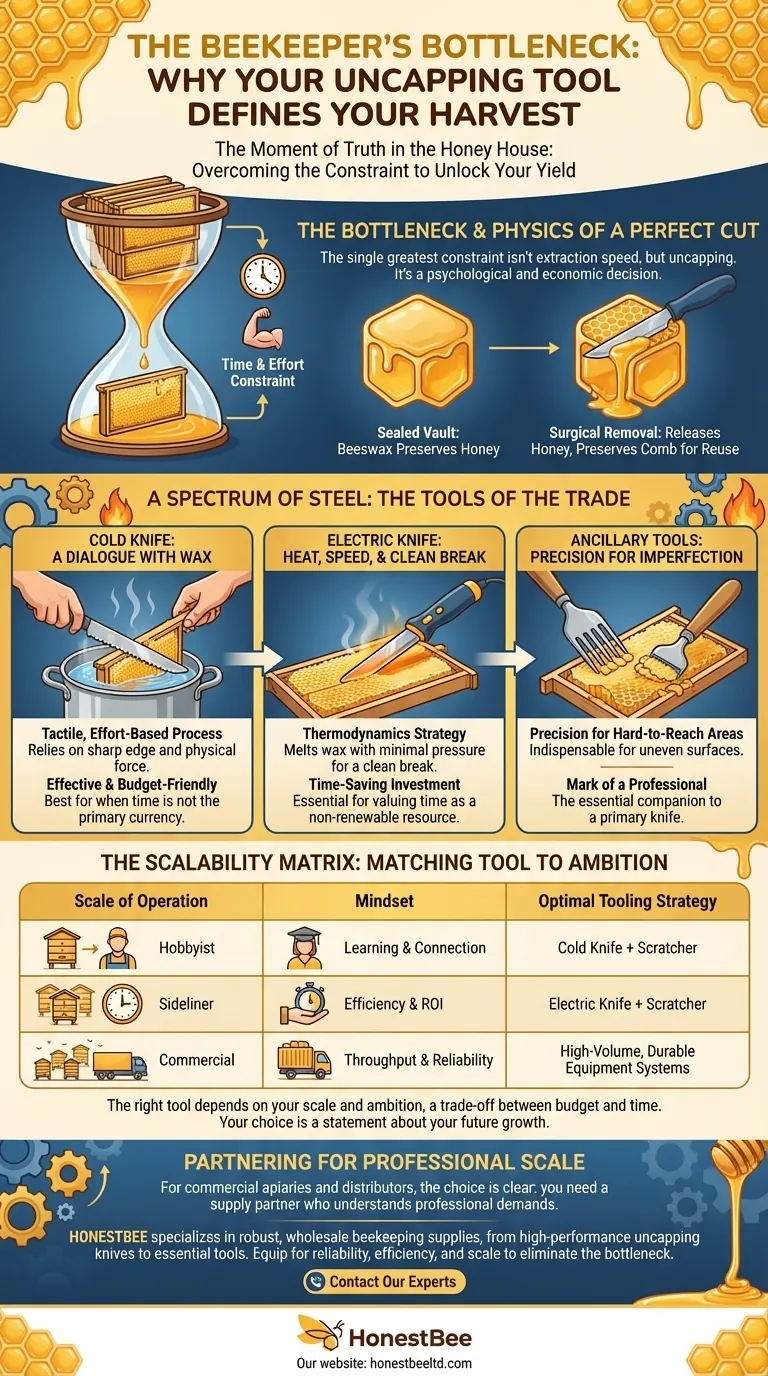
The single greatest constraint on your honey harvest isn't the speed of your extractor or the strength of your back. It's the small, repetitive, and crucial act of uncapping each frame.
Your choice of tool for this task is more than a matter of preference. It's a psychological and economic decision that reveals how you value your time, your energy, and the future scale of your operation.
The Physics of a Perfect Cut
Before we can extract honey, we must first undo the bees' perfect engineering. They seal each cell with a pristine layer of beeswax, creating a waterproof, airtight vault that preserves the honey indefinitely.
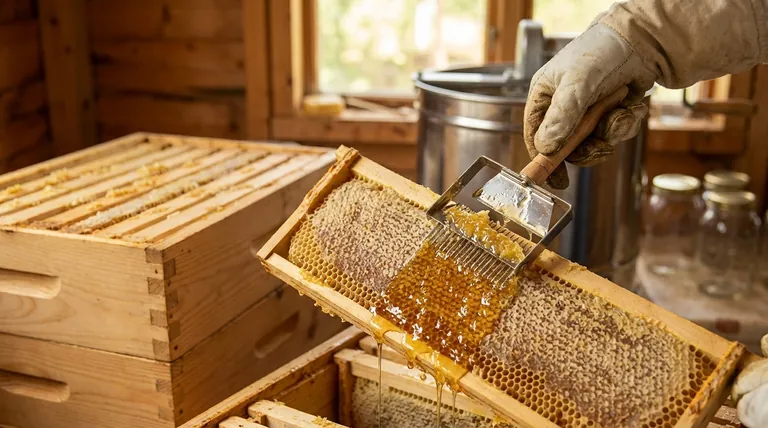
Uncapping is the act of surgically removing that seal. The goal is twofold: release the honey, but leave the underlying comb structure intact for the bees to reuse. A poor uncapping job doesn't just slow you down; it can damage the comb, costing your bees valuable time and resources to repair it next season.
This is a problem of physics and finesse.
A Spectrum of Steel: The Tools of the Trade
Every uncapping tool is an answer to the same question—how to remove wax efficiently—but each offers a profoundly different approach.
The Cold Knife: A Dialogue with Wax
The traditional, unheated knife is the simplest tool. It's a long, serrated blade that relies on a sharp edge and your physical effort.
Using one is a deliberate, tactile process. You often dip it in hot water between passes, letting the brief warmth help the steel slide. You feel the resistance of the wax; every cut is a direct conversation between your hand and the comb. It is effective, budget-friendly, and perfect for when time is not your primary currency.
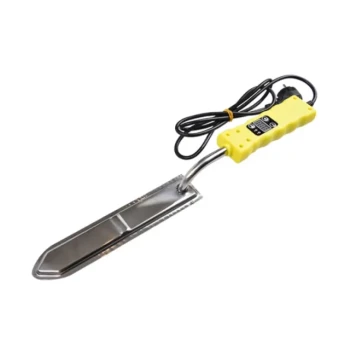
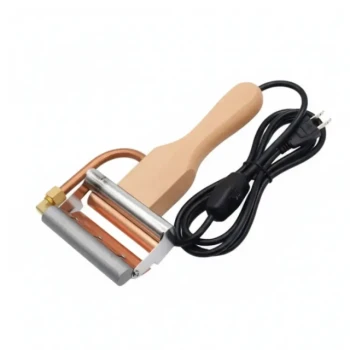
The Electric Knife: Heat, Speed, and a Clean Break
The heated electric knife represents a fundamental shift in strategy. It doesn't rely on force; it uses thermodynamics.
A heated blade melts through the wax cappings with minimal pressure, creating an astonishingly clean and smooth surface. The work becomes less about cutting and more about guiding. It’s a tool built for someone who has realized that their time is a non-renewable resource, and an hour saved during the harvest is worth a small upfront investment.
Ancillary Tools: Precision for Imperfection
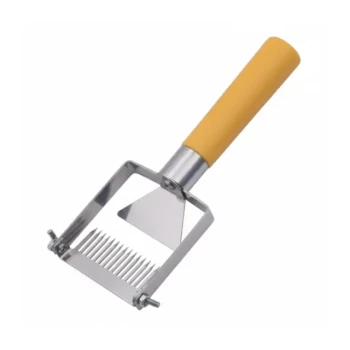
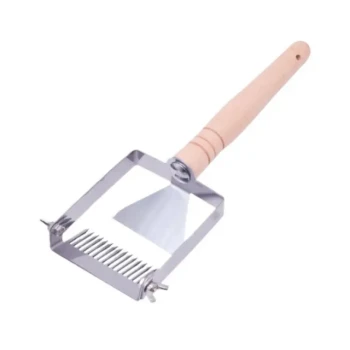
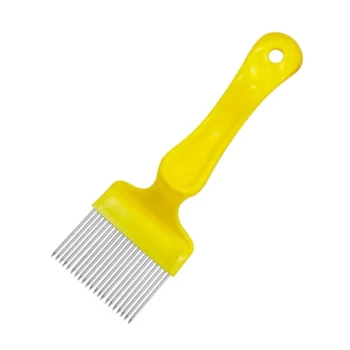
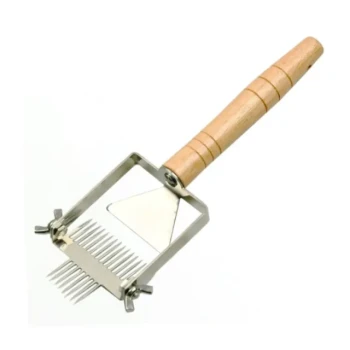
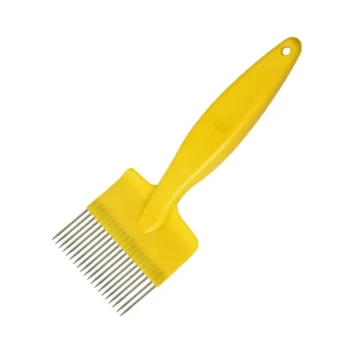
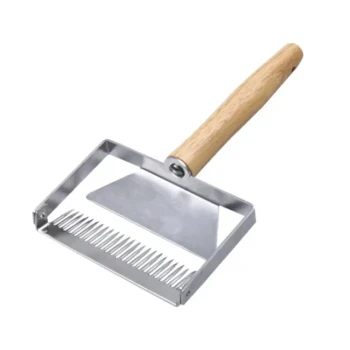
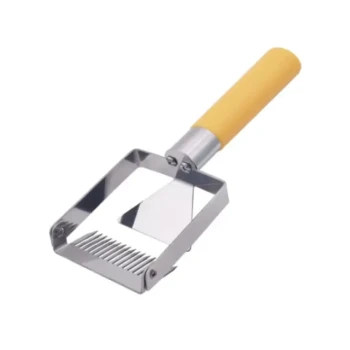
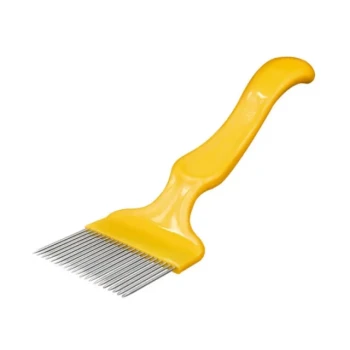
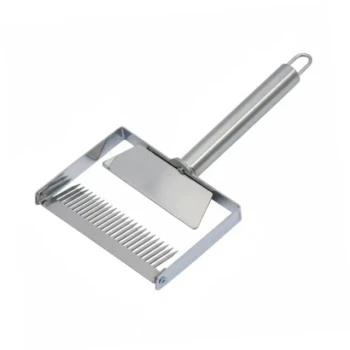
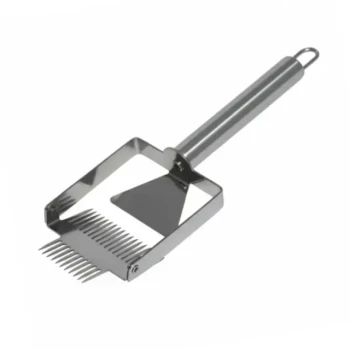
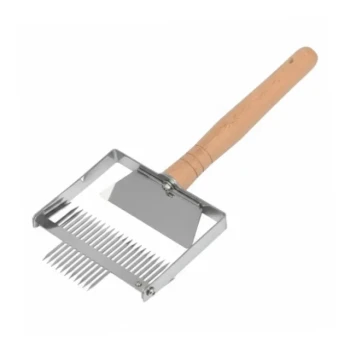
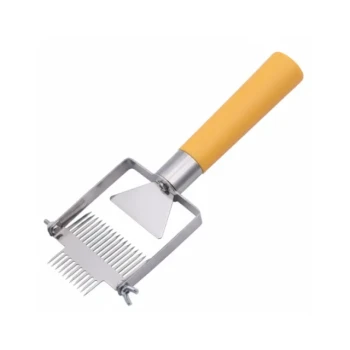
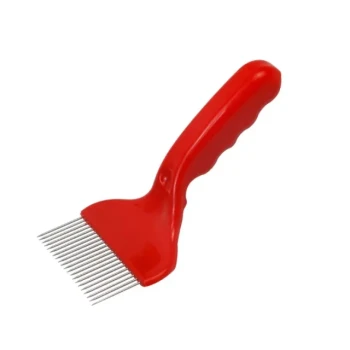
No honeycomb is perfectly flat. There will always be dips, valleys, and recessed cells that a flat knife blade will miss. This is where uncapping scratchers and forks are indispensable.
These tools aren't for speed but for precision. Their sharp tines pierce and lift the cappings from those hard-to-reach areas. Owning one isn't a sign of a beginner; it's the mark of a professional who understands that reality is never as clean as the ideal. They are the essential companions to any primary knife.
The Scalability Matrix: Matching the Tool to Ambition
The right tool for you is determined by the scale of your ambition. It’s a direct trade-off between your budget and your time, and the tipping point is different for everyone.
| Scale of Operation | Mindset | Optimal Tooling Strategy |
|---|---|---|
| Hobbyist (1-5 Hives) | Learning & Connection | Cold Knife + Scratcher |
| Sideliner (5-20+ Hives) | Efficiency & ROI | Electric Knife + Scratcher |
| Commercial Operation | Throughput & Reliability | High-Volume, Durable Equipment Systems |
For the hobbyist, the slower pace of a cold knife is part of the experience. The time spent is part of the reward.
For the sideliner, the equation changes. The hours saved by an electric knife are hours that can be spent on hive management, business development, or simply with family. The tool pays for itself in reclaimed time.
For commercial apiaries, the decision evolves beyond a single tool. It becomes about building a reliable, high-throughput system. The need is for durable, professional-grade equipment that can withstand the demands of processing hundreds of frames without failure. The focus shifts from the tool itself to the reliability of the supplier.
Your Choice is a Statement About Your Future
The tool you hold in your hand reflects your operational philosophy. It’s a quiet declaration of whether you are optimizing for today's budget or tomorrow's growth.
For commercial apiaries and beekeeping distributors focused on scaling efficiently, the choice is clear: you need a supply partner who understands the demands of professional-grade honey production. HONESTBEE specializes in providing the robust, wholesale beekeeping supplies that form the backbone of a successful harvest, from high-performance electric uncapping knives to the essential tools that ensure no drop of honey is left behind.
We equip the operations that value reliability, efficiency, and scale. Let us help you eliminate the bottleneck in your honey house.
Visual Guide
Related Products
- Adjustable Stainless Steel Honey Uncapping Fork with Plastic Handle for Beekeeping
- All-Stainless Steel Pivoting Honey Uncapping Fork for Beekeeping
- Wide Adjustable Stainless Steel Honey Uncapping Fork with Scraper
- Adjustable Stainless Steel Honey Uncapping Fork with Scraper for Beekeeping
- Professional Customizable Honey Uncapping Fork with Adjustable Tine Options
Related Articles
- How Uncapping Forks Protect Honeycombs and Reduce Beekeeping Costs
- Why Your Uncapping Knife Is Costing You Money—And How a Simple Fork Fixes It
- Precision in the Apiary: The Unsung Virtues of the Uncapping Fork
- Precision Over Pace: The Economic Logic of the Uncapping Fork
- Precision Over Pace: The Strategic Role of the Uncapping Fork in Honey Harvesting