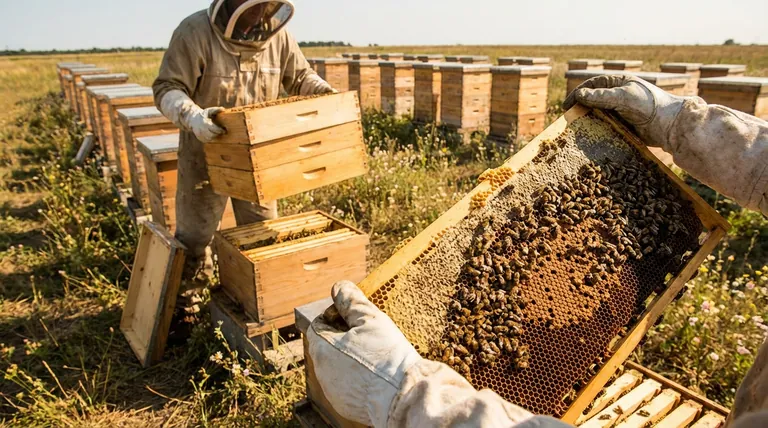
The Hive Isn't Just a Box; It's a System of Trade-offs
A beehive is often seen as a simple wooden box. In reality, it's a meticulously engineered interface between two different worlds: the biological imperatives of a honeybee colony and the physical and economic goals of the beekeeper.
The fulcrum on which this entire system balances is the humble frame.
The choice between a "brood frame" and a "super frame" isn't merely about equipment; it’s a strategic decision. It reflects a fundamental compromise between the queen bee's needs and the limits of the human spine.
Function Dictates Form: The Nursery vs. The Pantry
The names themselves reveal the core tension. A frame's purpose dictates its size and placement, creating a specialized system within the hive.
The Brood Chamber: The Engine of the Colony
The brood chamber is the nursery, the engine room where the colony’s future is forged. For this, bees prefer a large, uninterrupted canvas.
Deep frames (9 1/8 inches) provide exactly that. They allow a productive queen to lay eggs in a solid, continuous pattern, which is essential for raising a populous, robust workforce. This large brood nest is the biological ideal.
The physical reality for the beekeeper, however, is that a full deep box can weigh 80-90 pounds (around 40 kg). As a unit for harvesting, it is impractical and unsustainable at a commercial scale.
The Honey Super: The Warehouse for Harvest
The honey super is the pantry, but it's a pantry designed for the beekeeper. It exists to hold surplus honey intended for harvest.
For this, medium frames (6 1/4 inches) are the industry standard. Their invention was a direct concession to human ergonomics. A full medium super weighs a more manageable 40-50 pounds (around 22 kg), transforming honey harvesting from a feat of strength into a repeatable, efficient process.
The Beekeeper's Dilemma: Standardization vs. Specialization
For a commercial apiary, every equipment choice is an operational one. The frame debate boils down to a classic business decision: do you specialize your components for peak performance, or standardize them for maximum efficiency?
The Specialized Approach: Deep Brood, Medium Supers
This is the classic, time-tested compromise. It gives the queen the deep frames she prefers for building a powerful colony, while providing the beekeeper with lighter, medium-framed supers for harvesting.
This system optimizes for both biological health and human practicality. It's an elegant solution, but it requires managing two different frame and box sizes throughout your entire operation.
The Standardized Approach: All-Medium Hives
Some large-scale beekeepers opt for a unified system, using medium frames for everything—both brood and honey.
The psychological driver is powerful: radical simplicity. Every box is the same manageable weight. Every frame is interchangeable. This streamlines inventory, labor, and equipment handling, which are critical advantages at scale.
The trade-off is biological. The queen is forced to cross the wooden barrier between two medium brood boxes to complete her laying pattern, a less natural and potentially less efficient process. The operational gain is weighed against a potential biological cost.
Beyond Size: The Material Equation
The decision extends to materials, another trade-off between tradition and modern efficiency.
- Wooden Frames: The traditional choice. They are cost-effective upfront but require assembly and are more susceptible to wear over time.
- Plastic Frames: Often molded as a single piece, they offer exceptional durability and require zero assembly. They are a capital investment in longevity and reduced labor costs.
Your choice here impacts your long-term operational expenses and workflow, from initial setup to ongoing maintenance.
Designing Your Apiary's Operating System
Ultimately, your frame selection defines your apiary’s "operating system." It dictates your workflow, your physical limitations, and your management philosophy. There is no single correct answer, only the optimal system for your specific goals.
Do you build a specialized system that caters to the bee's ideal, or a standardized one that prioritizes logistical simplicity and human endurance?
| Feature | Deep Brood Frame | Medium Super Frame |
|---|---|---|
| Primary Function | Nursery for raising a populous colony | Storage for surplus, harvestable honey |
| Common Size | 9 1/8 inches | 6 1/4 inches |
| System Philosophy | Specialization: Optimizing for bee biology | Standardization: Optimizing for beekeeper ergonomics |
| Full Box Weight | ~80-90 lbs (40 kg) | ~40-50 lbs (22 kg) |
| Best For | Maximizing colony strength | Efficient, manageable honey harvesting at scale |
At HONESTBEE, we understand that commercial beekeeping is a business of systems. We supply high-quality wooden and plastic frames in all standard sizes, enabling you to build the precise operating system your apiary needs to thrive. Whether you prioritize specialization or standardization, our wholesale equipment is built for durability and efficiency.
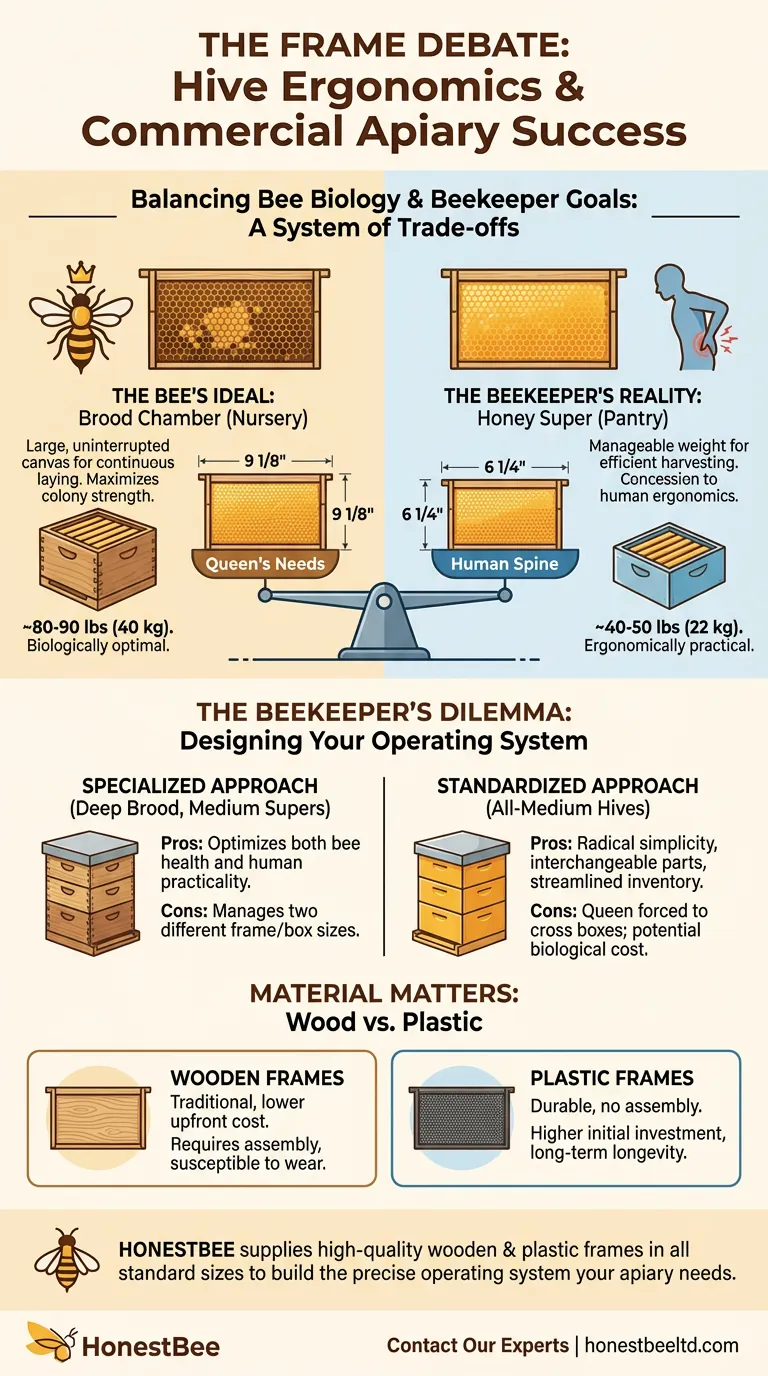
Visual Guide
Related Products
- 3.5L Plastic Beehive Frame Feeder Deep Frame Water Feeder for In Hive Use
- Assembled Wooden Bee Frames with Beeswax Foundation Ready to Use by HONESTBEE
- Heavy Duty Castellated Iron Frame Spacer for Honey Supers
- Precision Stainless Steel Frame Cleaner for Hive Grooves and Corners
- Wooden Bee Hive Frames for Beekeeping and Wholesale
Related Articles
- Why Your Bees Are Starving in Winter (And How the Right Feeder Prevents It)
- Why Your Plastic Frames Are Warping—And Costing You More Than You Think
- How to Choose the Right Bee Feeder for Your Hive’s Health and Efficiency
- How to Choose Between Frame and Gravity Feeders for Healthy Honey Bee Colonies
- How to Safeguard Bee Colonies During Hive Feeding: Practical Methods for Beekeepers