Honey crystallization isn’t a flaw—it’s chemistry in action. Whether you’re a beekeeper managing hive health or a distributor educating customers, understanding the why and how behind crystallization timelines empowers better storage, handling, and consumer communication. Here’s a science-backed guide to navigating this natural process.
The Natural Science of Honey Crystallization
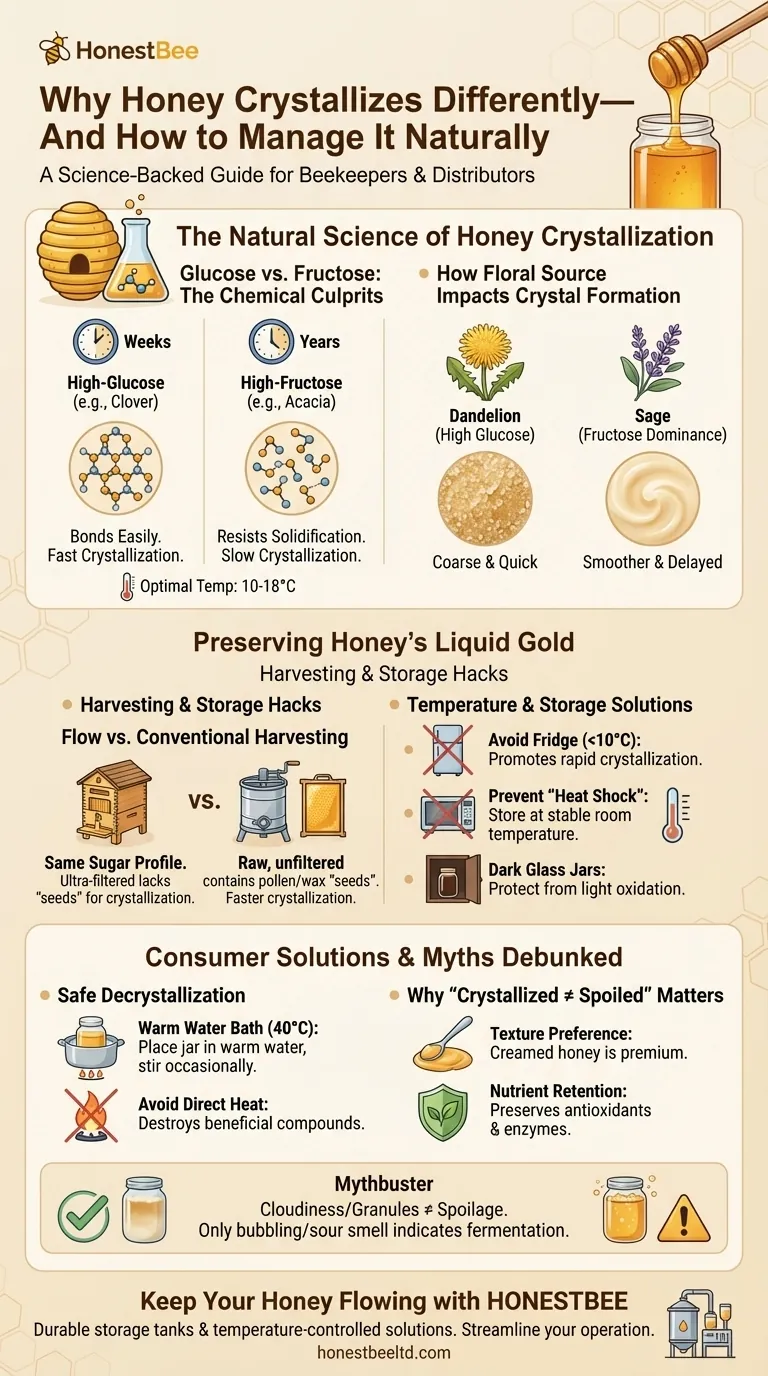
All honey crystallizes eventually, but the timeline varies wildly—from weeks to years. The difference lies in two factors: sugar composition and floral origin.
Glucose vs. Fructose: The Chemical Culprits
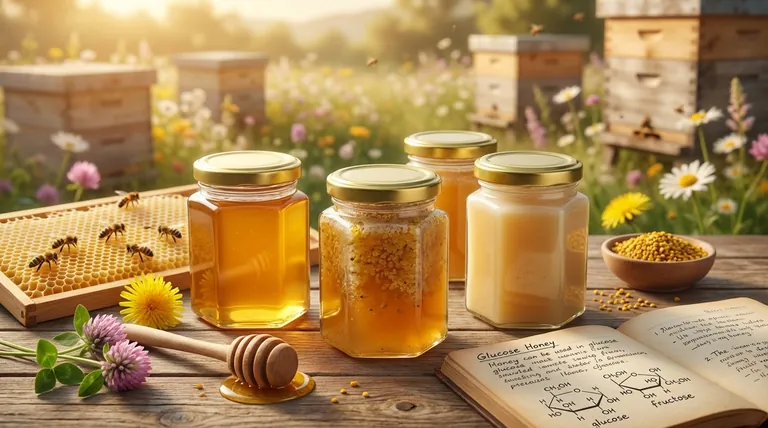
Honey’s sugars aren’t created equal. Glucose molecules bond easily, forming crystals, while fructose resists solidification. Research shows:
- High-glucose honey (e.g., clover, canola) crystallizes within weeks.
- High-fructose honey (e.g., acacia, tupelo) may stay liquid for years.
- Balanced varieties (e.g., orange blossom) fall in between.
Storage temperature amplifies this: cooler environments (10–18°C / 50–64°F) accelerate glucose bonding, while warmer storage slows it.
How Floral Source Impacts Crystal Formation
Nectar chemistry dictates a honey’s crystallization destiny:
- Dandelion & rapeseed honey: High glucose content creates coarse, gritty crystals quickly.
- Sage & black locust honey: Fructose dominance delays crystallization, yielding smoother textures when it occurs.
Practical insight: Beekeepers near crystallization-prone flowers (like clover fields) might swap Flow Supers for conventional frames during bloom seasons, later using the crystallized harvest as winter bee feed.
Preserving Honey’s Liquid Gold
While you can’t stop crystallization, strategic harvesting and storage extend liquid honey’s shelf life.
Flow vs. Conventional Harvesting: Does Method Matter?
Extraction method doesn’t alter crystallization chemistry—whether honey comes from Flow hives or centrifugal extractors, its sugar profile remains unchanged. However:
- Raw, unfiltered honey (common in conventional harvesting) contains pollen and wax particles that act as "seed" for faster crystallization.
- Ultra-filtered honey (often commercial) lacks these nuclei, delaying solidification but sacrificing flavor complexity.
Temperature, Storage, and Shelf Life Hacks
- Avoid the fridge: Temperatures below 10°C (50°F) promote rapid crystallization.
- Prevent "heat shock": Repeated warming above 40°C (104°F) degrades enzymes. Store at stable room temperature instead.
- Dark glass jars: Protect honey from light-induced oxidation, preserving quality longer.
Pro tip for distributors: Educate retailers to store honey away from drafty windows or heating vents to minimize temperature swings.
Consumer Solutions and Myths Debunked
Crystallized honey isn’t spoiled—it’s just misunderstood. Here’s how to address common concerns.
Safe Decrystallization Techniques
- Warm water bath: Place the honey jar in 40°C (104°F) water for 15–30 minutes, stirring occasionally. Avoid direct heat (microwaving or stovetop), which creates hot spots that destroy beneficial compounds.
- Sustainably sourced warmth: Some beekeepers repurpose hive warming pads to gently decrystallize bulk honey.
Why "Crystallized ≠ Spoiled" Matters
- Texture preference: Creamed honey (controlled crystallization) is a premium product in some markets.
- Nutrient retention: Crystallization preserves antioxidants and enzymes better than overheated liquid honey.
Mythbuster: Cloudiness or granules don’t indicate fermentation—unless there’s bubbling or a sour smell, the honey is still safe.
Keep Your Honey Flowing with HONESTBEE
For beekeepers and distributors, managing crystallization starts with the right tools. HONESTBEE’s durable storage tanks and temperature-controlled solutions help maintain honey quality from hive to shelf. Explore our wholesale beekeeping supplies to streamline your operation—because understanding nature’s processes means better honey for everyone.
Ready to optimize your honey handling? Connect with our apiary specialists today.
Visual Guide
Related Products
- Classic Honey Bear Jars with Flip Top Dispensing Cap for Liquid Sweeteners
- Economy Small Scale Honey Dryer Dehumidifier Thickening Machine
- Professional Plastic Honey Dipper for Easy Honey Drizzling
- Inverted Squeezable Honey Jar with No Drip Flip Top Cap for Easy Pouring
- Precision Honey Refractometer Instrument for Quality Assessment
Related Articles
- The Chemistry of Immortality: Why a Honey Jar is More Than Just a Container
- Anatomy of a Honey Jar: A Story of Chemistry, Psychology, and Logistics
- Why Honey Bear Packaging Wins: Psychology, Functionality, and Safety Behind Its Enduring Appeal
- How to Choose Honey Storage Containers That Prevent Spoilage and Extend Shelf Life
- How to Control Honey Crystallization: Science-Backed Methods for Beekeepers