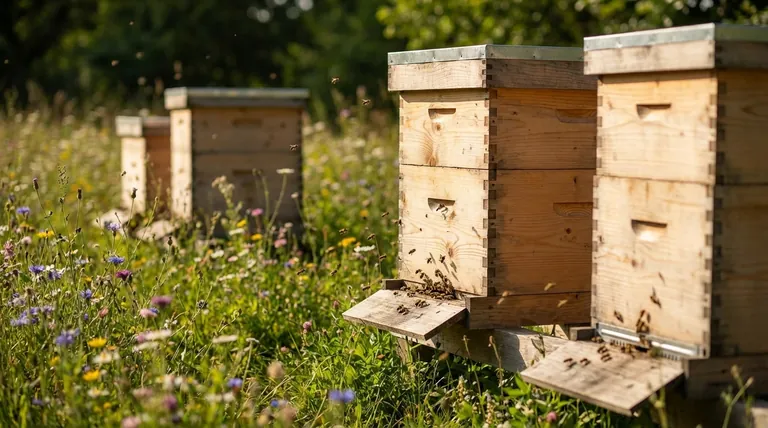
For centuries, wooden beehives have been the gold standard in apiculture. But with modern materials like plastic and polystyrene entering the market, many beekeepers wonder: does tradition still hold up? Research and real-world experience confirm that wood’s natural properties—superior insulation, breathability, and durability—make it the best choice for sustaining colony health and maximizing honey production.
Whether you’re a commercial beekeeper or a distributor sourcing equipment, understanding these advantages ensures you invest in hives that support thriving colonies. Let’s examine the evidence.
The Natural Advantage of Wooden Beehives
How Insulation in Wooden Hives Regulates Colony Temperature
Bees spend significant energy maintaining their hive’s internal temperature, which is critical for brood development and honey production. While modern materials like polystyrene offer strong insulation (with polyurethane foam providing up to 10x better thermal retention than wood), this doesn’t always translate to better colony outcomes.
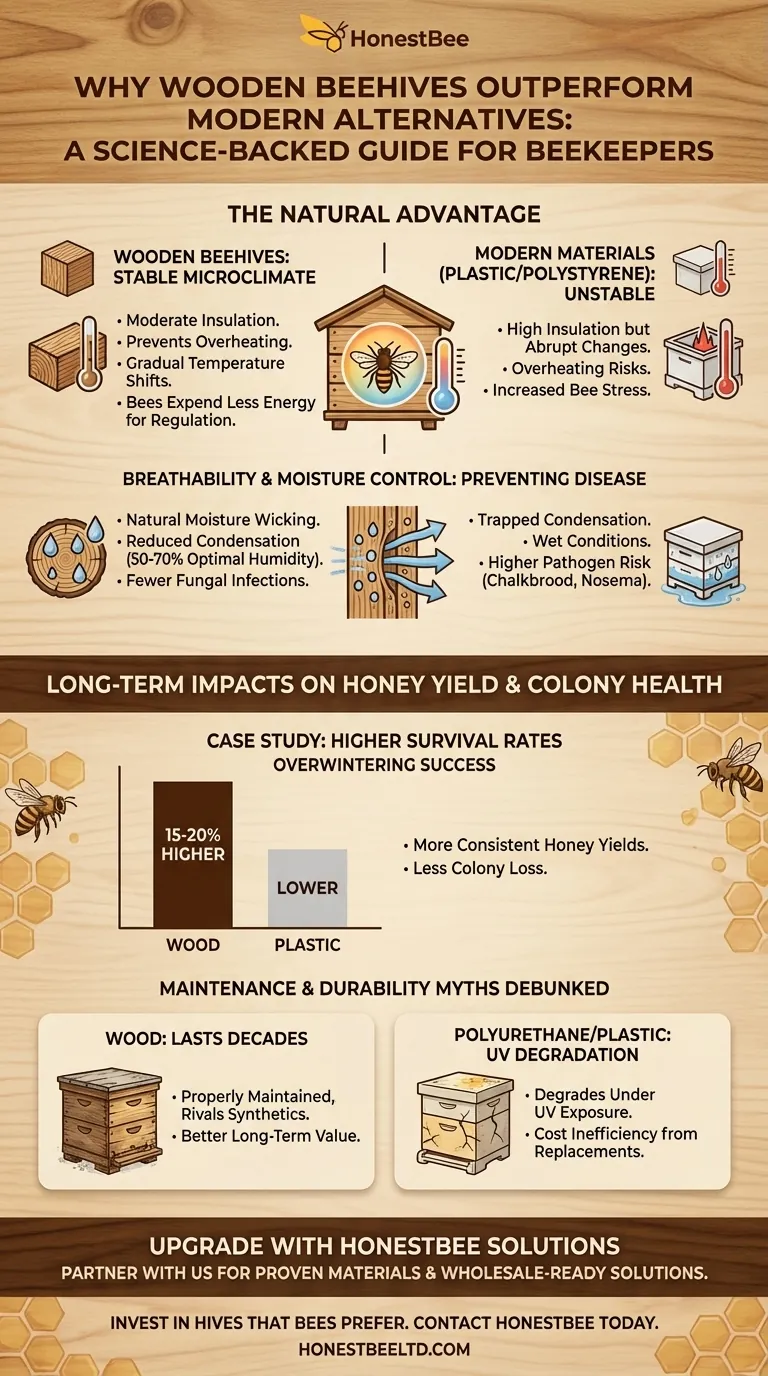
Wood’s moderate insulation creates a stable microclimate:
- Prevents overheating: Unlike plastic, wood absorbs excess heat, reducing temperature spikes in summer.
- Gradual temperature shifts: Bees adapt more easily to wood’s natural thermal lag, whereas synthetic materials may cause abrupt changes.
Studies show colonies in wooden hives expend less energy on temperature regulation, reserving resources for honey production and brood care.
Breathability and Moisture Control: Preventing Disease in Bees
Excess humidity fosters pathogens like chalkbrood and nosema. Here, wood’s breathability outperforms plastic and polystyrene:
- Natural moisture wicking: Wood absorbs and releases moisture, maintaining optimal humidity levels (around 50–70%).
- Reduced condensation: Synthetic hives often trap condensation, creating wet conditions that weaken bees.
Beekeepers report fewer fungal infections and higher winter survival rates in wooden hives, particularly in temperate climates.
Wood vs. Plastic vs. Polystyrene: Long-Term Impacts on Honey Yield
Case Study: Beekeepers Reporting Higher Survival Rates with Wood
Commercial apiaries tracking colony performance note:
- 15–20% higher overwintering success in wooden hives versus plastic.
- More consistent honey yields: While plastic hives may offer short-term insulation benefits, wood supports stronger, more resilient colonies over seasons.
The reason? Wood’s balance of insulation and airflow aligns with bees’ natural preferences, reducing stress and promoting longevity.
Maintenance and Durability Myths Debunked
Critics argue wood requires more upkeep, but evidence suggests otherwise:
- Lifespan: Properly maintained wooden hives last decades, rivaling synthetic alternatives. Polyurethane may insulate better but degrades under UV exposure.
- Cost efficiency: Initial savings from plastic hives diminish when factoring in replacements and higher colony losses.
For distributors, this means wooden hives offer better long-term value for commercial clients.
Upgrade Your Apiary with HONESTBEE’s Beekeeping Solutions
Choosing the right hive material impacts every aspect of beekeeping—from honey yields to colony health. HONESTBEE supplies beekeepers and distributors with durable, high-performance wooden hives designed to support thriving apiaries.
Why partner with us?
- Proven materials: Our hives leverage wood’s natural benefits for sustainable beekeeping.
- Wholesale-ready: Bulk pricing ensures commercial operations get the best equipment at scale.
Invest in hives that bees prefer. Contact HONESTBEE today to equip your apiary with time-tested solutions.
Visual Guide
Related Products
- Wholesales Dadant Size Wooden Bee Hives for Beekeeping
- Wooden Bee Hive Frames for Beekeeping and Wholesale
- Assembled Wooden Bee Frames with Plastic Foundation for Durability and Convenience by HONESTBEE
- HONESTBEE Wired and Assembled Wooden Bee Frames Foundation for a Thriving Hive
- Assembled Wooden Bee Frames with Beeswax Foundation Ready to Use by HONESTBEE
Related Articles
- The Silent Killer in the Hive: Why Moisture, Not Cold, Is Winter's Greatest Threat
- Beyond the Bee Box: Why Your First Apiary Investment Determines Your Success
- How to Assemble Wooden Beehives: A Beginner's Guide to Durable Joint Systems
- How Wooden Beehives Naturally Regulate Temperature for Healthier Honeybee Colonies
- How Bee Space Dictates Hive Success: Science-Backed Management Strategies