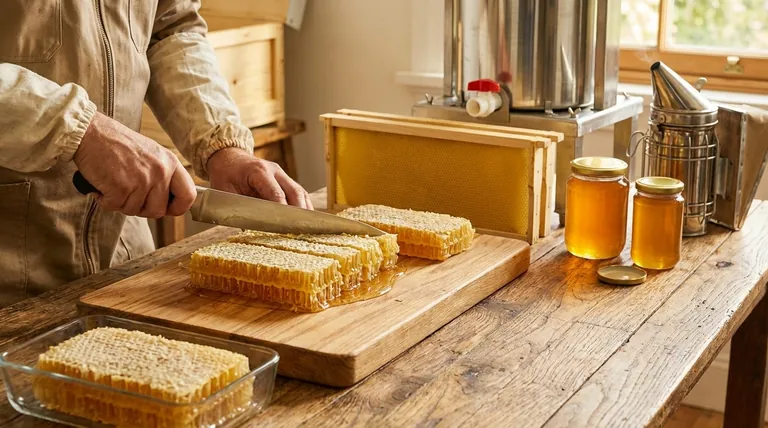
It’s a familiar scene for ambitious beekeepers. You pull a picture-perfect frame from the hive—heavy, immaculate, and fully capped. You see the potential for a high-value, artisanal product: pure cut comb honey. You lay the comb on a clean surface, take your sharpest knife, and make the first confident slice.
And then you hear it. Thunk.
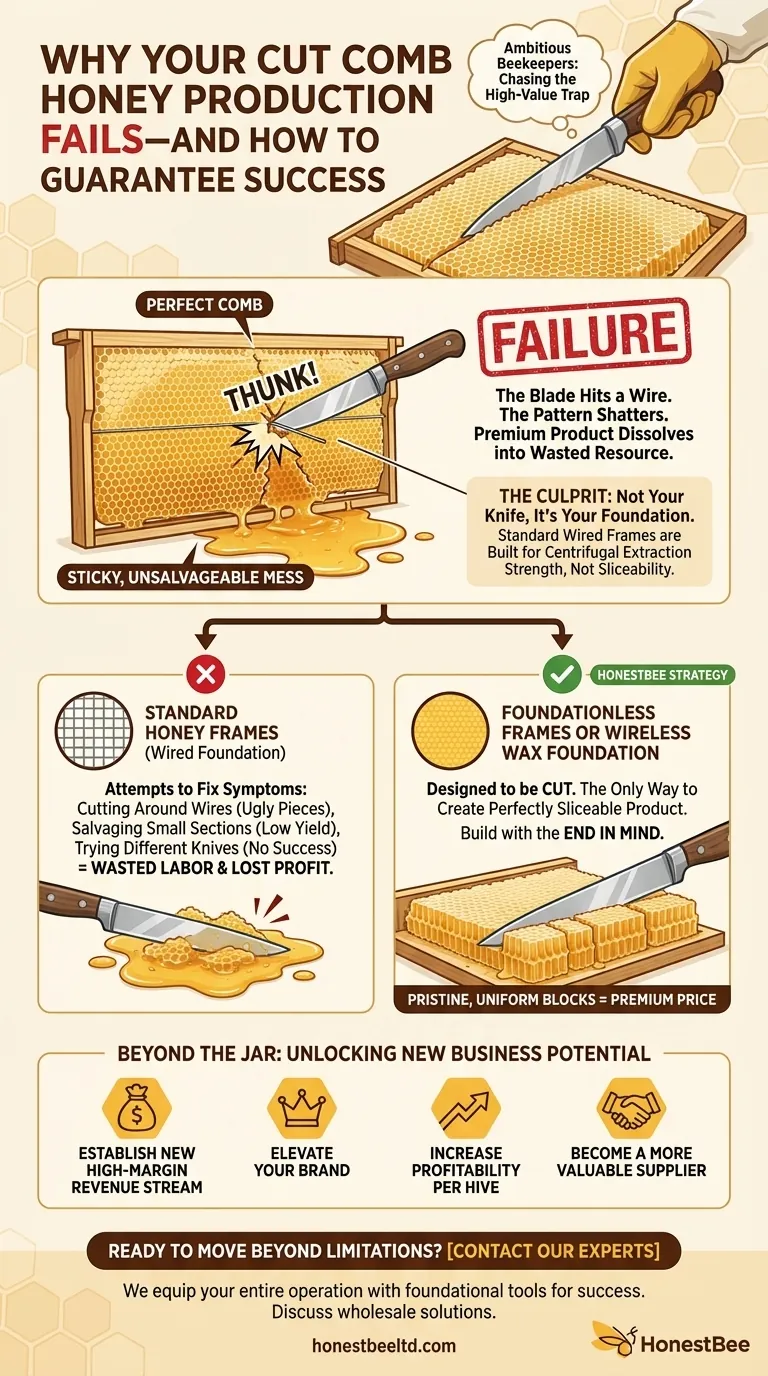
The blade hits a wire. The perfect hexagonal pattern shatters. Honey begins to ooze out, creating a sticky, unsalvageable mess. The dream of a premium product instantly dissolves, leaving you with a damaged comb that can now only be crushed and strained—a lower-value product that cost you time, effort, and lost revenue.
The High-Value Trap: Chasing the Cut Comb Market and Coming Up Short
If you’ve experienced this frustration, you are not alone. Many commercial apiaries see the surging demand and premium prices for cut comb honey and attempt to add it to their product line. But they often end up with inconsistent results and wasted product.
The common response is to blame the technique. Beekeepers will:
- Try to painstakingly cut around the internal support wires, resulting in ugly, non-uniform pieces that no one will buy.
- Attempt to salvage only the small, wire-free sections, leading to incredibly low yields and wasted labor.
- Experiment with different knives, temperatures, or cutting methods, all without success.
These struggles aren't just frustrating; they have direct business consequences. Every damaged comb represents a significant loss of potential profit. It’s a classic case of trying to enter a premium market but being held back by a hidden obstacle, leading to project delays, wasted resources, and the inability to meet distributor demand for a high-margin product.
The Real Culprit: It’s Not Your Knife, It’s Your Foundation
Here is the turn. The problem isn't your cutting skill, your tools, or the honey itself. The failure was set in motion weeks or even months earlier, with a single, fundamental choice: the foundation you used in your frames.
Standard honey frames are built with wired foundation for one reason: to provide structural strength so the comb can withstand the immense force of a centrifugal extractor. That equipment is designed for one purpose—producing liquid honey efficiently and at scale.
You cannot use equipment designed for extraction durability to create a product defined by its sliceability.
This is the core conflict. The very wires that make a comb strong enough for extraction make it impossible to cleanly portion for cut comb honey. All the attempts to fix the problem at the cutting stage are doomed to fail because they address a symptom, not the root cause. You are trying to solve a manufacturing problem during the packaging phase.
Building for Profit: The Foundation of Perfect Cut Comb Honey
To succeed in producing cut comb honey, you must begin with the end in mind. The only way to create a perfectly sliceable product is to build the comb on a structure that is designed to be cut.
This requires a deliberate switch to either foundationless frames or frames with a pure, wireless wax foundation. This isn't just a minor equipment swap; it's the enabling technology that makes professional cut comb production possible. It eliminates the hidden obstacle, allowing a sharp knife to glide through the comb, creating the pristine, uniform blocks that command a premium price.
At HONESTBEE, we understand that producing specialized honey products isn't about guesswork; it's about having the right strategy and the right equipment from the start. We supply commercial apiaries and distributors with the high-quality, wholesale beekeeping equipment engineered for specific outcomes. Our foundationless frames and wireless foundation sheets are the cornerstone for any operation serious about producing premium cut comb honey reliably and at scale. They directly address the root cause of failure, transforming a frustrating process into a predictable and profitable one.
Beyond the Jar: Unlocking a New Tier of Premium Honey Products
Once you solve this foundational problem, you do more than just avoid a sticky mess. You unlock a whole new level of business potential.
By consistently producing beautiful cut comb honey, you can:
- Establish a New, High-Margin Revenue Stream: Diversify your product line beyond liquid honey and tap into the lucrative artisanal food market.
- Elevate Your Brand: Position your apiary as a producer of premium, pure, and unprocessed honey, attracting high-end retailers, chefs, and discerning consumers.
- Increase Profitability Per Hive: Generate significantly more revenue from the same hive by selling a product that commands a much higher price per ounce.
- Become a More Valuable Supplier: For distributors, offering the right equipment and knowledge to your beekeeping clients helps them succeed, making you an indispensable partner in their growth.
Stop letting the wrong equipment dictate the limits of your business. It's time to build your honey products on a foundation designed for profitability and quality.
If you're ready to move beyond the limitations of standard production and confidently enter the premium cut comb honey market, our team is here to help. We can equip your entire operation with the foundational tools you need to succeed. Let’s discuss how to align your equipment with your business goals. Contact Our Experts to explore our wholesale solutions.
Visual Guide
Related Products
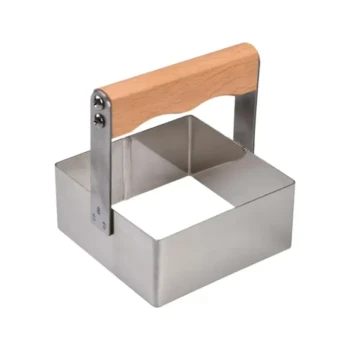
- Heavy Duty Stainless Steel Honeycomb Cutter
- Stainless Steel Jack Type Honey Comb Press Machine Wax and Honey Separator
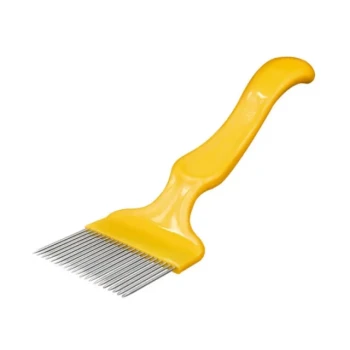
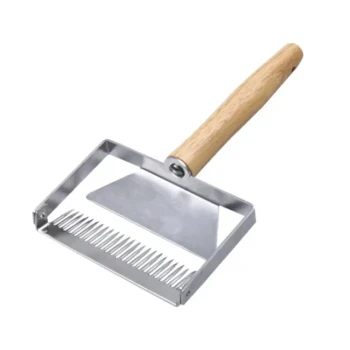
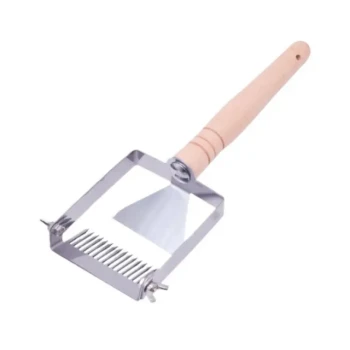
- Professional Honey Uncapping Fork Tool with Customizable Tine Options
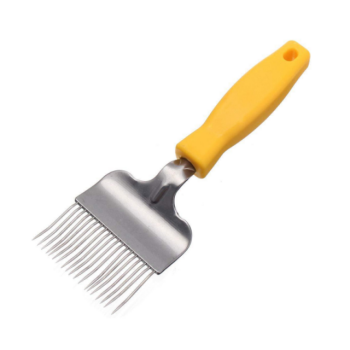
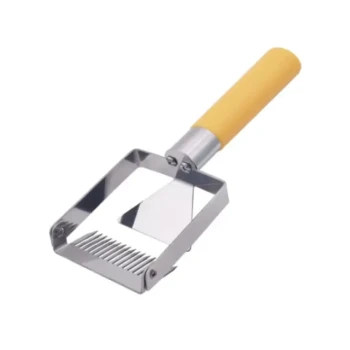
- Professional Bent Tine Honey Uncapping Fork with Ergonomic Grip
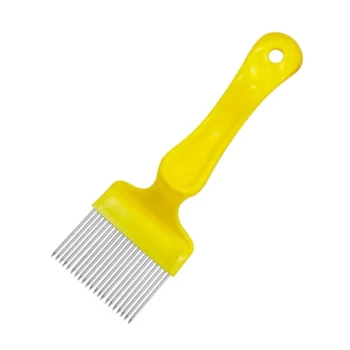
- Professional Customizable Honey Uncapping Fork with Adjustable Tine Options
Related Articles
- An Architecture of Purity: The Unseen Constraints of Cut Comb Honey
- Stuck Selling Liquid Gold? How a Simple Frame Swap Unlocks the High-Margin Comb Honey Market
- Why Your Comb Honey Isn't Commanding Premium Prices – And How to Achieve Perfection
- Why Your Commercial Comb Honey Fails—And How to Guarantee a Perfect Harvest
- Comb Honey: Why It Commands Premium Prices and How to Verify Purity