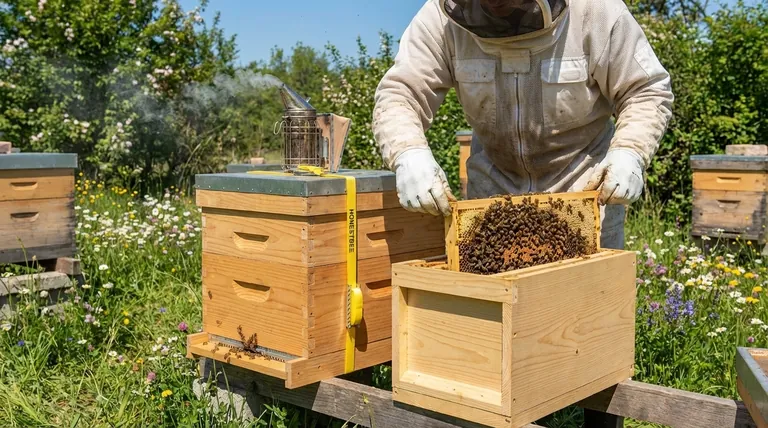
Colony splitting isn’t just about preventing swarms—it’s a strategic tool to strengthen your apiary. When done correctly, splits mitigate overcrowding risks, improve honey yields, and create opportunities for controlled expansion. This guide combines actionable steps with insights from commercial beekeepers to help you master the process.
Splitting Bee Colonies: A Strategic Approach
Successful colony splitting balances timing, technique, and post-split care. The goal? Healthy, productive hives that thrive independently.
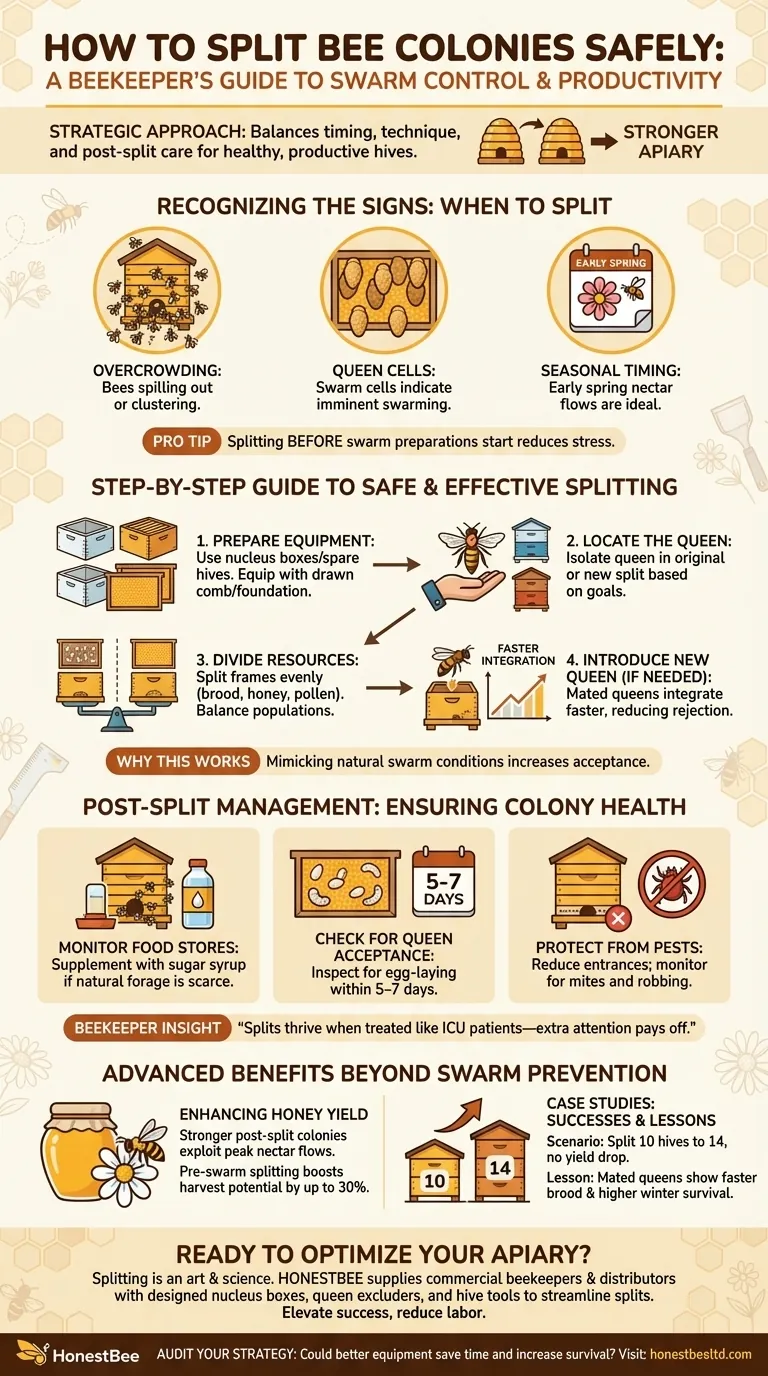
Recognizing the Signs: When to Split Your Colony
- Overcrowding: Bees spilling out of entrance reducers or clustering on hive exteriors signal space constraints.
- Queen Cells: Swarm cells (often at frame edges) indicate imminent swarming.
- Seasonal Timing: Early spring, when nectar flows begin, is ideal for splits to capitalize on natural forage.
Pro Tip: Splitting before swarm preparations start reduces stress on both bees and beekeeper.
Step-by-Step Guide to Safe and Effective Splitting
-
Prepare Equipment:
- Use nucleus boxes or spare hive bodies to house the split colony.
- Equip splits with drawn comb or foundation to accelerate establishment.
-
Locate the Queen:
- Isolate the queen in the original hive or the new split, depending on your goals (e.g., requeening vs. expansion).
-
Divide Resources:
- Split frames evenly: Ensure both colonies have brood, honey, and pollen.
- Avoid overloading splits with too many nurse bees; balance populations to prevent starvation.
-
Introduce a New Queen (If Needed):
- Research shows mated queens in nucleus hives integrate faster than caged queens, reducing rejection risks.
Why This Works: Mimicking natural swarm conditions (e.g., resource distribution) increases acceptance rates.
Post-Split Management: Ensuring Colony Health
- Monitor Food Stores: Splits lack foragers initially; supplement with sugar syrup if natural forage is scarce.
- Check for Queen Acceptance: Inspect for egg-laying within 5–7 days. Rejections require quick requeening.
- Protect from Pests: Smaller colonies are vulnerable to mites and robbing; reduce entrances and monitor closely.
Beekeeper Insight: "Splits thrive when treated like ICU patients—extra attention the first few weeks pays off," notes a commercial apiarist.
Advanced Benefits of Splitting Beyond Swarming Prevention
Enhancing Honey Yield Through Controlled Expansion
- Stronger colonies post-split can exploit peak nectar flows more efficiently.
- Splitting before swarming preserves the workforce, boosting harvest potential by up to 30% in managed apiaries.
Case Studies: Successes and Lessons from Beekeepers
- Scenario 1: A Midwest beekeeper split 10 hives pre-swarm, increasing total colonies to 14 with no honey yield drop.
- Lesson Learned: Splits with mated queens (vs. cells) showed faster brood production and higher winter survival rates.
Ready to Optimize Your Apiary?
Splitting colonies is both an art and a science—equipment matters. HONESTBEE supplies commercial beekeepers and distributors with nucleus boxes, queen excluders, and hive tools designed to streamline splits. Whether you’re managing 50 hives or supplying local beekeepers, the right tools reduce labor and elevate success.
Next Step: Audit your splitting strategy. Could better equipment save you time and increase survival rates?
About the Data: Findings are drawn from observed beekeeping practices and peer-reviewed studies on queen introduction methods.
Visual Guide
Related Products
- In-Hive Dual Compartment Frame Bee Feeder for Targeted Colony Nutrition
- Ergonomic Plastic Frame Spacer Tool for Rapid Hive Management Beekeeping
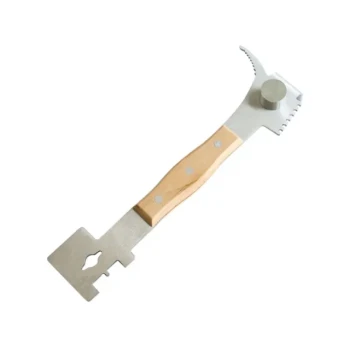
- HONESTBEE Professional Long Handled Hive Tool with Precision Cutting Blade
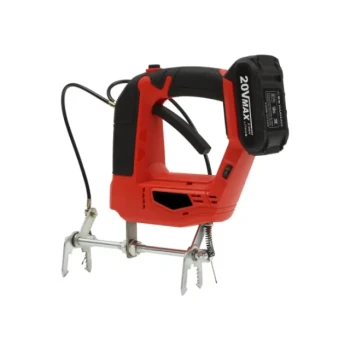
- High Performance Cordless Electric Bee Shaker for Beekeeping
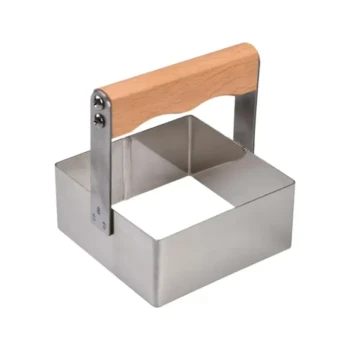
- Heavy Duty Stainless Steel Honeycomb Cutter
Related Articles
- Why Your Bees Are Starving in Winter (And How the Right Feeder Prevents It)
- Why Your In-Hive Feeders Leak—And How One Piece of Equipment Prevents Disaster
- How to Choose Between Frame and Gravity Feeders for Healthy Honey Bee Colonies
- How to Choose the Right Bee Feeder for Your Hive’s Health and Efficiency
- An Operator's Calculus: The Hidden Trade-offs of High-Capacity Bee Feeders